
Long-eared owl
Asio
Description
How to identify
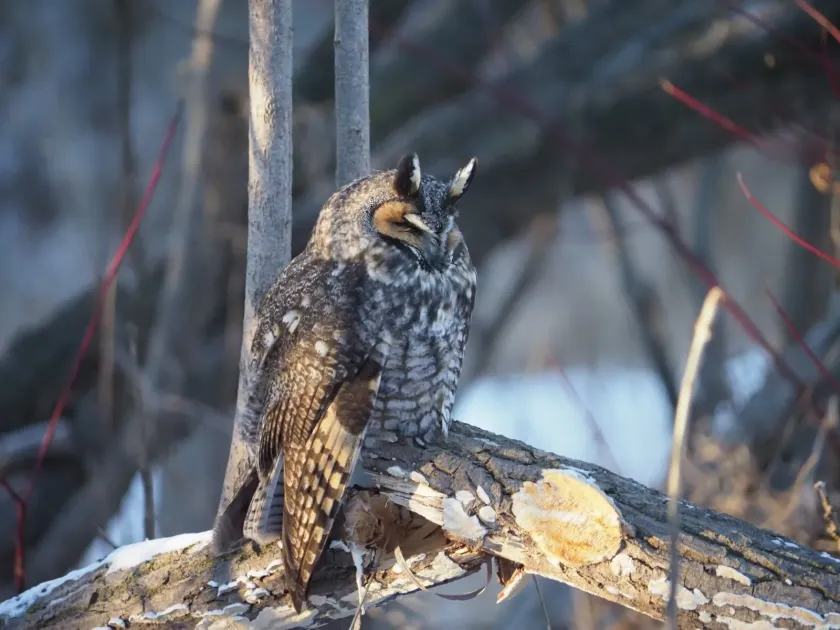
The Long-eared owl (Asio otus) is a medium-sized raptor belonging to the Strigidae family and Strigiformes order. It is named after its long, prominent ear-like feather tufts.
Its plumage is patterned with mottled brown and grey streaks, providing excellent camouflage against tree bark, which is vital for its survival during daytime roosting.
The owl has striking bright orange-yellow eyes, which are highly sensitive to light and motion, facilitating efficient hunting in low-light conditions.
These birds are commonly found near agricultural lands, orchards, and wooded shelterbelts, where they find ideal cover and proximity to feeding grounds.
With an impressive wingspan, the Long-eared owl moves silently through the air, making it an effective predator of various small mammals inhabiting fields.
What it damages
The Long-eared owl is not a plant pest. Conversely, it is a highly beneficial predator that plays a crucial role in maintaining agricultural ecosystem health.
Their diet consists primarily of small rodents, such as field voles and mice, which are major pests responsible for destroying crops, grains, and tree bark in orchards.
By consuming large quantities of these rodents, the owls help maintain a natural balance on farmland, preventing rodent outbreaks that could damage harvest yields.
The presence of these owls reduces the need for farmers to rely on toxic chemical pesticides to control rodent populations, thus promoting environmentally friendly agriculture.
As such, the Long-eared owl should be considered a key biological control agent and an essential partner for sustainable farming practices worldwide.
When it appears
Long-eared owls are generally resident throughout their range, though they may engage in local seasonal movements to locate areas with higher rodent density.
The breeding season typically begins in early spring, when pairs inhabit old nests in trees to raise their broods during the most active phase of the agricultural cycle.
During the summer months, the demand for food for growing owlets is at its peak, leading to increased hunting activity that benefits the farmer.
In autumn and winter, owls often congregate in communal roosts in dense foliage near fields, as these areas provide both shelter and access to food sources.
The persistence of the owl population depends on the availability of undisturbed nesting sites and consistent rodent activity throughout the year.
Signs of infestation
The presence of Long-eared owls is easily identified by the accumulation of pellets — small, indigestible lumps containing hair and bones of consumed prey.
Evidence of owls can also be found in white droppings on branches or the ground beneath their favoured daytime roosting trees in shelterbelts.
At night, their presence is often announced by a series of low, rhythmic hooting calls, which serve as communication between individuals during hunting.
Identifying nesting sites in old trees near farm borders is a clear indicator that a local population is active in managing the rodent population on the land.
Visual spotting of the bird silhouette flying low over fields during dusk indicates active patrolling of the area for potential prey.
Control measures
No control measures against the Long-eared owl are necessary or recommended, as they provide an essential service to the agricultural community.
Farmers are encouraged to preserve hedgerows and mature trees, which are critical for the survival of the owls and their nesting success.
Avoid the use of anticoagulant rodenticides, as these chemicals can cause secondary poisoning in owls, killing the very predators that help protect the crops.
Setting up simple wooden perches in the middle of large, open fields can attract owls to hunt in areas where they would otherwise be unable to find landing spots.
Maintaining biodiversity on the farm is the most effective way to encourage a stable population of these raptors and maximize the benefits of biological pest control.
Taxonomy
- Latin name
- Asio
- Family
- Strigidae
- EPPO code
- ASIOSP
Discussion
No discussions yet — be the first.