
Laughing dove
Streptopelia senegalensis
Description
How to identify
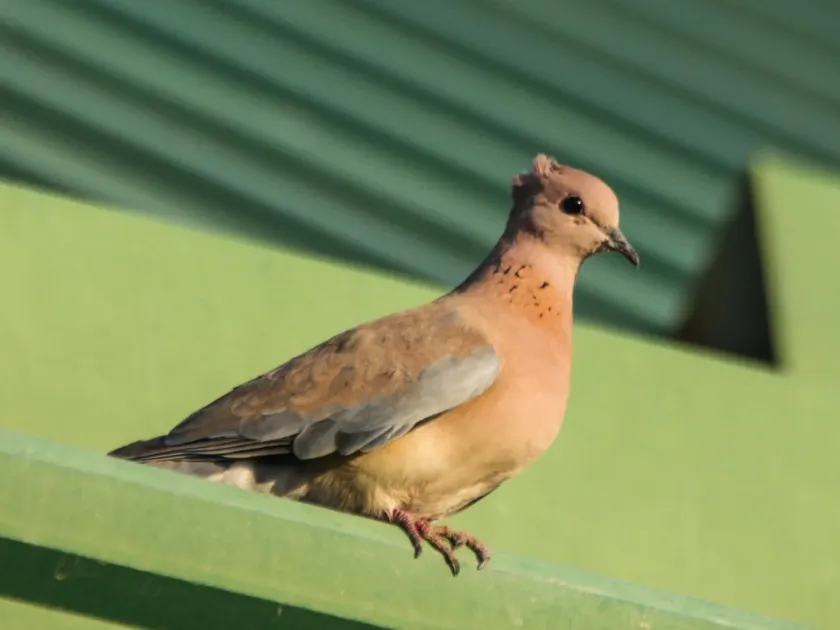
The Laughing dove (Streptopelia senegalensis) is a member of the Columbidae family. It is a small bird recognized by its reddish-brown wings and a distinctive spotted pattern on the throat, which gives it a unique appearance compared to other doves.
The bird has a slender build and a long tail with white tips on the outer feathers. They are highly synanthropic, often nesting in close proximity to farms, gardens, and agricultural infrastructures.
Breeding can occur throughout most of the year if food sources are abundant. Nests are typically constructed in trees, shrubs, or under the eaves of farm buildings, allowing the population to remain stable and persistent.
Their adaptability to various climates and human-altered landscapes has allowed the species to expand its range significantly, frequently settling in areas with intensive crop production.
The flocking behavior of these birds places significant pressure on agricultural fields, especially during sowing and harvest seasons, as they seek easily accessible food sources.
What it damages
Laughing doves primarily damage cereal crops such as wheat, barley, and millet. They consume seeds immediately after sowing, leading to thin stands and uneven crop emergence across the field.
Beyond cereals, they also target the seeds of oilseed crops like sunflowers. By consuming seeds at the soil surface, they cause direct financial losses and often necessitate reseeding.
As the crops reach maturity, doves damage the heads of the grain, knocking the seeds to the ground. This reduces overall yield and degrades the quality of the harvested produce.
Furthermore, their presence in fields contributes to the spread of weed seeds, which they carry through their digestive tract, potentially introducing invasive plant species to new agricultural areas.
In post-harvest storage facilities, these birds contaminate stored grain with droppings, feathers, and debris, which compromises sanitary standards and can lead to grain spoilage.
Signs of infestation
A primary indicator of infestation is the presence of large flocks congregating on the edges of fields near trees or buildings. Footprints near newly sown seeds are another clear sign of activity.
Visible gaps in field rows where seeds have been consumed indicate bird pressure. Young seedlings in these areas may show signs of damage or complete removal.
On grain heads, mechanical damage such as broken husks or missing kernels points to active feeding by doves. Droppings found near these areas confirm the presence of the pest.
Frequent movement of flocks between resting sites and foraging areas demonstrates that the birds have established a feeding pattern on the property, which requires immediate intervention.
Inside storage buildings, noise and the accumulation of bird waste or loose grain on the floor are definitive signs that the facility is being used as a feeding ground.
Control measures
Effective management includes the use of visual and auditory deterrents, such as bioacoustic systems that play distress calls or the sounds of natural predators to discourage birds from entering the area.
Correct agricultural practices, such as proper seed depth during planting, significantly reduce the availability of seeds on the surface, making them harder for the doves to find.
Installing netting or wire barriers on storage buildings is essential to keep birds out, ensuring that the harvested crop remains free from contamination and loss.
Seed treatments that alter the taste or odor of the grain can serve as a deterrent during the germination phase, making the seeds unattractive to the doves.
- Utilizing propane cannons to frighten birds from large fields.
- Keeping grain storage areas clean of spilled seeds to reduce attractiveness.
- Monitoring fields during critical development stages to apply deterrents early.
Taxonomy
- Latin name
- Streptopelia senegalensis
- Family
- Columbidae
- EPPO code
- STPESN
Discussion
No discussions yet — be the first.