
Rock dove
Columba
Description
How to identify
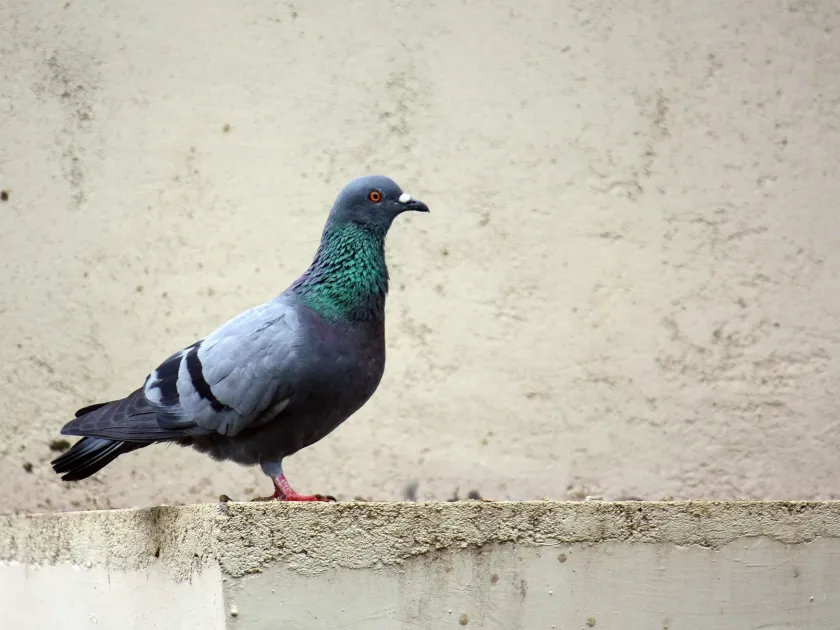
The rock dove (Columba livia), also known as the feral pigeon, belongs to the order Columbiformes, family Columbidae. It is a medium-sized bird characterized by blue-gray plumage, two dark wing bars, and a white rump.
In their natural habitat, these birds nest on cliffs, but in agroecosystems, they have adapted to life near farms, grain elevators, and warehouses. A defining trait of the species is its high sociality and sedentary behavior, which exerts year-round pressure on crops.
Reproduction occurs almost year-round, provided food and shelter are available. A single pair can produce 6–8 broods annually, ensuring rapid population growth in protected areas.
Adult birds possess excellent vision and memory for foraging sites, making them cautious and highly efficient at locating agricultural produce.
They move through fields in large flocks, actively pecking seeds directly from the soil, which is particularly destructive during the sowing season.
What it damages
Rock doves cause primary damage to cereal crops such as wheat, barley, corn, and sunflowers. Birds are particularly dangerous during seed germination and the emergence of early sprouts.
In fields with winter crops, pigeon flocks peck out sown seeds from the top layer of soil, leading to sparse germination and reduced final yield.
During the ripening stage of grain, pigeons damage stems by bending them to the ground and eating the grain from the heads, causing direct economic loss to agricultural enterprises.
Beyond consumption, birds contaminate the harvest with droppings, rendering grain unsuitable for storage or processing due to the risk of pathogenic microorganism growth.
In grain storage areas, birds destroy significant quantities of bulk grain, consuming large amounts and damaging packaging materials.
When it appears
Maximum damage to crops is observed in the spring during sowing, when seeds lie in the top layers of the soil and are easily accessible to the birds.
During autumn, pigeon activity increases with the sowing of winter crops, as flocks congregate on freshly tilled fields in search of easy food.
In winter, rock doves concentrate near livestock complexes and elevators, feeding on leftover feed and grain residues.
The summer period is characterized by birds shifting their attention to ripening crops, including sunflowers and corn, where they damage flower heads and cobs.
Overall population dynamics show no distinct seasonal declines, as the availability of food in the agricultural sector provides birds with comfortable conditions for overwintering.
Signs of infestation
The first sign of pigeon presence is the abundance of footprints in damp soil at the sowing sites.
Patches of sparse or missing seedlings in rows where seeds have been completely removed from the ground are key indicators of infestation.
The presence of flocks is confirmed by droppings on the soil surface, as well as characteristic feathers found in areas of mass feeding.
When grain crops are damaged, observers will notice trampled areas and threshed heads hanging on partially broken stalks.
Constant noise from the flock, cooing, and sudden take-offs upon human approach serve as direct visual confirmation of pests in the field.
Control measures
Effective crop protection requires a multifaceted approach, combining agronomic practices with mechanical bird deterrent methods.
Deep seed burial is an effective method, making seeds less accessible to pigeons during their foraging attempts.
The use of acoustic deterrents, such as gas cannons, ultrasonic systems, and predator bird call recordings, demonstrates high efficiency in large open areas.
Visual aids, including predator decoys, reflective tapes, and mirror balls, help to disorient the flock during the initial days of their arrival.
- Regular cleaning of storage areas to remove spilled grain.
- Use of protective netting on hangars and warehouses.
- Application of specialized repellent coatings for seed treatment.
Taxonomy
- Latin name
- Columba
- Family
- Columbidae
- EPPO code
- COLUSP
Discussion
No discussions yet — be the first.