
Rock dove
Columba livia
Description
How to identify
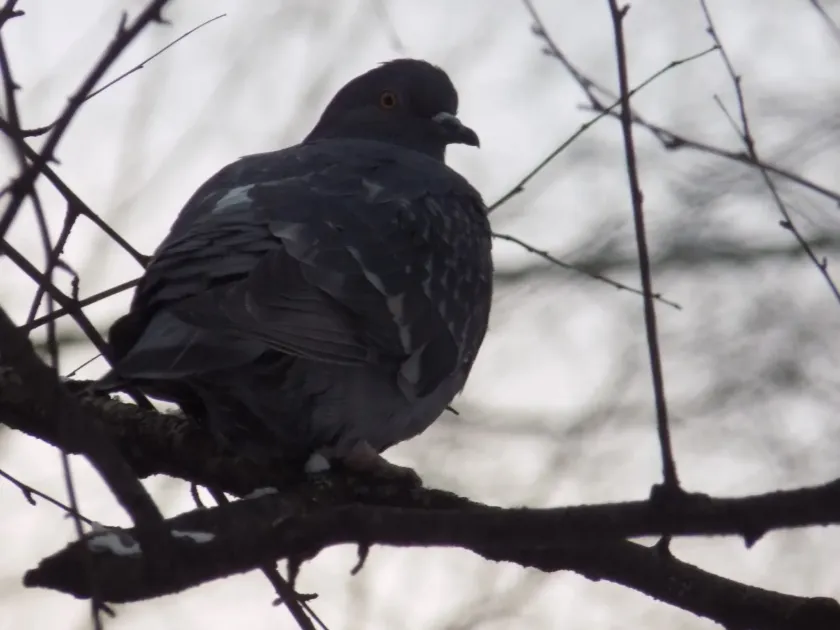
The Rock dove (Columba livia), belonging to the Columbidae family, is a medium-sized bird with a grey body, two distinctive black wing bars, and a white rump.
While originally cliff-dwelling, they have adapted to human-made structures, including barns, granaries, and warehouse rooftops, which they use for nesting.
These birds are sedentary and form large flocks near food sources, making them a persistent threat to various agricultural operations throughout the year.
Rock doves reproduce rapidly, often breeding year-round if food is sufficient, which allows their populations to recover quickly despite control efforts.
They possess keen eyesight and intelligence, which allows them to quickly adapt to visual or acoustic deterrents placed in agricultural fields.
What it damages
Rock doves cause significant economic losses by feeding on grain, oilseed, and legume crops, particularly during the germination and seedling stages.
They consume seeds directly from the soil after planting, which results in thin or patchy crop stands and necessitates costly reseeding operations.
In sunflower fields, flocks can destroy young sprouts and feed on mature seed heads, reducing the overall yield and seed oil quality.
Inside storage facilities, they contaminate grain with droppings, increasing moisture levels and creating a habitat for secondary pests and pathogens.
Furthermore, their presence in barns and warehouses causes structural damage to roofing and insulation, facilitating the entry of rodents and insects.
When it appears
The peak period of crop damage occurs in early spring, immediately following the planting season when seeds are easily accessible on the surface.
During the summer months, flocks switch their feeding habits to mature corn and sunflower crops, focusing on seed heads and ripening grains.
Autumn brings flocks to harvested fields to feed on waste grain and stubble, which often results in the spread of weed seeds across the field.
In winter, populations concentrate around livestock feedlots and granaries, relying on spilled grain and animal feed to survive the cold season.
Bird movement within an agricultural site is primarily driven by food availability, meaning flock size fluctuates with specific farming activities.
Signs of infestation
The most common sign of Rock dove infestation is the appearance of bare patches in fields where rows have been destroyed or seeds were consumed.
Clear footprints on soft soil along crop rows and an accumulation of bird droppings are reliable indicators of heavy feeding activity.
Affected seedlings often appear pulled out of the ground, with discarded seed coats left behind, clearly distinguishing bird damage from insect feeding.
Sunflower heads damaged by pigeons display irregular, ragged edges, as birds mechanically remove the seeds rather than leaving clean drill holes.
Frequent cooing sounds and high volumes of feathers near farm structures indicate a roosting site that supports the local pest population.
Control measures
Effective field protection involves using visual deterrents such as life-like predator decoys or reflective tapes that must be moved frequently.
Acoustic methods, including gas cannons and bio-acoustic bird distress call players, are successful in scaring flocks away from sensitive areas.
Maintaining the integrity of storage facilities by installing fine-mesh netting on vents and windows is essential for long-term grain protection.
Seed treatments using taste-aversion repellents can significantly reduce bird foraging pressure immediately after sowing by making the seeds unpalatable.
- Clean up spilled grain around silos and machinery daily.
- Ensure deep seed burial to reduce surface accessibility.
- Rotate deterrent methods to prevent birds from becoming habituated.
Taxonomy
- Latin name
- Columba livia
- Family
- Columbidae
- EPPO code
- COLULI
Discussion
No discussions yet — be the first.