
Stock dove
Columba oenas
Description
How to identify
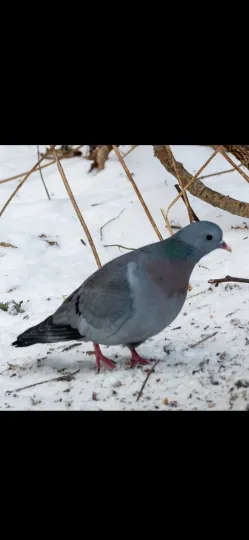
The stock dove (Columba oenas) is a medium-sized wild pigeon easily distinguished by its uniform blue-grey plumage. Unlike the common feral pigeon, it lacks white patches on the rump and features two short, broken black bars on its wings.
Taxonomically, it belongs to the order Columbiformes and the family Columbidae. These birds are naturally elusive and prefer forested areas with old trees for nesting in hollows, but they frequently venture into farmland to forage for seeds and young plant shoots.
Their flight is strong and agile, making them difficult to deter once they have identified a food source. They are highly observant and will quickly fly away if they sense danger, only to return shortly after the threat has passed.
The breeding cycle of the stock dove allows for multiple broods per season, which keeps the population density relatively stable even in areas under agricultural pressure. This persistence requires farmers to be vigilant during the entire growing season.
Juvenile stock doves have slightly duller feathers compared to adults but are highly efficient foragers. They quickly learn to follow the feeding patterns of the adults, making them a recurring challenge for crop management.
What it damages
Stock doves primarily damage agricultural crops by feeding on freshly sown seeds. They can dig up grains such as wheat, barley, and legumes from the soil surface before germination, leading to significant stand thinning.
During the early growth stage, they also target the tender shoots of seedlings. By pulling the young plants out of the ground, they cause localized crop failure, which often necessitates reseeding of the affected areas.
The economic impact is particularly severe in fields where the seedbed has not been properly compacted or where seeds are left too close to the surface. Small flocks can decimate a large percentage of seeds within just a few days.
Beyond the direct consumption of seeds and sprouts, the presence of these birds contributes to competition with crops for nutrients if the affected area becomes dominated by opportunistic weeds after the crop is destroyed.
While the total destruction of an entire field is rare, the cumulative loss from multiple visits by flocks can lead to measurable yield reductions. Effective monitoring is essential to calculate the potential loss and the need for interventions.
When it appears
The most critical period for stock dove activity is early spring, which coincides with the sowing season for many grain crops. During this time, the abundance of exposed seeds makes fields highly attractive to foraging flocks.
Late summer and early autumn also see increased activity when grains reach maturity. The birds take advantage of any fallen or exposed grain, including waste left behind by harvesting equipment.
Their activity is cyclical and tied to the crop development stages. Monitoring should be most intense during the first two weeks after planting, as this is when the vulnerability of the crop to avian pests is at its absolute peak.
Throughout the summer, flocks remain active, searching for seeds and fresh vegetation to feed their growing offspring. They tend to visit the same fields daily, creating a routine that can be targeted by deterrent measures.
As winter approaches, stock doves typically migrate, reducing the pest pressure. However, in regions with mild climates, some populations may remain active longer, requiring extended protection efforts.
Signs of infestation
Identifying a stock dove infestation is often done by spotting their characteristic footprints in soft or newly cultivated soil. These tracks are usually clustered in areas where seeds have been recently disturbed.
Thinning patches or bare spots in a field where rows were expected are clear indicators of avian damage. Close inspection usually reveals small holes in the soil where the bird has used its beak to unearth the seed.
The presence of bird feathers and distinctive droppings on the periphery of the fields or near surrounding hedgerows confirms that the birds are using the area as a landing or resting spot.
Visually, the abrupt flight of a large flock when machinery or people approach the field is a definitive sign. Their behavior in the air, characterized by rapid wing beats and agile banking, is a telltale signature of the species.
Damage to seedlings is distinct: plants are often yanked out or have torn leaves, which is vastly different from the clean cuts or skeletonization caused by various insect pests.
Control measures
Acoustic deterrents, such as gas cannons or speakers playing distress calls of raptors, are highly effective. To ensure long-term success, the timing and frequency of these sounds must be varied to prevent the birds from habituating to them.
Visual aids like life-sized models of hawks or falcons can be used. For these to remain effective, they should be moved periodically to simulate a real predator, as the birds will quickly learn if the 'predator' is stationary and harmless.
Agricultural practices like deeper seed placement are fundamental. Ensuring that seeds are buried at the optimal depth significantly reduces the birds' ability to find and reach them, protecting the crop from initial damage.
Reflective deterrents, such as flashing tapes or mirrors, can be effective on smaller plots by creating visual discomfort for the birds, which disrupts their ability to forage safely and efficiently.
Post-harvest management, specifically immediate plowing or discing of stubble, removes leftover grains from the soil surface. By denying them this food source, farmers can reduce the incentive for flocks to return to their fields.
Taxonomy
- Latin name
- Columba oenas
- Family
- Columbidae
- EPPO code
- COLUOE
Discussion
No discussions yet — be the first.