
Wood pigeon
Columba palumbus
Description
How to identify
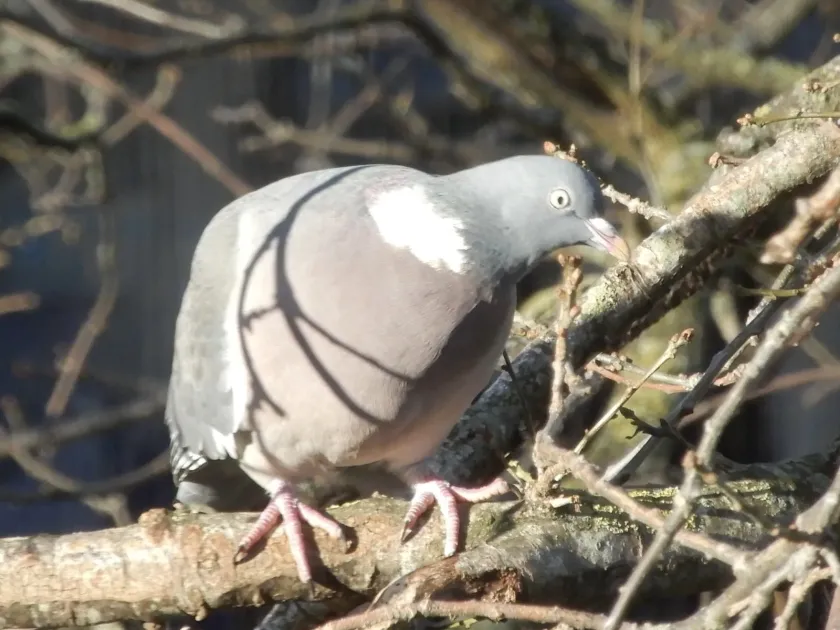
The wood pigeon (Columba palumbus) is the largest pigeon species found in Europe. It is a robust bird characterized by its grey plumage, pinkish chest, and prominent white patches on the sides of the neck and wings.
Adult wood pigeons can weigh up to 600 grams with a wingspan of up to 80 centimeters. They are easily recognized by their distinct yellow bill with a pink base and their powerful flight silhouette.
These birds are highly gregarious, often forming large flocks that can be seen feeding on open fields. They possess keen eyesight and are extremely alert, making them difficult to approach without detection.
Breeding usually takes place in forests or tree lines bordering agricultural land. A pair can raise multiple broods per season, which contributes to high local population densities.
Their adaptability to various landscapes and high dietary requirements make them a consistent nuisance for farmers, especially in areas with large cereal plantations.
What it damages
Wood pigeons cause significant damage to cereals, pulses, and oilseeds, including wheat, barley, peas, and oilseed rape. They feed on sown seeds, seedlings, and mature grains.
The most severe damage occurs during the ripening phase, where flocks feed on the grains and trample the standing crop, leading to substantial yield losses in affected field sections.
Winter wheat crops are particularly vulnerable during autumn, as pigeons target the young green shoots, which are essential for the birds' preparation for migration.
Oilseed rape is susceptible in its early development stages because pigeons often graze the leaves and terminal buds, causing stunted plant growth or total crop failure.
The cumulative effect of their feeding behavior, often involving large numbers of birds moving across the field, can reduce overall yields by 10% to 30% depending on infestation levels.
When it appears
Activity on fields begins in early spring when pigeons search for germinating seeds shortly after the sowing season begins.
During the summer months, particularly when crops reach the milk-waxy stage, wood pigeons become highly aggressive in their feeding, targeting the nutritious grains.
Autumn is a critical period for winter crops, as wood pigeons frequent these fields daily to consume the fresh greenery before the onset of colder weather.
Daily activity is usually concentrated in the morning and late afternoon hours, when birds commute between their roosting sites and the primary feeding fields.
In regions with milder climates, wood pigeons may remain throughout the winter, causing secondary damage to crop stubble or remaining unharvested residues.
Signs of infestation
The most obvious sign of a wood pigeon infestation is the presence of large flocks perched on adjacent trees, power lines, or feeding directly on the field edges.
Evidence on the ground includes patches of missing seedlings, cleared areas where grain was consumed, and visible bird droppings concentrated in feeding zones.
Damage to seedlings is characterized by clean-cut leaf tips or the total removal of plants down to the root, leaving bare spots in the field.
During the pre-harvest period, ears of grain or seed pods often show mechanical damage where the pigeon has picked the crop, leading to early shedding of the grain.
The characteristic explosive sound of a large flock taking flight, accompanied by the clatter of wings, is a reliable indicator that the area is being targeted by these birds.
Control measures
Visual deterrents such as predator kites, scarecrows, or reflective ribbons are used to protect crops, though these require frequent movement to prevent the birds from habituating.
Gas-powered bird-scaring cannons are widely used to disperse flocks, but their effectiveness is best when used intermittently in combination with other deterrent methods.
Agrotechnical strategies include rapid sowing and timely harvesting, which significantly reduce the window of opportunity for birds to damage the crop while it is most vulnerable.
Modern drone technology can be used for field monitoring, allowing farmers to detect arriving flocks early and deploy countermeasures more efficiently.
In some agricultural sectors, crop rotation and the selection of less palatable varieties may help minimize the attractiveness of the field to local wood pigeon populations.
Taxonomy
- Latin name
- Columba palumbus
- Family
- Columbidae
- EPPO code
- COLUPA
Discussion
No discussions yet — be the first.