
Stratiomys singularior
Stratiomys singularior
Description
How to identify
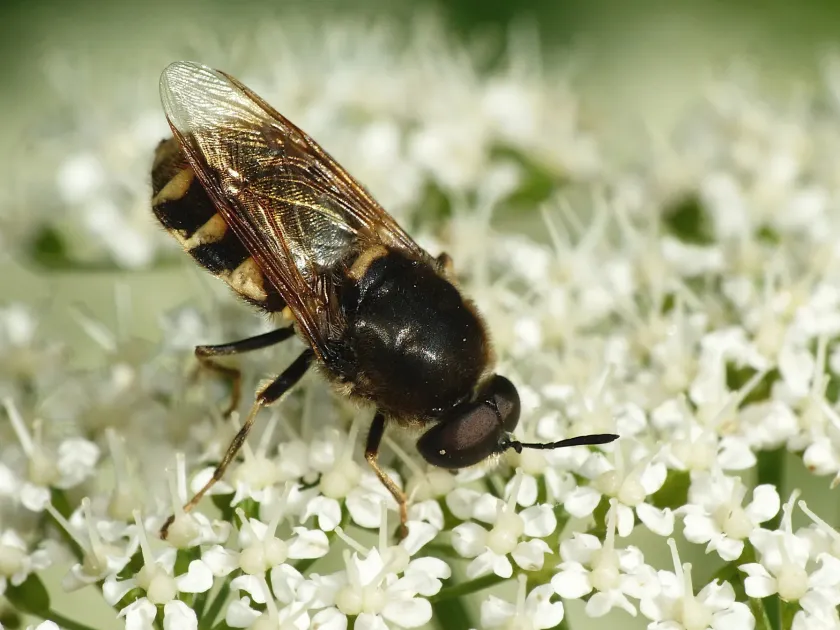
Stratiomys singularior belongs to the Stratiomyidae family within the order Diptera. Adults typically measure 10–15 mm in length and are distinguished by their black bodies with prominent yellow or greenish spots on the abdomen.
The wings of the adult fly are clear, often featuring a subtle dark tint on the leading edge. The head is equipped with large compound eyes, which are joined in males and separated in females, and a mouthpart suitable for nectar feeding.
The larvae possess a flattened, segmented body reaching up to 20 mm. A key identifying feature is the breathing tube located at the posterior end, which allows them to thrive in aquatic or highly saturated soil environments.
The life cycle undergoes complete metamorphosis, consisting of the egg, larva, pupa, and adult stages. They are most commonly spotted near water bodies, flower beds, and damp soil during the summer months.
While adult soldier flies are harmless pollinators, their larvae occupy damp microhabitats where they consume organic matter, occasionally interacting with crop root systems.
What it damages
Stratiomys singularior is not a primary agricultural pest; however, under conditions of excessive moisture, larvae may feed on or damage the root systems of various vegetables and ornamental plants.
The primary concern arises when rotting plant debris accumulates near the base of crops. This provides an ideal food source for larvae, which may inadvertently damage healthy plant tissues while feeding.
In greenhouses and nurseries, the presence of these larvae in stagnant or waterlogged substrate can stunt seedling growth and reduce overall plant vigor.
Damaged roots become susceptible to secondary infections, such as root rots and fungal pathogens, which often cause more significant damage than the larvae themselves.
Their presence is a reliable biological indicator of poor irrigation management or excessive organic waste management on the farm or in the garden.
When it appears
Adult flies typically emerge in early summer, with peak activity occurring throughout June and July when warm temperatures facilitate mating and egg-laying.
Larval development is prolonged, as they are adapted to overwinter in soil or decaying organic piles, typically completing their pupation cycle in the spring.
Adult fly activity is heavily influenced by the blooming season of local nectar-producing plants, which provide the energy required for their reproductive cycles.
Population levels generally decline by late summer, although extended warm autumn weather may occasionally support a partial second generation in protected environments.
As temperatures drop, larvae seek deeper layers in the soil or compost, entering a state of diapause to survive the winter months until conditions become favorable again.
Signs of infestation
Signs of infestation include stunted plant growth, chlorotic (yellowing) leaves, and daytime wilting, which are symptoms often misidentified as early-stage root rot.
Physical inspection of the soil near the root zone may reveal the presence of larvae with their distinct respiratory tubes, especially in areas with poor drainage.
Evidence of damage to the root cortex or the presence of larval waste within the immediate growing medium confirms their activity in the root zone.
High numbers of adult soldier flies hovering around water containers or damp soil indicate that the local environment is suitable for larval development.
Plants affected by larval activity display signs of nutrient deficiency and water stress, appearing weaker and less resilient than healthy, unaffected plants in the same bed.
Control measures
The most effective management strategy is improving soil drainage to eliminate the stagnant water conditions that attract these insects for breeding.
Regular sanitation, specifically the removal of rotting organic matter and plant debris, effectively reduces the larval food supply and discourages population buildup.
Proper compost management, including maintaining adequate aeration and moisture control, prevents the pile from becoming a breeding site for the soldier fly.
In greenhouse settings, ensure that top-layer substrates are kept sufficiently dry and that all soil mixtures are properly sterilized before planting.
Chemical intervention is rarely required; focusing on agronomic practices that ensure proper soil health and drainage is the best long-term solution for preventing infestations.
Taxonomy
- Latin name
- Stratiomys singularior
- Order
- Diptera (flies)
- Family
- Stratiomyidae
- EPPO code
- SRMSSI
Discussion
No discussions yet — be the first.