
Soldier fly
Beris
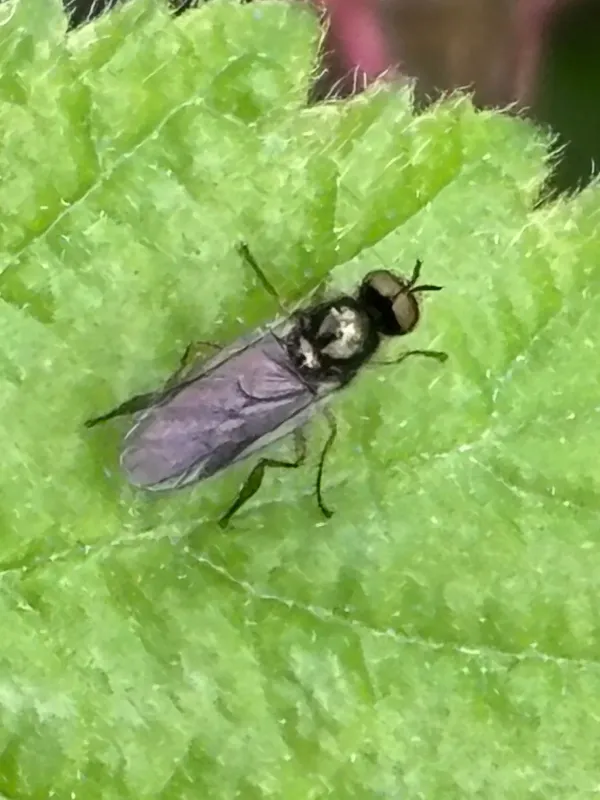
Description
How to identify
The Beris genus belongs to the family Stratiomyidae within the order Diptera. These soldier flies are generally small, often featuring metallic coloration, which allows for quick field identification by experienced agronomists.
The life cycle includes egg, larva, pupa, and adult stages. The larvae are notably resilient, often found in soil with high organic matter content or near decaying vegetation.
Physically, the larvae possess a flattened, sclerotized body that protects them in semi-aquatic or damp soil environments where they feed and develop.
While many soldier flies are beneficial decomposers, specific Beris species can reach population densities that pose risks to agriculture, especially in greenhouses or irrigated fields.
Differentiating between beneficial and harmful species is crucial, as misidentification can lead to unnecessary interventions that disrupt local insect populations.
What it damages
The primary agricultural concern arises from the larval stage, which feeds on the root systems and underground stems of various vegetable and horticultural crops.
Young seedlings are particularly vulnerable, as even minor damage to the root network can severely restrict nutrient uptake and cause stunted growth.
Large larvae populations can cause direct mortality in crop stands, leading to patchy fields that require intensive replanting efforts.
Beyond direct feeding, the wounds created by the larvae provide entry points for secondary pathogens, such as soft rot bacteria and various root-inhabiting fungi.
The economic impact is most pronounced in high-moisture agricultural systems where organic decomposition provides an ideal substrate for the flies to reproduce.
When it appears
Adult activity usually begins in late spring and continues throughout the summer, depending on the local climatic conditions and soil temperature.
Multiple generations can occur within a single growing season if the environment remains consistently warm and moist, extending the period of risk.
The peak emergence of adults often coincides with the germination and early vegetative phases of many annual crops, making timing critical for surveillance.
Larval activity intensifies as soil moisture levels rise, often following periods of heavy rain or excessive scheduled irrigation in the field.
By autumn, the larvae prepare for winter diapause, typically moving deeper into the soil profile to avoid freezing temperatures.
Signs of infestation
The first indicator of an infestation is often irregular plant emergence, with some seedlings failing to thrive while others appear healthy and vigorous.
If suspicious plants are excavated, the roots will often show visible feeding damage, such as shallow furrows or missing root hairs caused by larval activity.
Wilting during the day, even in well-irrigated fields, is a classic sign that the root system has been compromised by underground pests.
The physical presence of soldier fly larvae in the topsoil layer, often near the base of the plant, provides conclusive proof of the causal agent.
Yellowing of lower leaves is a secondary symptom caused by the plant's inability to maintain its physiological balance due to root damage.
Control measures
Effective management begins with strict field hygiene, including the removal of decaying organic matter that serves as a breeding ground for the flies.
Proper drainage systems are essential, as reducing soil moisture levels is one of the most effective ways to make the habitat unsuitable for larvae.
Deep autumn tillage is a recommended cultural practice that exposes larvae to the elements and natural predators, significantly reducing overwintering populations.
Crop rotation helps break the life cycle of the soldier fly by removing host plant availability in subsequent seasons.
When necessary, targeted application of entomopathogenic fungi or appropriate soil-applied insecticides can be used to control high-density larval populations.
Taxonomy
- Latin name
- Beris
- Order
- Diptera (flies)
- Family
- Stratiomyidae
- EPPO code
- BERISP
Discussion
No discussions yet — be the first.