
Beautiful soldier fly
Chloromyia formosa
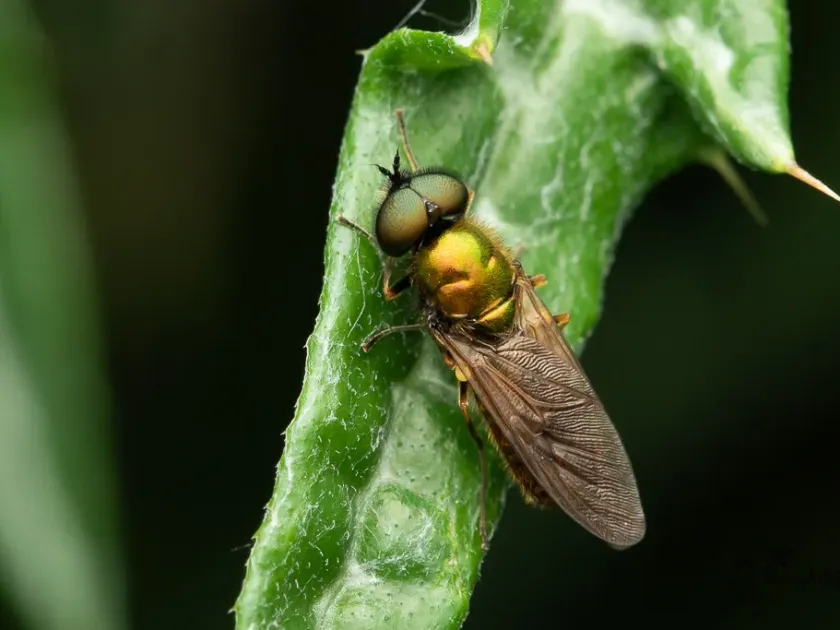
Description
How to identify
The Beautiful soldier fly (Chloromyia formosa) is a distinct species within the Stratiomyidae family, easily recognized by its metallic, emerald-green, or bronze appearance.
Adult flies typically reach 8 to 11 mm in length, with males characterized by larger eyes that meet at the top of the head, while females have broader abdomens.
The wings of the fly are mostly clear or slightly smoky, displaying the specific venation patterns that help entomologists distinguish this species from other look-alikes.
The legs of these insects show variations in color, ranging from black to yellowish-brown, depending on the specific environmental conditions of the population.
Larvae are flattened and encased in a hardened cuticle, an adaptation that helps them thrive in moist environments where they consume decaying matter.
What it damages
Chloromyia formosa is not classified as a primary crop pest because it lacks the mouthparts to feed on living, healthy plant tissue.
In agricultural settings, these flies are often considered beneficial or neutral because their larvae act as decomposers, accelerating the breakdown of organic material.
Potential issues may only arise if excessive rotting organic waste is allowed to accumulate directly against the base of sensitive crops or in greenhouse environments.
Under such conditions, larvae might accidentally interface with plant roots that have already succumbed to secondary bacterial or fungal decay.
Given their scavenging habits, they generally pose no threat to agricultural production and usually perform an essential role in soil nutrient cycling.
When it appears
Adults are most commonly observed during the warmer months, with peak activity levels recorded between late spring and mid-summer, specifically June and July.
The insect follows a complete metamorphosis life cycle: egg, larva, pupa, and adult, with the larval stage being the longest and most environmentally dependent.
Larvae typically overwinter in the soil or within decaying vegetation piles, remaining dormant until the spring soil temperature rises sufficiently.
Increased humidity and temperature are the main drivers for emergence, as these conditions are essential for the survival of the moisture-loving larvae.
Their flight patterns are synchronized with the blooming periods of local flora, as adults require nectar sources for energy during their reproductive phase.
Signs of infestation
The most reliable sign of their presence is the appearance of vibrant, metallic green flies buzzing around compost heaps or decaying vegetation.
Finding flattened, segmented brown larvae while turning garden soil or mulch is a strong indicator of an established population in the area.
Because they are not primary pests, the absence of leaf-rolling, mining, or necrotic lesions on the foliage is a key diagnostic feature.
Gardeners may observe higher activity in shaded or poorly drained areas where organic matter remains consistently wet for extended periods.
The presence of these flies is typically localized and does not correlate with widespread plant stress, confirming their non-predatory status on crops.
Control measures
Chemical control is rarely necessary and generally discouraged as the Beautiful soldier fly does not cause economic damage to agricultural crops.
Standard field sanitation practices, such as removing rotting plant debris from near crop rows, are more than sufficient to manage their numbers.
Improving soil drainage and aeration helps prevent the conditions that larvae prefer, effectively reducing their presence without the need for insecticides.
Maintaining a healthy, clean greenhouse environment prevents the accumulation of the moist organic substrates required for the flies to lay their eggs.
In conclusion, promoting overall plant health and good moisture management is the best strategy to keep these insects away from the immediate root zone.
Taxonomy
- Latin name
- Chloromyia formosa
- Order
- Diptera (flies)
- Family
- Stratiomyidae
- EPPO code
- CHMAFO
Discussion
No discussions yet — be the first.