
Altermetoponia
Altermetoponia
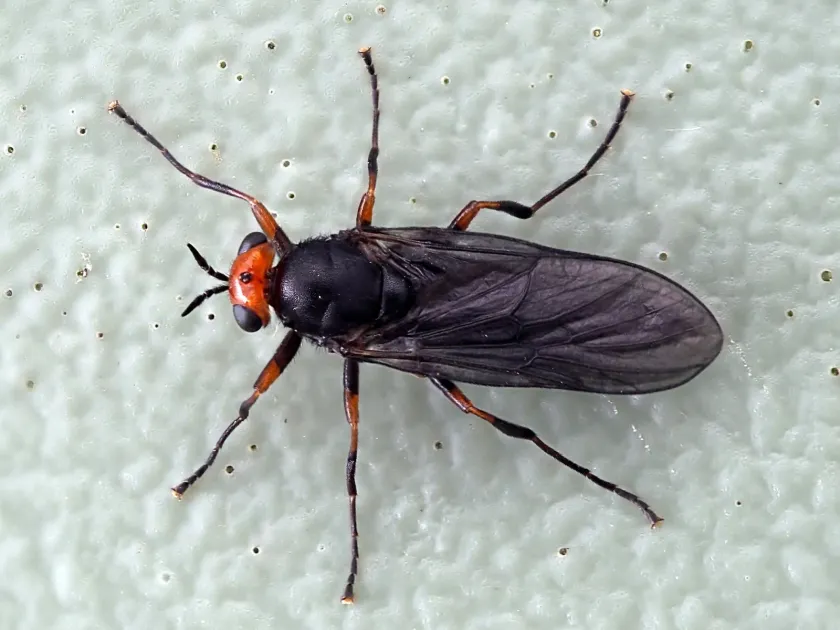
Description
How to identify
Altermetoponia is a genus of flies belonging to the family Stratiomyidae, order Diptera. These insects are characterized by a life cycle in which the larval stages often develop in moist soil environments, where they act as either decomposers or opportunists.
Adult flies are typically medium-sized and are often found in areas with high humidity, near decaying organic matter, or near the margins of water bodies. They are not usually the primary concern for agronomists, but their presence indicates favorable conditions for larval development.
The taxonomic classification of the genus Altermetoponia is primarily based on the morphology of the larval mouthparts and the structure of their abdominal segments. This specificity allows them to navigate and feed within soil and root tissues.
The insect undergoes complete metamorphosis: egg, larva, pupa, and adult. Each developmental stage is highly dependent on moisture levels, which act as a key limiting factor for population growth in agricultural settings.
Field identification of this pest requires careful soil sampling and examination of the root zone, as larvae are often hidden and difficult to detect without systematic scouting.
What it damages
The larvae of Altermetoponia are known to feed on the root systems and crowns of various crops, including cereals and vegetables. By consuming root tissue, they disrupt the plant's ability to transport nutrients and water.
Feeding damage is particularly severe in seedlings, which often fail to survive once their primary root structure is compromised. The result is uneven emergence and the formation of bare spots in the field.
In addition to direct mechanical damage, the larvae create entry points for secondary pathogens, such as root rot fungi and soil-borne bacteria. These pathogens significantly accelerate plant decline and mortality.
This pest thrives in waterlogged or poorly drained soils where organic content is high. In such conditions, the feeding pressure can be intense, leading to substantial yield losses across the affected areas.
Overall, the economic impact is measured by the reduction in stand density and the loss of vitality in surviving plants, which may lead to reduced yields at harvest time.
When it appears
The emergence of adults typically occurs in the late spring or early summer, following the warming of the soil. This timing coincides with the planting season, making young crops highly susceptible to infestation.
Larval activity spans the entire growing season but is most aggressive during the early development stages of the plants. During these periods, larvae move through the soil, actively seeking root tissue.
As the season progresses toward autumn, larvae continue to feed before finding suitable depths for overwintering. They usually remain in the soil profile, protected by organic matter or moist conditions.
Environmental conditions play a significant role in the population dynamics. High precipitation during the spring and summer months often creates optimal conditions for successful larval development.
Monitoring should be intensified after wet seasons, as environmental stressors that favor moisture retention in the soil generally support higher populations of this pest.
Signs of infestation
The most visible sign of an infestation is the sudden wilting or yellowing of plants in otherwise well-managed fields. When pulled, affected plants often have damaged or severed root systems.
Upon closer inspection, the presence of greyish larvae near the roots or within the basal stem tissue confirms the infestation. These larvae may be found in the immediate rhizosphere of the damaged plant.
In infested fields, patches of suppressed growth or completely dead plants may appear, creating an irregular pattern. The soil in these areas may also show signs of disturbance due to larval movement.
Plants affected by Altermetoponia are easily dislodged from the soil, as they lack a firm root anchor. This lack of root integrity is a hallmark of subterranean insect feeding.
Verification of the pest involves digging around the base of symptomatic plants and performing soil sifting to isolate the larvae for identification.
Control measures
Effective management begins with sound agronomic practices, such as deep autumn plowing, which disrupts the soil environment and exposes larvae to predators and desiccation.
Improving field drainage is a critical long-term strategy. Reducing soil moisture levels creates a less hospitable environment for Altermetoponia larvae and discourages their development.
Implementing crop rotation, especially with non-host crops, helps to break the life cycle of the insect and prevents the build-up of populations over successive growing seasons.
Seed treatments and soil-applied insecticides can provide protection for young crops during the most critical early growth phases, significantly reducing the impact of initial infestations.
Biological control, including the use of entomopathogenic fungi or nematodes, represents an environmentally friendly management option that can be highly effective in moist soil conditions.
Taxonomy
- Latin name
- Altermetoponia
- Order
- Diptera (flies)
- Family
- Stratiomyidae
- EPPO code
- ATMPSP
Discussion
No discussions yet — be the first.