
Chloromyia
Chloromyia
Description
How to identify
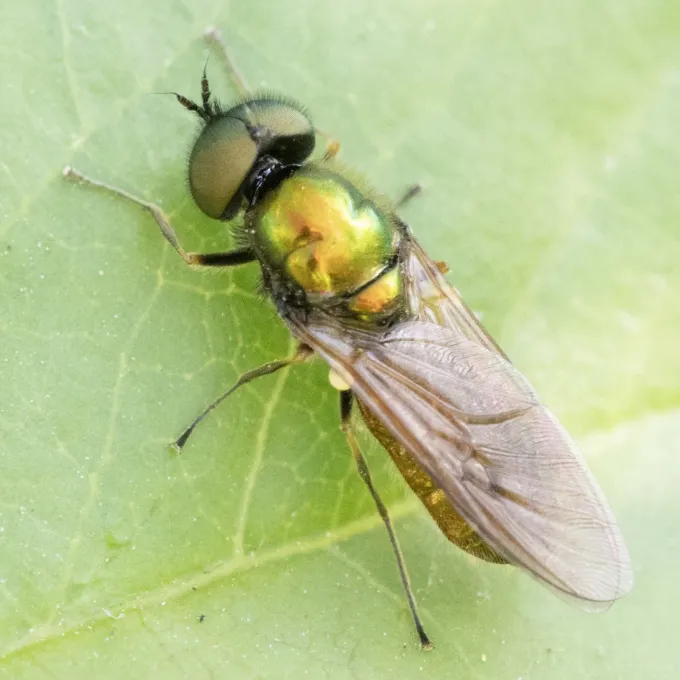
Chloromyia is a genus of insects belonging to the soldier fly family (Stratiomyidae) within the order Diptera, known for their distinct metallic appearance.
Adult flies are generally recognized by their shiny, often iridescent bodies, which differentiate them from other common dipteran pests found in fields.
The larvae, which are the stage capable of causing damage, have a flattened, segmented appearance that allows them to hide effectively within the soil matrix.
While most species are scavengers that feed on decaying organic matter, certain conditions can drive them to consume the roots of living plants.
Understanding their taxonomy is essential for farmers, as they are often confused with other harmless soil-dwelling organisms during routine crop scouting.
What it damages
The primary damage occurs when larvae feed on the roots and underground stems of seedlings, particularly in moist and nutrient-rich soil conditions.
Crops with tender root systems are the most vulnerable, especially during the early stages of development when the plant lacks established resilience.
Feeding larvae create small cavities and tunnels in the roots, which disrupts the transport of water and nutrients throughout the plant.
Such mechanical damage acts as a gateway for opportunistic pathogens, leading to secondary rot and potential plant death in severe infestations.
Over-reliance on fresh organic matter as fertilizer can increase the population density of these larvae, as it creates an ideal environment for egg-laying.
When it appears
The life cycle of Chloromyia is highly dependent on soil temperature and moisture, with peak activity occurring during the spring planting season.
Adult flies emerge in early summer, taking advantage of the warm weather to mate and deposit eggs in environments that will support the growing larvae.
The developmental phases are synchronized with the environmental cycles of the region, ensuring that larvae are active when food sources are abundant.
As autumn approaches, the larvae seek deeper soil layers or dense crop residue to protect themselves against the approaching cold weather.
In temperate climates, the larvae undergo diapause during winter months, resuming their activity as soon as soil temperatures reach favorable levels.
Signs of infestation
The first indicator of an infestation is often the sudden wilting or yellowing of seedlings that cannot be attributed to lack of water or nutrients.
Upon careful examination of the root zone, farmers may notice physical damage, such as missing root tips or scarred tissue on the main taproot.
The presence of metallic-looking adult flies hovering near the soil surface during late spring serves as a warning sign for potential larval activity.
Soil disturbances around the base of the plant may reveal the presence of larvae or their empty pupal cases, confirming the cause of the wilting.
Significant infestations often result in stunted growth and uneven crop stands, which become clearly visible as the growing season progresses.
Control measures
Integrated pest management strategies are crucial for controlling Chloromyia, focusing on soil sanitation and moisture management.
Deep plowing before planting helps to disturb larval habitats and exposes them to predators and harsh environmental conditions, reducing their numbers.
Ensuring that all organic matter is fully composted before incorporation into the soil prevents the creation of attractive sites for egg-laying.
Using certified, healthy seeds and implementing crop rotation helps to break the life cycle of the pest, making the field less favorable for colonization.
- Regular monitoring of soil health.
- Proper drainage to prevent waterlogging.
- Targeted soil treatments if thresholds are exceeded.
Taxonomy
- Latin name
- Chloromyia
- Order
- Diptera (flies)
- Family
- Stratiomyidae
- EPPO code
- CHMASP
Discussion
No discussions yet — be the first.