
Beris vallata
Beris vallata
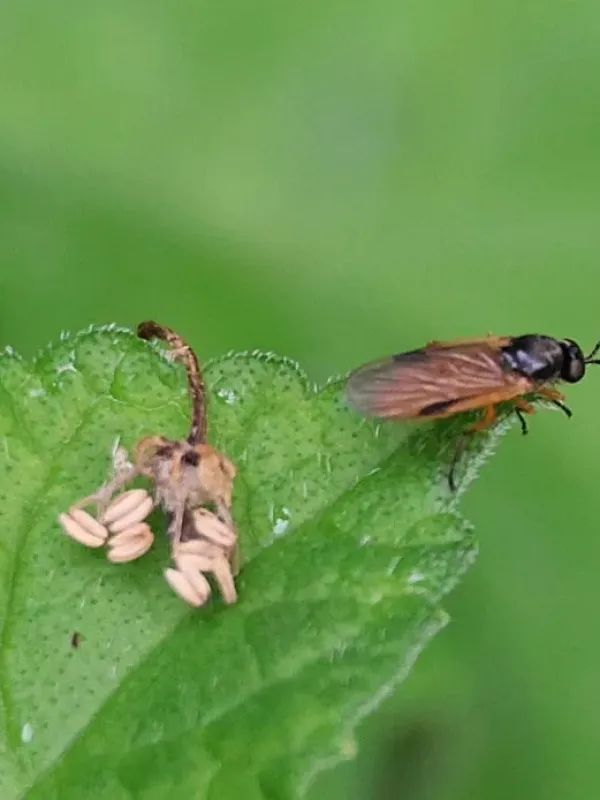
Description
How to identify
Beris vallata is a species of soldier fly belonging to the family Stratiomyidae. The adult flies are generally small with a metallic sheen, often displaying dark, bronze, or greenish colorations that distinguish them within their family.
Identifying this species requires careful observation, as it shares many physical characteristics with other harmless soldier fly species. Entomological identification by experts is necessary to distinguish between saprophagous (beneficial) and potentially harmful species.
The larvae are characterized by a flattened, tough-skinned body that allows them to thrive in moist environments, such as damp soil or decomposing organic matter, making them difficult to spot during routine field checks.
Identification is primarily based on the morphology of the larval mouthparts and abdominal segments. Agronomists should consult regional entomological guides to differentiate Beris vallata from other soil-dwelling insect larvae.
While adults feed on nectar and are generally harmless, the larvae are the primary focus of agricultural pest monitoring. Correct identification ensures that control measures are targeted only when necessary.
What it damages
Beris vallata is not typically an aggressive crop pest. It primarily affects plants that are already stressed or growing in poorly drained soil where the larvae find an abundance of organic matter.
The larvae may feed on the underground parts of young vegetable and cereal plants if their primary food source, such as rotting debris, is unavailable or if the soil moisture levels are exceptionally high.
Damage to the root system results in stunted plant growth, reduced vigor, and increased susceptibility to secondary infections by soil-borne pathogens, which often causes more damage than the larvae themselves.
In cases of severe infestation, the larvae can damage the root collar or seedling roots, leading to thinning of crop stands. This is more common in fields with improper crop management or poor soil drainage.
The economic threshold for this pest is usually high, meaning that direct damage to commercial yields is rare unless conditions are optimal for the larvae to switch to feeding on live plant tissues.
When it appears
The life cycle of Beris vallata is heavily dependent on soil temperature and humidity. Adult activity usually peaks during late spring and early summer, when mating and egg-laying occur.
The larvae undergo a prolonged development phase. They typically overwinter in the soil or under layers of damp organic debris, allowing them to survive winter temperatures effectively.
Pupation occurs in the spring, leading to the emergence of the next generation of adults. The timing of this emergence is closely linked to the warming of the soil, which triggers the end of the larval stage.
During the spring, when seeds are germinating and young roots are developing, larvae are most active. This is the period when they are most likely to interact with crops if the field is poorly managed.
As temperatures drop in the autumn, larvae move deeper into the soil profile to find stable conditions for overwintering, significantly reducing their impact on the field until the next growing season.
Signs of infestation
Signs of infestation include general plant stunting and uneven growth across the field, particularly in low-lying areas that retain moisture longer than the rest of the plot.
When investigating suspicious areas, digging around the roots may reveal chewed tissues or the presence of flattened, grayish-brown larvae in the soil surrounding the plant base.
Unexpected wilting of plants in well-irrigated fields can be a diagnostic sign of root damage caused by soil-dwelling insects, prompting the need for a targeted search for larvae.
The presence of large numbers of soldier flies on the soil surface during warm evenings may indicate a high population density that could potentially lead to larval feeding on nearby seedlings.
In many cases, the signs are subtle and are often confused with soil-borne diseases. A professional diagnosis involves confirming the presence of the larvae in the rhizosphere of the affected crops.
Control measures
Effective control relies on good agricultural practices. Deep plowing helps disrupt larval habitats and buries organic debris, which is essential for reducing the pest population in the soil.
Improving field drainage is a critical step. By reducing soil moisture, the environment becomes significantly less hospitable for Beris vallata larvae, which thrive in damp conditions.
Crop rotation is an effective preventive measure. By alternating host crops, you can break the life cycle of the larvae and reduce their ability to establish a permanent colony in a specific field.
Chemical control is rarely the first line of defense and should only be used if monitoring indicates that the population has exceeded economic thresholds, using soil-applied insecticides.
Removing crop residues and managing organic waste efficiently decreases the available food supply, making the field unattractive for egg-laying females during the following season.
Taxonomy
- Latin name
- Beris vallata
- Order
- Diptera (flies)
- Family
- Stratiomyidae
- EPPO code
- BERIVA
Discussion
No discussions yet — be the first.