
Stobaera
Stobaera
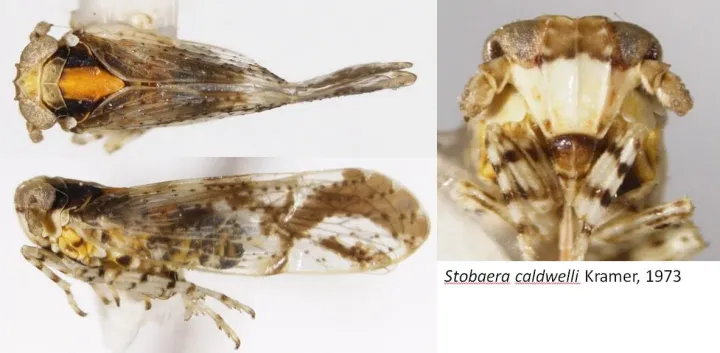
Description
How to identify
Stobaera is a genus of insects belonging to the order Hemiptera and the family Delphacidae. These are small, jumping planthoppers that often go unnoticed due to their cryptic behavior and tiny size.
Adults typically exhibit the classic body structure of delphacids, often featuring transparent wings with distinct venation patterns. Their coloration usually ranges from light yellow to brown, providing effective camouflage on plant stems.
The nymphs undergo several developmental stages, gradually assuming the appearance of adult insects. They can be identified by their characteristic jumping movements when the plant is disturbed.
These pests prefer to inhabit the lower parts of stems or leaf axils, where higher humidity provides optimal conditions for feeding and survival.
Accurate identification to the species level often requires professional examination of male genitalia, as many species within the genus are morphologically very similar.
What it damages
The primary hosts for Stobaera are various grasses, particularly those in the Poaceae family. In agricultural settings, they can negatively impact forage grasses and certain industrial crops.
They damage plants by piercing the epidermis with their piercing-sucking mouthparts to feed on phloem sap. This feeding process results in general plant weakness and metabolic disruption.
Beyond direct sap loss, Stobaera species are potential vectors for phytoplasmas and plant viruses. Even low pest populations can trigger the spread of diseases throughout a field.
Infestations lead to stunted growth, leaf curling, and yellowing of the foliage. In severe cases, significant portions of the crop may dry out and die prematurely.
The economic impact of Stobaera manifests as a reduction in green biomass yield and poor quality of harvested material due to disease transmission and tissue necrosis.
When it appears
The activity of Stobaera is heavily influenced by temperature and humidity levels within the agroecosystem. They are most active during the warmer months of the year.
After overwintering in the egg or nymph stage within plant debris, the first generation of adults typically emerges with the arrival of consistent spring temperatures.
Population peaks usually occur mid-summer, when stable, warm weather facilitates the rapid development of nymphs in dense colonies on host plants.
Stobaera can produce multiple generations per season, necessitating ongoing vigilance to prevent large-scale infestation across agricultural fields.
As autumn temperatures drop, insect activity decreases. They prepare for wintering by laying eggs or migrating to protected areas with sufficient plant cover to survive until the next season.
Signs of infestation
The first sign of infestation is the appearance of chlorotic spots on leaves, which gradually coalesce into necrotic tissue as the plant's structural integrity is compromised.
The presence of honeydew (a sticky secretion) on the leaf surface is another key indicator. This substance often promotes the growth of sooty mold, which physically interferes with photosynthesis.
Visual inspection may reveal deformed or twisted stems, resulting from localized feeding that disrupts the normal development of plant tissues.
Infested plants typically show significantly reduced growth rates compared to healthy areas, exhibiting signs of stress and stunted overall development.
A reliable field method for detection is to shake the plant stems, which triggers the jumping insects to fly off, revealing their presence to the observer.
Control measures
The primary control method involves cultural practices, such as the removal of weeds around field borders, which act as alternate hosts during the off-season.
Crop rotation and physical isolation of new plantings from heavily infested areas help disrupt the pest's life cycle and limit its ability to spread.
Chemical control is warranted if economic thresholds are exceeded, with systemic insecticides being the most effective way to reach the insects feeding within plant tissues.
Biological control methods include supporting natural enemies such as predatory bugs, spiders, and parasitoid wasps, which play a crucial role in suppressing population growth.
Monitoring using yellow sticky traps is an essential strategy for detecting the onset of adult flights, allowing farmers to apply timely interventions before damage becomes widespread.
Taxonomy
- Latin name
- Stobaera
- Order
- Hemiptera (bugs, aphids, leafhoppers)
- Family
- Delphacidae
- EPPO code
- STOBSP
Discussion
No discussions yet — be the first.