
Stenoptilodes taprobanes
Stenoptilodes taprobanes
Description
How to identify
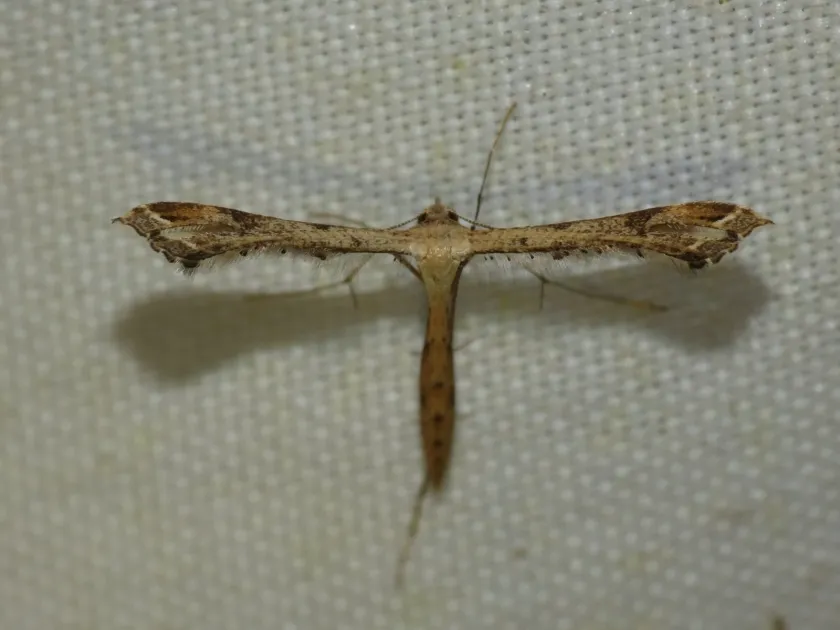
Stenoptilodes taprobanes, commonly known as a type of plume moth, belongs to the family Pterophoridae. The adult moth is characterized by its uniquely shaped, split wings that resemble thin feathers or fingers.
These moths are typically small with a wingspan ranging from 15 to 20 mm, and they display color patterns that vary from light tan to pale brown, providing camouflage.
The larvae are typically greenish or yellowish with sparse hair, allowing them to blend into the foliage and stems of host plants while they feed.
The lifecycle includes complete metamorphosis: egg, larva, pupa, and adult. In controlled greenhouse environments, breeding can occur throughout the year.
These pests are highly adapted to stable climates and can rapidly increase their population density if not managed promptly upon detection.
What it damages
The primary host plants for Stenoptilodes taprobanes are ornamental crops, with a particular affinity for greenhouse-grown chrysanthemums.
The larvae are the main destructive stage, causing damage by feeding on young buds, apical meristems, and tender leaf tissues of the plants.
By tunneling into the developing buds, the larvae destroy the floral potential of the plant, leading to significant economic losses for commercial growers.
Apart from cultivated flowers, the pest may occasionally survive on related weed species, which can act as a reservoir for infestations.
Heavy infestations not only destroy current flower production but also stunt the plant's overall growth, making them non-marketable.
Signs of infestation
Early infestation signs include minute entry holes in buds or leaves, which may go unnoticed until the damage progresses significantly.
Deformed, stunted, or partially withered buds that fail to open correctly are common indicators that a larva has been feeding inside.
The presence of fine silken webbing used by the larvae to bind leaves or petals together is a definitive sign of active infestation.
Frass (larval excrement) appearing as dark, granular deposits on leaves or near the base of the flower heads indicates recent larval activity.
Wilting of the terminal shoot, often mistaken for a water-related issue or fungal disease, is frequently caused by larval feeding in the growth point.
Control measures
Integrated Pest Management (IPM) should begin with the deployment of pheromone traps to monitor adult moth activity and time insecticide applications.
Strict sanitation practices, such as the removal and destruction of crop debris and nearby weeds, are essential to break the pest's lifecycle.
Biological control agents, including specific Bacillus thuringiensis strains or predatory mites, can be effective in reducing larval populations.
Systemic insecticides are generally the most effective chemical choice because they target the larvae hidden within the plant tissues.
Regular scouting and quarantine protocols for incoming plant materials are vital to prevent the introduction and spread of this pest into greenhouses.
Taxonomy
- Latin name
- Stenoptilodes taprobanes
- Order
- Lepidoptera (butterflies)
- Family
- Pterophoridae
- EPPO code
- STPDTA
Discussion
No discussions yet — be the first.