
Anstenoptilia
Anstenoptilia
Description
How to identify
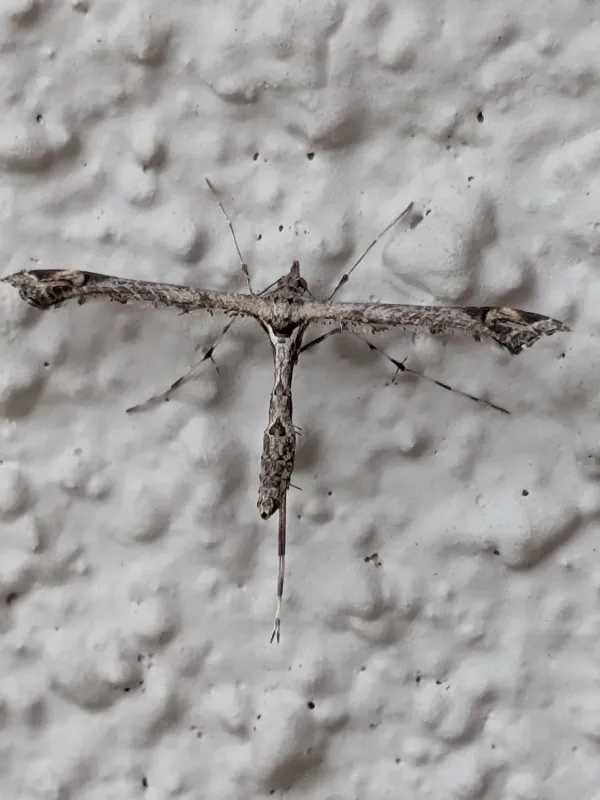
Anstenoptilia is a genus of moths belonging to the family Pterophoridae, known as plume moths, within the order Lepidoptera. These moths are characterized by their deeply cleft wings, which give them a feather-like or finger-like appearance, a distinguishing feature of the entire family.
Adult moths are typically cryptic in color, ranging from ochre to greyish tones, which provides them with excellent camouflage against plant debris and stems. Their bodies are narrow and elongated, supported by long legs that allow them to perch effectively on plant surfaces.
The larvae of Anstenoptilia often exhibit specific morphological features, such as dense hairs or fleshy projections on their body segments. This appearance helps them blend into the foliage and stems of their host plants, remaining largely invisible to predators and observers.
Accurate identification to the species level often requires a microscopic examination of the male and female genitalia, as many species within the Pterophoridae family are externally similar. In the field, agronomic identification is usually based on the association with specific host plants and the patterns of damage observed.
Their life cycle consists of complete metamorphosis, moving through egg, larval, pupal, and adult stages. Each stage is strictly correlated with the phenology of the host plant and local climatic conditions, ensuring the survival and proliferation of the population.
What it damages
Anstenoptilia larvae are specialized phytophagous insects that target a range of herbaceous plants, primarily within the families Lamiaceae and Asteraceae. In agricultural settings, they can cause significant damage to both wild flora and specific crop varieties.
The larvae feed on various plant structures, including leaves, buds, and flowers. They frequently bore into the flower heads or developing seeds, hollowing them out, which often leads to the total loss of the seed harvest for the affected plant.
The injuries caused by larvae weaken the host plant, rendering it susceptible to secondary infections by bacteria and fungi. Furthermore, larvae burrowing into the stems disrupt the plant's vascular system, hindering nutrient and water transport and causing structural deformation.
The severity of the damage is directly linked to the population density of the pest. During years of heavy infestation, Anstenoptilia can devastate entire fields, necessitating robust phytosanitary measures to mitigate economic losses.
The damage also negatively impacts the quality of the green mass, which is a major concern for crops grown for fodder or medicinal purposes. Affected plant parts typically wither rapidly or succumb to secondary decay, rendering them unmarketable.
When it appears
Adult Anstenoptilia activity begins with the arrival of warmer weather, typically in late spring or early summer. A stable temperature above +15°C acts as a trigger for moth emergence and the subsequent egg-laying cycle.
The period of peak larval damage occurs in the latter half of summer, coinciding with the active vegetative and reproductive development of host plants. During this stage, larvae feed voraciously on plant tissues in preparation for pupation.
The number of generations per year can vary, ranging from a single generation to multiple, depending on the specific species and the latitude of the infestation. In warmer climates, continuous breeding throughout the season is possible, posing a high risk to crop productivity.
Overwintering typically takes place in the pupal stage or as a mature larva, hidden in the soil, beneath plant litter, or within the hollows of dried stems. Emergence in spring is synchronized with the new growth phase of their host plants.
Effective monitoring involves the use of pheromone traps or systematic visual inspections of flower buds, especially during the early morning hours when the moths are less active and more easily spotted on the vegetation.
Signs of infestation
The first signs of infestation are often minute entry holes in buds or stems, accompanied by small accumulations of larval frass (excrement). These indicators are often subtle and require close inspection to be noticed.
Deformed flower heads and premature flower drop are strong indicators that a larva is feeding internally. Often, the external appearance of the bloom remains deceptively intact, even while the interior is being consumed.
Stunted growth or curling of young shoots often signals that larvae have damaged the growing points of the plant. Peeling back the epidermis of the stem often reveals galleries filled with brownish waste, confirming the presence of the larvae.
Larvae frequently use silk threads to bind leaves together, creating protective shelters. These small webs in the upper foliage or around the flower buds are classic diagnostic signs of Pterophoridae presence.
- visible frass on the leaves;
- deformed or hollowed flower buds;
- silk-bound webs within inflorescences;
- wilting and necrosis of apical shoots;
- premature chlorosis and leaf fall.
Control measures
An integrated pest management (IPM) approach is essential. Cultural control measures, such as deep autumn ploughing, are highly effective in burying pupae and disrupting the life cycle, thereby reducing the overwintering population for the next season.
Sanitation is a critical control method, involving the thorough removal and destruction of weeds and infested plant residues. By eliminating potential shelter sites, growers can significantly lower the pest pressure on their main crops.
When infestation levels exceed the economic threshold, biological control agents such as Bacillus thuringiensis sprays can be used. These are effective against early-instar larvae and are generally safer for non-target beneficial insects.
Chemical control with systemic insecticides may be necessary during peak larval emergence. Applications must be strictly aligned with label guidelines and regional regulations, ensuring adherence to pre-harvest intervals to guarantee food safety.
The encouragement of natural predators and parasitoids, such as Trichogramma egg parasitoids, helps maintain a natural balance and suppresses population spikes of Anstenoptilia without the excessive use of broad-spectrum pesticides.
Taxonomy
- Latin name
- Anstenoptilia
- Order
- Lepidoptera (butterflies)
- Family
- Pterophoridae
- EPPO code
- ANSNSP
Discussion
No discussions yet — be the first.