
Diacrotricha
Diacrotricha
Description
How to identify
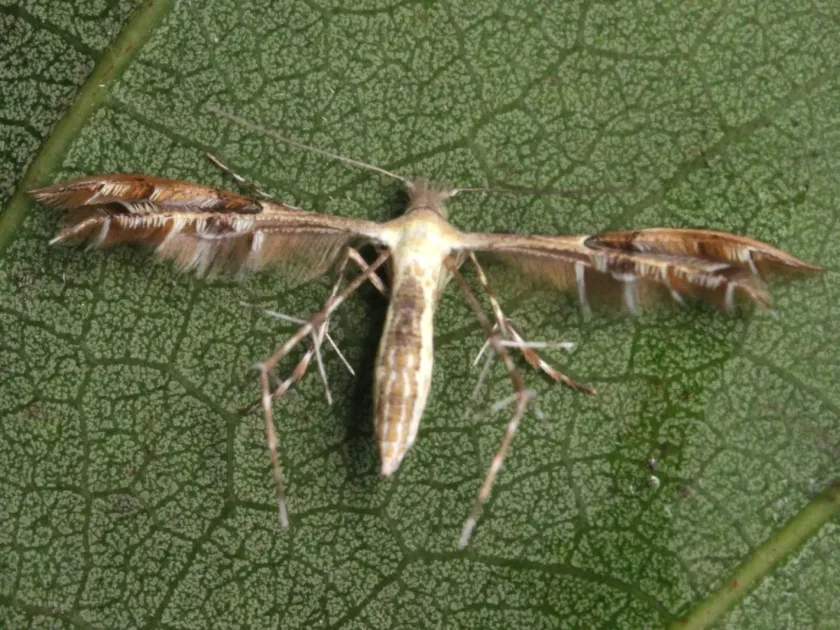
Diacrotricha is a genus of moths belonging to the Pterophoridae family, commonly known as plume moths. These insects are easily recognized by their unique wing structure, where the wings are deeply cleft into narrow, feather-like segments.
Adult moths are typically small and possess a cryptic coloration, which provides excellent camouflage against bark and plant stems. Their larvae are often covered with setae or bristles, helping them blend into the floral structures of their host plants.
The life cycle involves complete metamorphosis, consisting of the egg, larval, pupal, and adult stages. The duration of each stage is highly dependent on ambient temperature and humidity levels in the tropical environments they inhabit.
Because they are nocturnal and spend much of their time feeding internally within buds or fruits, detection of this pest is challenging and usually requires careful monitoring of the plantation.
As specialists in tropical ecosystems, these moths have evolved to synchronize their reproduction cycles with the flowering and fruiting periods of their specific host plants, ensuring maximum survival for the larvae.
What it damages
The primary hosts for Diacrotricha are plants in the Oxalidaceae family, with the starfruit (Averrhoa carambola) being the most economically significant crop impacted by this insect.
The larval stage is the most destructive, as they penetrate young flower buds and developing fruits. By feeding on the internal tissues, they prevent proper fruit development and cause massive premature fruit drop.
When fruit is damaged later in its development, the larvae create tunnels inside the pulp, which leads to tissue necrosis and invites secondary rot and fungal infections, effectively rendering the fruit unmarketable.
The economic impact of this pest can be severe, often leading to a significant loss of yield. In some regions, without intervention, infestation rates can jeopardize the financial viability of fruit orchards.
The intensity of damage is often correlated with the flowering density; however, the presence of the pest is consistent throughout the fruiting season, leading to cumulative losses if left unchecked.
Signs of infestation
The most immediate sign of infestation is the premature shedding of flower buds that appear intact on the outside but show signs of internal feeding when opened.
Visual inspections of fruits may reveal small, circular entry holes accompanied by brownish frass (larval excrement). These marks are clear indicators that a larva has successfully penetrated the fruit.
Deformed or asymmetrical fruit development is another hallmark of larval presence, as the internal damage disrupts the growth of the fruit structure during the maturation process.
Adult moths are typically observed at night. Using light traps or pheromone baits can help growers estimate population levels and determine the precise timing for intervention.
- Premature dropping of buds and small fruit.
- Small entry holes on the skin of the starfruit.
- Presence of larval frass on the fruit surface.
- Distorted fruit shape at harvest.
- Increased incidence of fungal rotting in damaged buds.
Control measures
Sanitation is the cornerstone of effective management. Growers must remove and dispose of all dropped fruit and withered buds, as these serve as reservoirs for the next generation of the pest.
Biological control agents, such as selective bacteria-based insecticides, provide a powerful tool to manage larvae without harming non-target beneficial insects or pollinators in the orchard.
Chemical control should be implemented strategically during the flowering and fruit-setting stages. It is crucial to rotate insecticides to prevent the development of resistance in the moth population.
Regular monitoring through orchard scouting and the use of light traps allows for precise application of pesticides, reducing overall chemical usage and production costs.
Enhancing tree health through proper fertilization and pruning improves the plant's resilience, helping it to better withstand and recover from light infestations of the larvae.
Taxonomy
- Latin name
- Diacrotricha
- Order
- Lepidoptera (butterflies)
- Family
- Pterophoridae
- EPPO code
- DCRTSP
Discussion
No discussions yet — be the first.