
Geranium plume moth
Amblyptilia pica
Description
How to identify
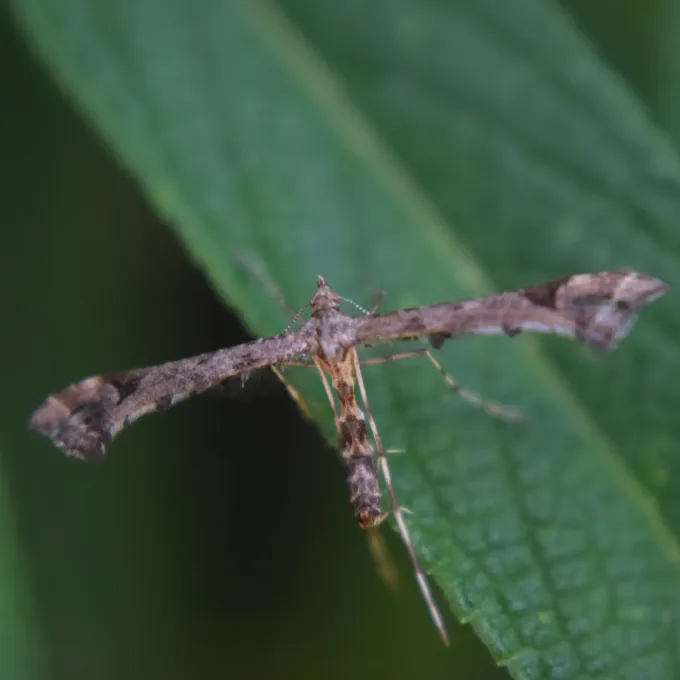
The geranium plume moth (Amblyptilia pica) is a member of the Pterophoridae family, order Lepidoptera. Adult moths are easily distinguished by their unique wing structure, where the forewings and hindwings are divided into lobes, creating a feather-like appearance.
When resting, these moths hold their wings extended horizontally or tightly rolled, resembling a piece of dried plant debris. This cryptic coloration and behavior serve as an effective camouflage against potential predators in their natural habitat.
The lifecycle begins with small, oval eggs deposited by the female on the undersides of leaves or near flower buds. These eggs typically hatch into larvae that are highly active and voracious from the very first instar.
The larvae, or caterpillars, are the stage responsible for the primary damage. They are often covered in fine setae and display distinct patterns or coloration, which may change as they molt through several larval stages.
Pupation occurs on the host plant. The pupae are typically naked, often attached to the stems or leaves with a small amount of silk, and their color blends seamlessly with the plant's texture, making them difficult to detect.
What it damages
The primary hosts of this pest are plants within the Geraniaceae family, with a particular affinity for Pelargonium species. These plants are often grown as decorative ornamentals, making the damage economically significant.
Larvae consume foliage, creating irregular holes and skeletonizing leaves. In severe infestations, the entire leaf surface may be destroyed, leaving only the primary veins, which causes the plant to lose its vitality.
Flower buds are a preferred food source, and their destruction often prevents the plant from flowering entirely. This results in a significant reduction in the decorative quality of the geranium, rendering it unsuitable for sale or display.
Furthermore, the larval feeding creates entry points for secondary infections. Fungal spores and bacteria can easily invade the wounded plant tissues, leading to rot that can spread throughout the entire plant.
In commercial greenhouse environments, the geranium plume moth can rapidly multiply, leading to widespread loss of greenhouse inventory and the need for frequent, costly intervention strategies.
When it appears
In outdoor garden settings, the geranium plume moth emerges in the spring when temperatures consistently reach favorable levels. Multiple generations can occur throughout the growing season, especially in temperate climates.
Peak activity generally occurs mid-summer when the plant growth is most vigorous, providing an abundance of tender buds and leaves. High humidity levels combined with moderate heat can accelerate the insect's development cycle.
Overwintering typically occurs as pupae or adults in protected locations. These include garden debris, leaf litter, cracks in pots, or even in the soil medium near the base of the perennial host plants.
Within protected greenhouse structures, the geranium plume moth can thrive year-round if temperatures remain stable. This lack of a true winter dormancy period poses a constant threat to year-round flower production.
Effective management requires monitoring throughout the year. Agronomists emphasize that early intervention during the first flush of spring growth is essential to prevent large-scale outbreaks later in the summer.
Signs of infestation
One of the earliest and most recognizable signs of an infestation is the presence of silk webbing. Larvae often use this silk to tie leaf margins together or to enclose buds, protecting themselves from predators.
Dark, granular frass (excrement) deposited on the leaves below the feeding site is a definitive indicator of larval activity. This sign is often visible before the actual insects are spotted.
Distorted or stunted plant growth, particularly at the growing tips or within flower trusses, often suggests that a larva is feeding inside the bud or at the stem apex, hindering proper development.
Holes in the leaves that appear "shredded" or have irregular, frayed edges are common indicators. These holes are typically located in the newer, softer foliage where the caterpillars prefer to feed.
The presence of aborted or yellowing flower buds that fall off the plant before blooming is another classic sign, indicating that the moth's larvae have destroyed the internal reproductive structures of the flower.
Control measures
Sanitation is the cornerstone of control. Regularly removing and destroying damaged leaves, buds, and fallen debris helps eliminate the moth's pupae and prevents the next generation from emerging.
Biological control using Bacillus thuringiensis (Bt) has proven effective, especially when applied early in the larval stage. This bacterium is selective and minimizes impact on beneficial insect populations.
Chemical control involving systemic insecticides is often necessary for significant infestations. These products are absorbed by the plant, making its tissues toxic to the larvae as they feed.
Yellow sticky traps can be employed within greenhouses to monitor adult moth populations. These traps help determine the timing of the flights and allow for more precise insecticide applications.
Cultural practices, such as maintaining adequate space between plants to improve airflow and avoiding excessive nitrogen fertilization, help keep the plants strong and less susceptible to severe pest pressure.
Taxonomy
- Latin name
- Amblyptilia pica
- Order
- Lepidoptera (butterflies)
- Family
- Pterophoridae
- EPPO code
- PLALPI
Discussion
No discussions yet — be the first.