
Carambola moth
Diacrotricha fasciola
Description
How to identify
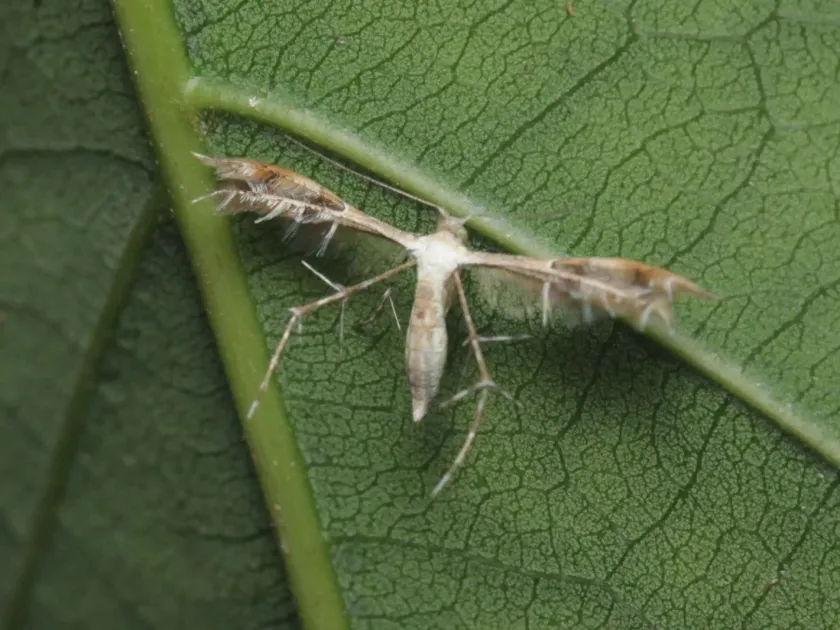
The carambola moth (Diacrotricha fasciola) is a small insect belonging to the order Lepidoptera and the family Pterophoridae, commonly known as plume moths.
Adult moths are characterized by narrow, deeply cleft wings that fold along the body when at rest, giving the insect a distinct, twig-like appearance.
The coloration of the wings typically ranges from yellowish-brown to grey, providing excellent camouflage against the bark and stems of the host plant.
The larvae are cylindrical, covered in fine setae, and usually exhibit a greenish or yellowish-cream hue, which blends perfectly with the host's floral tissues.
The life cycle undergoes complete metamorphosis, consisting of egg, larva (caterpillar), pupa, and adult stages, with each stage adapted to specific host plant tissues.
What it damages
The primary host plant for this pest is the carambola (Averrhoa carambola), also known as the starfruit, a popular tropical fruit crop.
The larvae primarily target the reproductive parts of the tree, specifically feeding on the internal tissues of developing flower buds and young fruit.
By boring into the young fruit, the larvae create internal tunnels that cause premature fruit drop and significant deformation of the harvestable product.
In severe infestations, the pest can cause substantial yield loss, rendering a high percentage of the starfruit crop unsuitable for export or commercial sale.
The wounds caused by larval feeding often serve as entry points for secondary fungal and bacterial pathogens, which further exacerbate the loss of fruit.
When it appears
The biology of the carambola moth is closely synchronized with the flowering and fruiting phenology of the starfruit tree, which can produce fruit throughout the year.
Adults are most active during peak flowering periods, as this stage provides the necessary resources for oviposition and the development of the first instar larvae.
Given the favorable tropical environment, the moth is capable of completing multiple overlapping generations per year, making constant vigilance necessary.
High temperatures and humidity typically accelerate the larval development rate, leading to faster population surges during the rainy season.
The pest demonstrates significant plasticity in its life cycle, allowing it to survive in various developmental stages depending on the current plant growth phase.
Signs of infestation
The most visible sign of infestation is the presence of withered, deformed, or darkened flower buds that fail to open or develop into fruit.
Closer inspection of the affected buds reveals the presence of frass (larval excrement), which appears as small, dark granular deposits within the damaged tissues.
Young fruit may show characteristic entry holes where the larvae have bored inside, often accompanied by sap flow or localized necrosis around the site.
Frequent premature fruit drop is a strong indicator of an active moth population within the tree canopy, requiring immediate intervention.
- Stunted or blackened flower buds.
- Visible silk webbing within the flower clusters.
- Deformed fruit development due to internal larval feeding.
Control measures
An effective management strategy for the carambola moth requires an integrated approach combining cultural, physical, and chemical control methods.
Cultural practices, such as the systematic removal and destruction of fallen or infested buds, are critical to reducing the local population of the pest.
Light traps can be deployed in orchards to monitor adult flight activity and significantly reduce the number of egg-laying females in the field.
Biological control, using specific entomopathogenic bacteria or naturally occurring predators, is an environmentally friendly way to suppress larval populations.
When infestation levels exceed economic thresholds, the use of targeted insecticides may be necessary, provided that harvest safety intervals are strictly observed.
Taxonomy
- Latin name
- Diacrotricha fasciola
- Order
- Lepidoptera (butterflies)
- Family
- Pterophoridae
- EPPO code
- DCRTFA
Discussion
No discussions yet — be the first.