
Rose plume moth
Cnaemidophorus rhododactylus
Description
How to identify
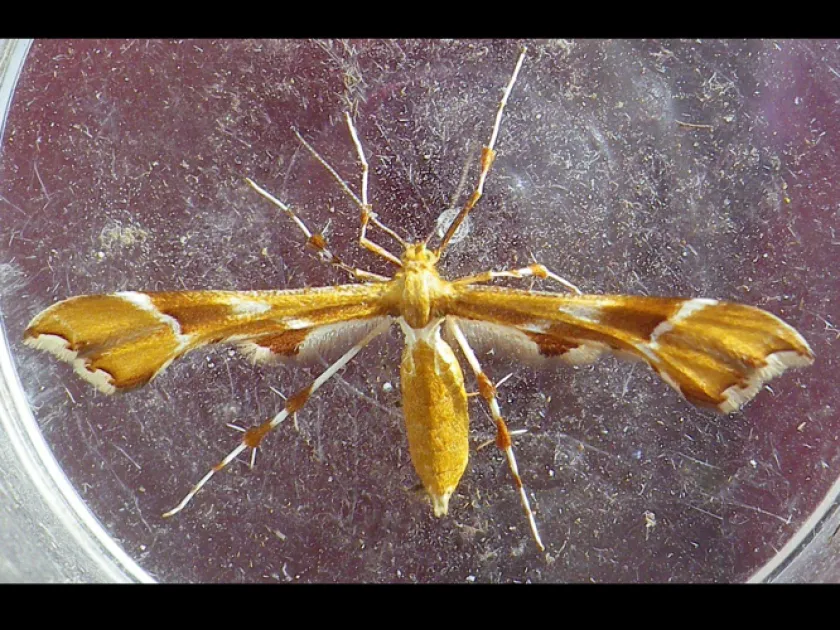
The rose plume moth (Cnaemidophorus rhododactylus) is a small nocturnal moth belonging to the Pterophoridae family. It is easily identified by its unique wings, which are deeply cleft into narrow, feather-like lobes, giving the insect a distinct appearance.
The wingspan of an adult moth is approximately 20–25 mm. The coloration typically ranges from ochre-brown to a soft pinkish hue, which provides excellent camouflage against rose petals and dry vegetation.
The larva (caterpillar) of this pest grows up to 15 mm long. It is covered in sparse, short hairs and features a greenish body with a lighter stripe along the back, blending perfectly with rose stems and buds.
The life cycle consists of one generation per year. The insect typically overwinters as a first-instar larva in sheltered areas on the rose bush or within plant debris, becoming active again in early spring.
Pupation occurs directly on the host plant, usually on the flower stalks or beneath folded leaves, where the pupa is secured with a small silk girdle.
What it damages
The primary hosts for this pest are members of the Rosa genus, including both wild species and garden roses. The larvae specifically target the reproductive parts of the plant.
Caterpillars bore into the developing flower buds, consuming the tissues from the inside out. This frequently leads to the total destruction of the bloom before it has a chance to open.
In addition to buds, larvae may feed on young leaves and shoots, spinning them together with silk to create protective clusters. This webbing shields the pest from predators and environmental stress.
In cases of heavy infestation, the rose plume moth can significantly impair the ornamental value of roses, leading to widespread loss of blooms across the entire plant.
Damaged buds often display signs of deformity, internal tissue loss, and the presence of frass (excrement) near the entrance holes, which can also invite secondary fungal infections.
When it appears
Activity commences in the spring as temperatures rise. Overwintered larvae emerge to feed on the tender growth and the earliest forming buds of the season.
Adult moth flight typically occurs during the summer months, from June through July. During this time, mating takes place, followed by females laying individual or small clusters of eggs on buds and young foliage.
The incubation period for the eggs is relatively short, leading to a new generation of larvae that continues to feed throughout the warmer parts of the season.
By autumn, larvae finalize their development and seek overwintering sites, often hiding in crevices on the plant or in the leaf litter at the base of the bushes.
The most critical window for monitoring and management is the spring bud-formation stage, when the larvae are most actively causing irreversible damage to future flowers.
Signs of infestation
The most prominent sign of infestation is the appearance of silk webbing on the tips of unopened buds. The caterpillar uses this web to bind petals together, hindering normal growth.
Close inspection of the buds often reveals small entrance holes near the base of the bud or the peduncle, indicating where the larva has bored into the plant tissue.
Stunted development, wilting of terminal shoots, or buds that appear prematurely dry are strong indicators of larval activity within the interior of the plant structure.
Small, dark granular deposits of frass near the entrance holes are definitive evidence that a larva is currently feeding inside the bud.
If a bud opens partially and appears misshapen, with ragged or eaten petals, it serves as a clear confirmation of Cnaemidophorus rhododactylus activity.
Control measures
In home gardens, manual removal of larvae and infested buds is an effective control strategy. All collected material should be discarded away from the garden site.
Sanitation is essential; thorough autumn pruning and the removal of fallen leaves from the base of bushes help eliminate overwintering sites, reducing the next year's population.
Chemical control involving systemic or contact insecticides can be effective if applied early, before the larvae have fully bored into the buds to protect themselves.
Biological control agents, such as formulations containing Bacillus thuringiensis, are highly effective against young larvae and are safer for beneficial insects and the environment.
Maintaining vigorous plant health through proper fertilization and watering helps roses recover more effectively and increases their overall resilience against pest damage.
Taxonomy
- Latin name
- Cnaemidophorus rhododactylus
- Order
- Lepidoptera (butterflies)
- Family
- Pterophoridae
- EPPO code
- EUCNRH
Discussion
No discussions yet — be the first.