
Marble plume moth
Anstenoptilia marmarodactyla
Description
How to identify
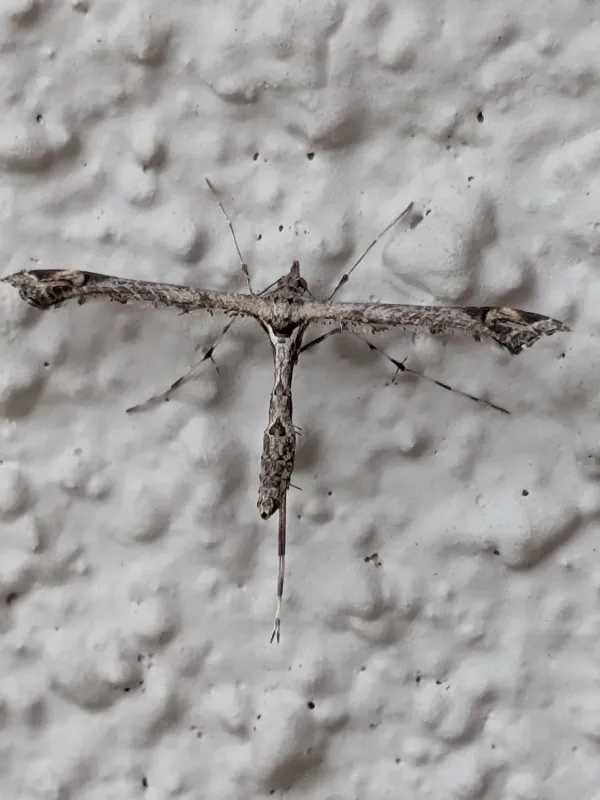
The marble plume moth (Anstenoptilia marmarodactyla) belongs to the Pterophoridae family, order Lepidoptera. It is recognized by its narrow, deeply cleft wings that resemble feathers or plumes, a diagnostic feature of all plume moths.
Adult moths possess a unique marble-like pattern on their forewings, which provides excellent camouflage against plant stems and buds. Their size is relatively small, making them easy to overlook in natural habitats.
Larvae are typically small, hairy, and match the color of their host plant's tissues, allowing them to feed cryptically within the floral structures of their food source.
The life cycle involves complete metamorphosis, where the moth passes through the stages of egg, larva (caterpillar), pupa, and adult. The timing of each stage is highly dependent on local climate conditions and host plant availability.
Accurate species identification often requires specialized entomological study, particularly focusing on the wing patterns and internal structures that separate this species from others in the genus Anstenoptilia.
What it damages
The primary host plants for this species are members of the Lamiaceae family, with particular preference for various species of sage (Salvia) and related ornamental plants.
The damage is primarily caused by the larvae, which bore into the developing buds to feed on the inner reproductive parts, such as anthers and ovules, essentially destroying the flower before it blooms.
Impacted buds often become stunted, distorted, or wither completely. This not only ruins the aesthetic quality of the plants but also severely limits seed production if the plant is grown for propagation.
High population densities of this pest can lead to a significant decrease in flowering capacity, weakening the plant's overall health and vigor during the growing season.
Because the larvae live inside the buds, the signs of infestation are often limited to minor holes or the sudden browning of unopened flowers, which makes early detection difficult.
Control measures
The most effective cultural practice is the manual removal and destruction of infested buds as soon as they are identified to prevent larvae from completing their life cycle and pupating.
Biological control using formulations of Bacillus thuringiensis can be very effective, especially when applied early in the larval stage before the caterpillar is fully protected inside the flower bud.
Chemical control options include the use of selective insecticides applied during the peak flight period of the adults or during the early larval stage; however, timing is critical to ensure the chemical reaches the target.
Monitoring using pheromone or light traps is recommended for professional growers to establish a precise treatment schedule based on the actual activity of the moth population.
- Sanitation: clearing host-related weeds in the garden area.
- Encouraging natural predators such as parasitic wasps.
- Targeted insecticide applications during the pre-blooming phase.
Taxonomy
- Latin name
- Anstenoptilia marmarodactyla
- Order
- Lepidoptera (butterflies)
- Family
- Pterophoridae
- EPPO code
- ANSNMA
Discussion
No discussions yet — be the first.