
Common plume moth
Stenoptilia bipunctidactyla
Description
How to identify
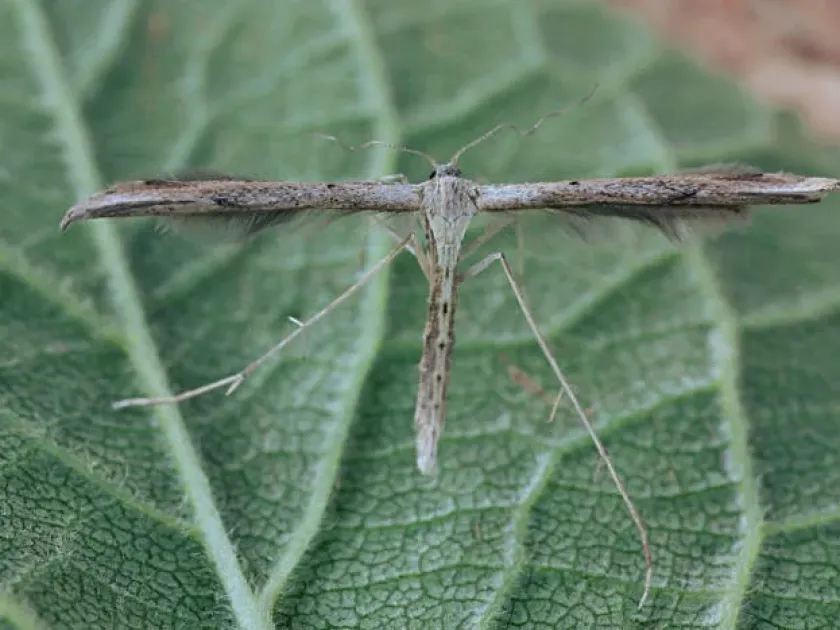
The Stenoptilia bipunctidactyla, known as the common plume moth, belongs to the family Pterophoridae. These moths are easily identified by their unique wing structure, where the wings are deeply cleft into plumose lobes, giving them a feathery appearance.
When at rest, these moths hold their wings extended horizontally, creating a distinct 'T' shape. Their coloration ranges from grayish-brown to ochre, which serves as effective camouflage against the dried or brown parts of their host plants.
The larvae, or caterpillars, are cylindrical and covered in short, fine hairs. They are usually pale green or yellowish-green, often featuring a darker longitudinal stripe down their back to blend in with the stems and foliage.
Pupae are elongated and typically attached to stems or the underside of leaves with a fine silk girdle. They may exhibit slight movement if disturbed, which is a defensive mechanism against potential predators.
The life cycle encompasses a complete metamorphosis through egg, larva, pupa, and adult stages. Depending on the environmental conditions, they may produce multiple generations per year, increasing their potential impact.
What it damages
The primary hosts for this species are members of the Dipsacaceae family, including genera such as Scabiosa, Knautia, and Dipsacus. These plants are often used in ornamental gardening and meadows.
Larvae are responsible for the damage, as they feed voraciously on both foliage and reproductive structures. They are particularly destructive when they invade flower buds, preventing the plant from blooming properly.
By consuming the developing seeds and flower tissues, the larvae drastically reduce the ornamental value of the plant. In seed production fields, this can lead to significant economic losses for growers.
In addition to direct tissue consumption, the presence of larvae leads to secondary complications. The wounds created by their feeding become entry points for fungi and bacteria, causing necrotic spots and rotting.
Heavily infested plants may show stunted growth and loss of vitality. The structural integrity of the stems and flower heads can be compromised, leading to premature wilting and collapse of the plant.
When it appears
Adult moths typically emerge in late spring as temperatures begin to rise. They are primarily crepuscular or nocturnal, hiding during the heat of the day in dense vegetation.
After mating, females lay eggs on the leaves or buds of the host plant. The incubation period is relatively short, allowing larvae to emerge in time for the rapid growth phase of the host.
Larval activity peaks during early to mid-summer, coinciding with the flowering period of their host species. This is the stage where the most significant visual damage occurs in garden settings.
Pupation generally occurs during the mid-summer months. The pupal stage lasts about two weeks, after which the next generation of adults emerges to continue the cycle.
Overwintering typically occurs as larvae in the soil or protected crevices of plant debris. They resume feeding in the early spring, targeting emerging vegetative growth as soon as weather permits.
Signs of infestation
Small dark granules of frass (excrement) clustered around the buds or at the base of flower heads are the most reliable indicators of a Stenoptilia bipunctidactyla infestation.
Look for entry holes in the buds, which indicate that a larva has bored inside to feed. If the bud appears malformed or fails to open correctly, it is highly likely to be harboring a larva.
Spun-together leaves are another classic sign of plume moth presence. Larvae often use silk threads to tie leaves together to create a sheltered micro-environment where they feed undisturbed.
Prematurely yellowing leaves and wilting flower stalks often suggest that the larva has damaged the vascular tissues, interrupting the plant's ability to transport water and nutrients.
During the flowering stage, the presence of asymmetrical or damaged floral structures serves as a clear sign of larval feeding activity occurring deep within the flower head tissues.
Control measures
Cultural control practices are essential. Regularly weeding out wild Dipsacaceae species from the vicinity of ornamental beds can significantly reduce the local population of the pest.
Autumn soil cultivation and the removal of plant debris help to destroy the pupae and overwintering larvae, effectively disrupting the life cycle before the next season begins.
Biological control using Bacillus thuringiensis (Bt) is highly effective against young larvae. This approach is preferred in domestic gardens as it targets the caterpillars while remaining safe for beneficial pollinators.
If chemical intervention is necessary, apply insecticides during the early stages of larval development. Systemic treatments are most effective if applied before the larvae have successfully bored deep into the flower buds.
Monitoring adult flight times using light traps can help time control measures accurately. Early detection is crucial to preventing population explosions and minimizing the need for repeated pesticide applications.
Taxonomy
- Latin name
- Stenoptilia bipunctidactyla
- Order
- Lepidoptera (butterflies)
- Family
- Pterophoridae
- EPPO code
- STEOBI
Discussion
No discussions yet — be the first.