
Plume moth
Stenoptilia
Description
How to identify
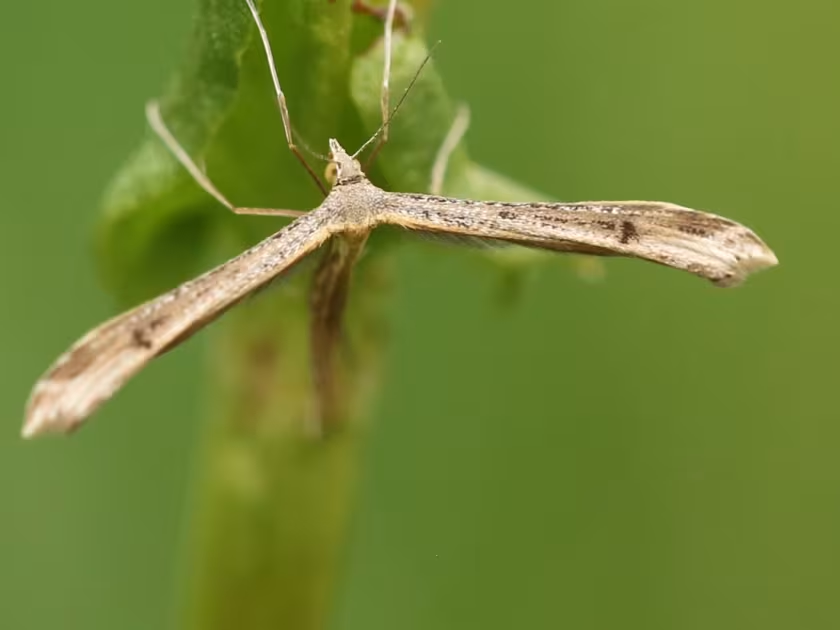
The Plume moth (genus Stenoptilia) belongs to the family Pterophoridae, within the order Lepidoptera. These moths are easily distinguished by their unique resting posture, where they hold their wings perpendicularly to the body, forming a distinct T-shape.
The name reflects their morphology: the forewings are split into two lobes, and the hindwings into three, resembling fingers. Their wingspan ranges from 15 to 25 mm, and their coloration is typically dull, ranging from tan to grey, which provides excellent camouflage.
The larvae, or caterpillars, have a slender body covered in short hairs. Their color often matches the host plant tissues, making them quite difficult to spot during routine garden inspections.
Pupae are often attached to the host plant stems or leaves using silken threads. They can adjust their appearance to blend into the background, providing additional protection from predators.
The life cycle follows a complete metamorphosis: egg, larva, pupa, and adult. Each stage is strictly adapted to survive on specific host plants, usually within the Asteraceae family.
What it damages
Stenoptilia species are specialized pests that primarily target plants from the Asteraceae family, including several ornamental species and wildflowers.
The primary damage is caused by the caterpillars, which feed on the plant's reproductive organs. They burrow into flower buds, hollowing them out and preventing normal blooming or seed set.
In cases of heavy infestation, the pest can significantly reduce the ornamental value of a garden or the output of seed-producing nurseries by destroying the majority of the flower buds.
Larvae may also bore into stems, causing structural weakness, stunted growth, and the eventual wilting of the upper parts of the plant.
These feeding sites frequently become entry points for secondary pathogens, such as fungi or bacteria, which can lead to rot and further decline in plant health.
When it appears
Adult moths typically emerge in late spring and early summer. The timing is closely linked to the phenological development of the host plants they rely on for egg-laying.
Females deposit eggs directly onto the buds or the undersides of leaves. This ensures that the newly hatched larvae have immediate access to their preferred food source.
The peak feeding period occurs during the budding and early flowering stages. This is when the pest is most active and causes the most visible destruction to the vegetation.
Most Stenoptilia species overwinter as mature larvae or pupae. They seek shelter in plant debris, dead stems, or the upper layer of the soil to survive the winter months.
Depending on the climatic zone, the pest may complete one or more generations per season, making consistent monitoring essential throughout the warmer months.
Signs of infestation
The most reliable sign of a Plume moth infestation is the presence of withered, deformed, or partially eaten buds that fail to open correctly.
Upon careful inspection of the damaged flowers, one can often find small, dark granular frass (excrement) trapped within the damaged petals or bud scales.
Silk webbing spun between leaves or buds is a common indicator, used by the caterpillars to secure themselves or create protected feeding zones.
Plants may exhibit localized stunted growth, and stems near the feeding site might show small entry holes or areas of discoloration indicating larval activity.
- withered or deformed flower buds;
- presence of dark frass pellets in flowers;
- fine silk webbing on stems and buds;
- reduced seed yield or flower count.
Control measures
Manual removal of infested buds is an effective first-line defense. Collecting and disposing of damaged plant parts prevents the larvae from completing their development.
Sanitation practices, such as clearing plant debris in the autumn, are crucial as they eliminate the overwintering sites for the larvae and pupae.
Chemical control should be implemented early, targeting the young larvae before they burrow deep into the buds. Systemic insecticides are generally more effective than contact sprays.
Pheromone traps are a useful monitoring tool for commercial growers, allowing for the precise timing of insecticide applications based on the actual flight of the adults.
Integrated Pest Management (IPM) strategies, including crop rotation and the selection of resistant cultivars, are recommended to minimize the reliance on chemical treatments.
Taxonomy
- Latin name
- Stenoptilia
- Order
- Lepidoptera (butterflies)
- Family
- Pterophoridae
- EPPO code
- STEOSP
Discussion
No discussions yet — be the first.