
Stenophylax
Stenophylax
Description
How to identify
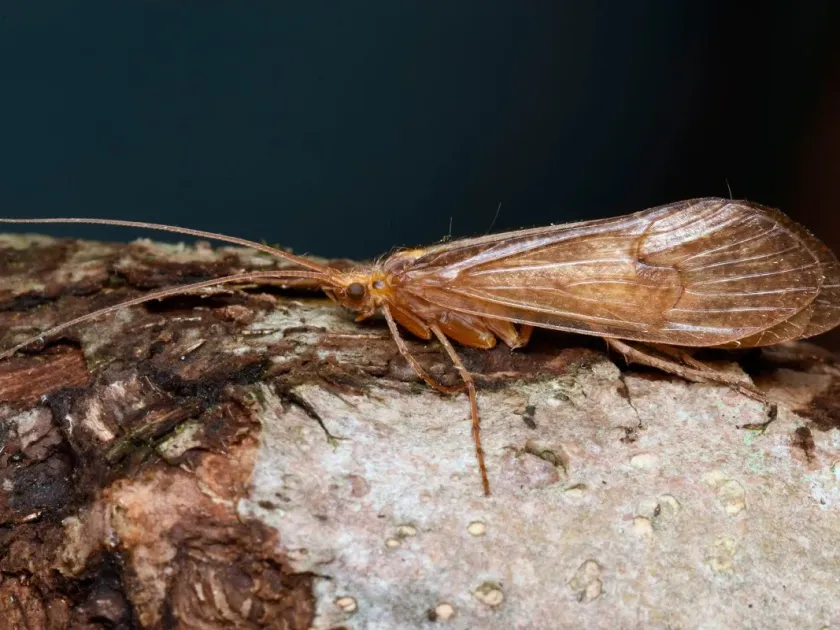
Stenophylax belongs to the order Trichoptera (caddisflies) and the family Limnephilidae. The adults are nocturnal insects that resemble moths with a characteristic roof-like wing fold.
The body of the adult is covered in dense hairs, with coloration ranging from brown to grayish, providing excellent camouflage against tree bark or dry vegetation.
Larvae are aquatic or semi-aquatic, constructing portable cases made of soil particles, sand, or plant debris, which are held together by silk secretions.
The head and thoracic segments of the larvae are heavily sclerotized, providing resistance to environmental stressors, while the abdomen remains soft and vulnerable without the protective case.
The insect undergoes complete metamorphosis (egg, larva, pupa, adult), with the larval stage being the longest, often lasting several months depending on environmental conditions.
What it damages
Significant damage occurs in specific conditions when larvae, during migration or when water sources dry up, settle in areas with cultivated plants.
The insects feed on young shoots, succulent leaves, and soft stem tissues, which poses a serious risk to vegetable seedlings and young nursery saplings.
The greatest damage is reported on agricultural lands bordering natural water bodies, marshes, or irrigation channels where high humidity levels are maintained.
Symptoms include leaf skeletonization, ragged edges on leaves, and occasionally partial girdling of stems near the base, eventually leading to plant death.
Under food scarcity, these larvae exhibit polyphagous behavior, shifting to cultivated crops, which can lead to measurable yield losses in riparian agricultural fields.
When it appears
Adult activity peaks during the late summer and autumn, when they migrate in search of mating sites and egg-laying habitats.
Larvae are most active in spring and early summer as water levels in their native habitats begin to recede, forcing them to move toward wetter shorelines.
The lifecycle is closely linked to water temperature; in temperate regions, the active larval phase typically begins immediately after the snow melts.
Adult insects are highly attracted to artificial light, and their presence in agricultural areas is often most noticeable on warm, windless nights toward the end of the season.
Diapause at the egg or larval stage allows the species to survive harsh winter conditions, ensuring a stable population year after year.
Signs of infestation
The primary sign of Stenophylax presence is the discovery of characteristic cases on the soil surface, lower leaves, or near the base of plant stems.
Irregularly eaten leaf margins, accompanied by slime trails or frass (excrement), indicate active larval feeding behavior.
At night, adults can be observed clustering near light sources, serving as a reliable indicator of a high pest population in the vicinity.
Inspecting damp sections of the field may reveal mass aggregations of larvae, which resemble mobile debris or small fragments of twigs moving on the ground.
Gradual wilting of seedlings without apparent root damage may suggest nighttime stem feeding, as larvae are most active during the dark hours.
Control measures
Primary control measures involve draining excessively wet areas and managing weeds along the banks of irrigation channels to reduce breeding habitats.
Creating mechanical or chemical barriers around the perimeter of fields adjacent to permanent water bodies is an effective preventive strategy.
- Use light traps to capture and reduce the adult population.
- Conduct deep autumn tillage to disrupt overwintering sites.
- Apply contact insecticides when the economic threshold of damage is reached.
Effective crop rotation planning helps minimize risks for fields located in flood-prone areas where the species is likely to thrive.
Monitoring adult numbers using light traps allows for early prediction of larval emergence, enabling timely preventive treatments for the crops.
Taxonomy
- Latin name
- Stenophylax
- Family
- Limnephilidae
- EPPO code
- STHXSP
Discussion
No discussions yet — be the first.