
Grammotaulius
Grammotaulius
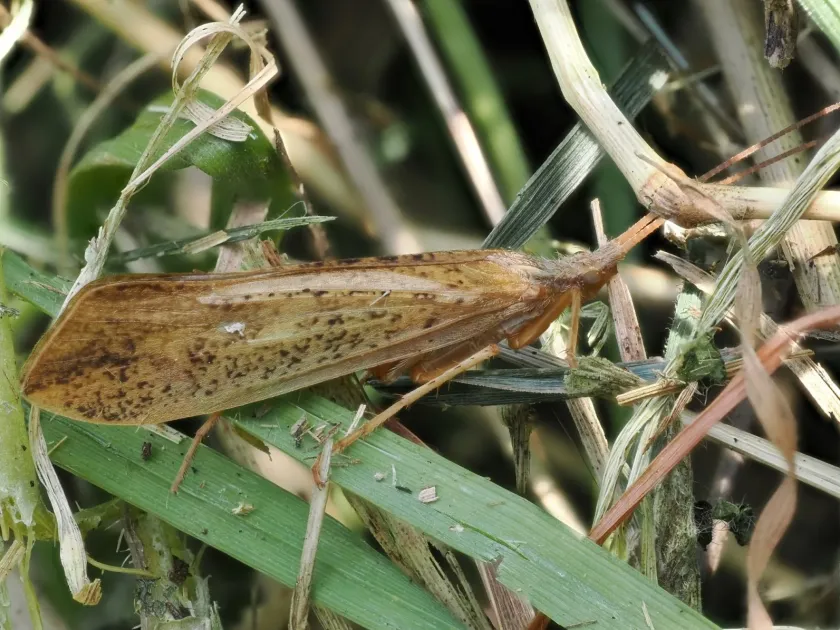
Description
How to identify
Grammotaulius is a genus belonging to the order Trichoptera (caddisflies) and the family Limnephilidae. Adult insects resemble moths with elongated bodies and wings folded over their backs.
Their coloration is typically brown or grey, which provides effective camouflage against tree bark or dry vegetation during the daylight hours.
The larvae of this genus are semi-aquatic, constructing protective cases made from plant fragments, sand grains, or small pebbles, which is their most defining characteristic.
The insect undergoes complete metamorphosis, passing through egg, larval, pupal, and adult stages within their annual life cycle.
These insects are most active at dusk and during the night, frequently gathering near water sources, which is a vital indicator for monitoring their presence.
What it damages
The primary damage to agricultural crops is caused by larvae during migrations in damp areas or when fields suffer from temporary flooding.
Common targets include germinating seedlings of cereals, vegetables, and certain fodder crops located in low-lying areas of the field.
Larvae feed by scraping the epidermis of stems and gnawing at the root systems of young plants, leading to wilting and eventual plant death.
Infestation risk increases significantly during seasons with heavy spring rainfall, which allows larvae to spread from natural water sources into cultivated land.
Beyond direct consumption, larval activity creates entry points for secondary fungal or bacterial pathogens, further compromising plant health.
When it appears
Adult flight usually occurs in the late summer and autumn, which is the period for mating and egg-laying in wet substrates or water bodies.
The insects overwinter as eggs or larvae, with activity peaking in early spring as temperatures rise and snow begins to melt.
The period of maximum damage typically falls between April and May, coinciding with the sensitive growth stage of many young agricultural crops.
By June, larvae reach the pupal stage, typically within their protective cases buried in the soil or submerged in plant debris at the water's edge.
Weather conditions, specifically rainfall intensity, serve as the primary driver for population density in any given agricultural season.
Signs of infestation
A primary indicator of infestation is the discovery of the insect's characteristic tubular cases found in the soil or around the base of plants.
Damage manifests as irregular holes in leaves, stems that appear scraped, or root systems that have been partially eaten away.
Field observation often reveals uneven stands, gaps in rows, and premature wilting of seedlings, even when soil moisture appears adequate.
The presence of larvae inside their woven cases, found near or on affected plants, confirms the infestation of this species.
Affected plants often show stunted growth, yellowing foliage, and localized necrosis at points where the larvae have fed extensively.
Control measures
Effective control relies heavily on land drainage and soil management to prevent water stagnation in low-lying areas of the fields.
Standard crop rotation and timely tillage help destroy the sites where pupation occurs, significantly reducing the population for the next season.
Chemical control is rarely the first choice and is considered only during severe outbreaks using appropriate contact-action insecticides.
- Improve land drainage and eliminate standing water in fields.
- Control weed growth along field margins and near water bodies.
- Apply registered insecticides if infestation thresholds are exceeded.
- Monitor adult populations using light traps during the peak flight season.
Prioritizing agrotechnical methods that ensure rapid seedling emergence can help plants quickly outgrow the vulnerability phase to larval feeding.
Taxonomy
- Latin name
- Grammotaulius
- Family
- Limnephilidae
- EPPO code
- GMTASP
Discussion
No discussions yet — be the first.