
Ecclisopteryx
Ecclisopteryx
Description
How to identify
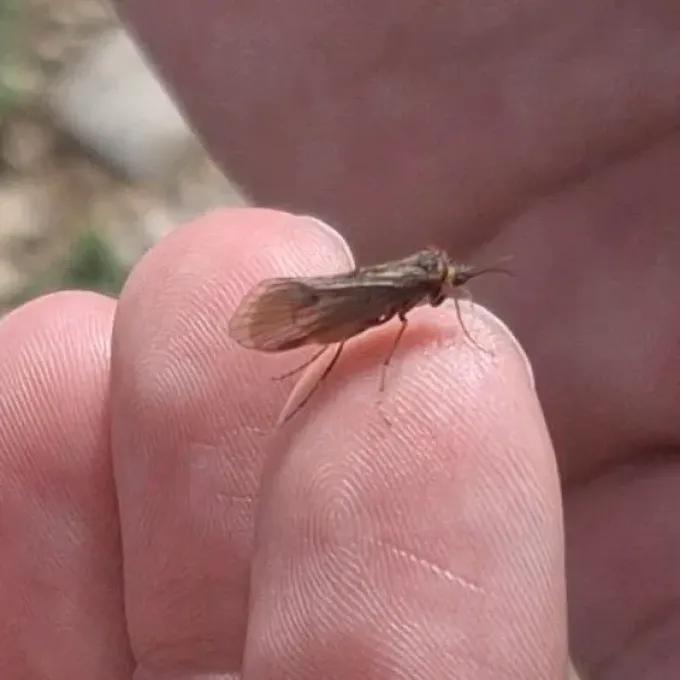
Ecclisopteryx belongs to the order Trichoptera (caddisflies) and the family Limnephilidae. These insects are easily recognized by their moth-like appearance with hairy wings.
Adult caddisflies are generally nocturnal, possessing complex wing venation patterns that help in taxonomic identification between closely related species.
The larvae are notable for their habit of building cylindrical cases made from various materials, including sand grains, small stones, and organic debris.
Their mouthparts are adapted for chewing, although the focus of adult feeding behavior is primarily on nectar and fluids rather than leaf tissues.
Taxonomic classification requires microscopic examination of the terminal genitalia, as external appearances are often insufficient to distinguish between species.
What it damages
Ecclisopteryx is not considered a primary agricultural pest, but it can cause damage in specialized horticultural environments such as aquaponics.
Larval activity can result in the mechanical abrasion of plant roots as they harvest materials to construct their protective cases or feed on organic matter.
While the economic threshold for this species is low, high population densities in water reservoirs can lead to root system degradation in nearby crops.
The accumulation of debris and waste products from these insects near plant bases can promote the growth of unwanted fungal pathogens.
Direct consumption of leaves by larvae is rare and typically occurs only when alternative aquatic food sources are scarce.
When it appears
The adult emergence period typically occurs during the summer months, with variations based on local climate and water temperature conditions.
Larvae are aquatic and active throughout the year, with peak growth occurring in spring as water temperatures increase and food availability rises.
Adult flight activity is primarily concentrated in the twilight and night hours, which is the best time for monitoring population levels.
Winter phases are characterized by reduced activity, where larvae often enter a state of dormancy or slow growth within their cases.
Rapid climate fluctuations can trigger earlier emergence, disrupting the standard seasonal cycle observed in stable environments.
Signs of infestation
The most visible sign of infestation is the presence of tubular, mobile cases attached to roots or stems within aquatic or saturated soil environments.
Affected plant tissues often show small, irregular lesions where the larvae have scraped the outer layer of the roots or stems.
During the adult phase, large numbers of these insects may cluster around lights or windows of greenhouses near water sources.
Frass deposits left behind by larvae serve as a clear indicator of their presence on the submerged parts of the plants.
Overall plant vigor may decrease, characterized by wilting or yellowing leaves, if the infestation causes significant stress to the root zone.
Control measures
Preventative measures include the installation of fine mesh screens on greenhouse vents to effectively block the entry of flying adults.
Maintaining clean water systems by removing invasive weeds and stagnant debris reduces the available habitat for larvae to thrive.
Biological control methods, including the use of targeted microbial insecticides, can be effective if larval populations exceed manageable levels.
Proper water management and the regulation of moisture levels in the root zone prevent the creation of favorable environments for larval colonization.
Integrated Pest Management (IPM) practices, including the use of light traps for monitoring, allow growers to assess risks and intervene before damage scales up.
Taxonomy
- Latin name
- Ecclisopteryx
- Family
- Limnephilidae
- EPPO code
- ECCLSP
Discussion
No discussions yet — be the first.