
Anabolia brevipennis
Anabolia brevipennis
Description
How to identify
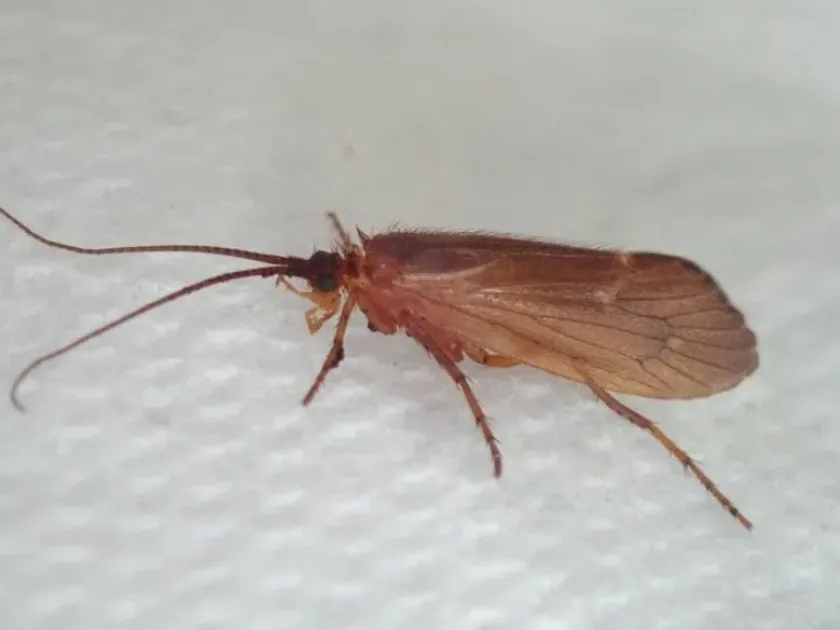
Anabolia brevipennis belongs to the order Trichoptera, commonly known as caddisflies, and the family Limnephilidae. The adults are moth-like insects that fold their wings roof-like over their bodies when at rest.
The larvae are specialized aquatic organisms that construct portable cases using sand grains, small stones, and aquatic plant debris for protection against predators.
Adult caddisflies are generally nocturnal and are often found in proximity to wetlands, irrigation ditches, or flooded agricultural fields where they lay their eggs.
Morphologically, the larvae possess a sclerotized head capsule and robust mandibles, which are adapted for cutting and consuming both plant matter and organic detritus.
Identification of the species is typically performed by specialists through the examination of genital structures and wing venation, which distinguish them from related Limnephilid species.
What it damages
This pest is known to cause significant damage to rice cultivation and other crops grown under flooded conditions, particularly in early developmental stages.
The larvae feed voraciously on the tender roots and stems of young plants, leading to severe stand thinning and uneven plant growth throughout the field.
By consuming the base of the plant stems, the larvae cause the stalks to collapse, which significantly reduces the photosynthetic area and overall crop vigor.
In addition to direct consumption, the feeding damage facilitates the entry of pathogens into the vascular tissues of the plants, worsening the overall impact.
High infestation rates can lead to total crop loss in localized areas, necessitating immediate intervention to prevent the further spread of the population.
When it appears
The lifecycle of Anabolia brevipennis is highly dependent on the water temperature and the presence of stable aquatic environments during the spring and summer months.
Adult emergence typically peaks in late spring, following which mating and oviposition occur in or near the water surface to ensure the larvae have immediate access to food.
The larval stage is the most active feeding period, extending throughout the growing season of the host crops, with growth rates fluctuating based on nutrient availability.
Pupation usually occurs in late summer or autumn within a sealed case, which provides protection during the metamorphosis process before the adult emerges.
The species survives the winter months as larvae or pupae tucked away in the sediment of water bodies, emerging as adults when conditions become favorable in the following spring.
Signs of infestation
The most reliable sign of an infestation is the presence of the characteristic protective cases floating or attached to submerged plant surfaces within the field.
Visual gaps in the crop stand, where young plants have been cut off or destroyed at the water-soil interface, are clear indicators of larval activity.
The observation of floating leaf fragments and debris indicates that larvae have been grazing on the stems and causing the plant parts to detach.
Stunted growth or chlorosis in otherwise healthy-looking plants often points to root-level damage caused by larvae feeding beneath the water surface.
Mass appearance of adult insects near the field edges during dusk can serve as a warning sign for potential future larval infestations in the upcoming season.
Control measures
Managing populations of Anabolia brevipennis requires an integrated approach that focuses on habitat modification and chemical protection when necessary.
- Draining fields during critical stages to eliminate the aquatic habitat required for larval survival and feeding.
- Removing weeds and excessive debris from irrigation channels to reduce the structural resources available for larval case construction.
- Implementing strict crop rotation protocols to break the lifecycle of the pest in high-risk zones.
- Application of selective insecticides targeting the larval stage if infestation thresholds are exceeded.
- Biological control measures, including the preservation of natural predators like aquatic birds and predatory invertebrates that hunt larvae.
Taxonomy
- Latin name
- Anabolia brevipennis
- Family
- Limnephilidae
- EPPO code
- ANBOBR
Discussion
No discussions yet — be the first.