
Glyphotaelius punctolineatus
Glyphotaelius punctolineatus
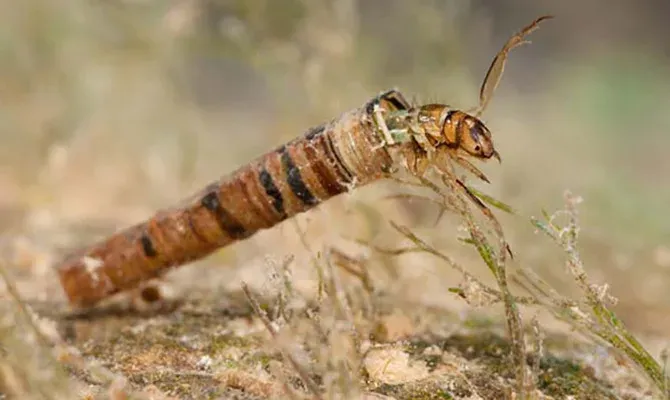
Description
How to identify
Glyphotaelius punctolineatus belongs to the Trichoptera order, specifically the Limnephilidae family. These insects undergo complete metamorphosis and are often mistaken for nocturnal moths at first glance.
Adults possess wings with a distinct mottled pattern, consisting of dark spots and stripes, which provides effective camouflage against tree bark, leaf litter, and vegetation near water bodies.
The larval stage is aquatic. A defining characteristic of these larvae is their ability to construct protective cases from plant fragments, sand grains, or small pebbles, which they carry throughout their development.
Respiration in larvae is achieved through tracheal gills located on the abdomen, allowing them to extract oxygen efficiently from stagnant or slow-moving water sources.
The larvae feature a highly sclerotized head and robust mandibles, which are specialized for shredding aquatic vegetation, algae, and organic debris found in their habitat.
What it damages
While primarily aquatic, this species can become a pest when agricultural fields are situated near poorly managed irrigation canals or in high-moisture zones where water meets land.
The damage is primarily caused by larvae that may migrate to the shoreline or consume succulent parts of crops that are growing within the reach of the water's edge.
Seedlings and young plants are the most susceptible targets. Larval feeding often leads to the destruction of the epidermis and softening of the plant tissues, hindering growth.
Agricultural crops planted in flood-prone areas or near drainage systems are at the highest risk of being attacked by these larvae during the spring and summer months.
Beyond direct feeding, the physical presence of larval cases and feeding wounds can weaken the plant's structural integrity and create entry points for secondary pathogens.
When it appears
The life cycle of the insect is deeply linked to the thermal conditions of its aquatic environment. Adult emergence typically occurs in the spring, triggered by rising water temperatures.
The larval stage is the longest part of the life cycle, active throughout the majority of the growing season when crops are in their vulnerable vegetative development stages.
Pupation occurs inside the protective case, usually attached to underwater surfaces or aquatic stems, marking the completion of the cycle before the next generation of adults appears.
Adult activity is primarily nocturnal, meaning that large populations can exist around a farm without being observed by growers during standard daytime inspections.
Weather patterns, including air humidity and water level fluctuations in irrigation systems, play a crucial role in determining the population density for the current season.
Signs of infestation
Signs of infestation include irregular holes in the lower leaves of the plant, often accompanied by ragged edges where the larvae have scraped away the leaf tissue.
On damp ground near the base of the plant, the presence of larval cases—small, cylindrical structures made of organic debris—is a definitive indicator of the pest's presence.
Seedlings showing signs of stunted growth or wilting despite adequate irrigation may be suffering from larval feeding at the root collar or lower stem.
Often, the damage caused by these larvae is confused with that of slugs, but the absence of slime trails and the presence of case material helps distinguish the culprit.
- Irregular feeding holes on lower foliage.
- Presence of discarded or active organic debris cases.
- Damage to the plant stem near the water-soil interface.
Control measures
The primary control measure is land management: maintaining proper drainage and water flow in irrigation canals effectively eliminates the breeding environment for larvae.
Regular maintenance of shoreline vegetation is critical; removing excessive aquatic plants from canal edges reduces the food supply for the larvae before they impact crops.
Biological control methods, specifically the use of bacterial formulations, can manage larval populations effectively without damaging the surrounding aquatic ecosystem.
Chemical intervention should be restricted to extreme cases, using only environmentally friendly insecticides that have minimal impact on non-target aquatic organisms.
Deploying light traps for adult monitoring can provide growers with early warning signs of an upcoming infestation, allowing for preventive rather than reactive measures.
Taxonomy
- Latin name
- Glyphotaelius punctolineatus
- Family
- Limnephilidae
- EPPO code
- GTALPU
Discussion
No discussions yet — be the first.