
Stenocranus pacificus
Stenocranus pacificus
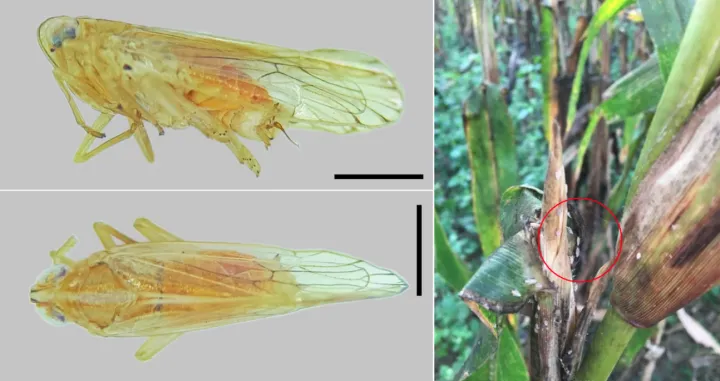
Description
How to identify
Stenocranus pacificus is a small insect belonging to the family Delphacidae, commonly known as planthoppers. These insects are characterized by their clear wings and a prominent keel on the forehead, which is typical for the family.
Adults are usually yellow to brownish in color, providing excellent camouflage against the grasses and cereal stems where they dwell. They possess powerful hind legs adapted for jumping when disturbed.
The biology of this species is tied to moist environments. They spend most of their life cycle in the base of grasses or cereal plants, protected by leaf sheaths and foliage.
Eggs are typically deposited into the tissues of the host plant. The larvae, or nymphs, pass through several developmental stages, gradually increasing in size and resemblance to adults before reaching maturity.
Wintering usually occurs in the nymphal or adult stage, with the insects seeking shelter in plant debris, thick grass stubble, or crevices in the soil to survive cold temperatures.
What it damages
The main host plants for Stenocranus pacificus include various wild grasses, but they frequently migrate to cereal crops like wheat, barley, and oats when populations are high.
Both adults and nymphs cause damage by piercing plant tissues and extracting sap. This feeding activity leads to a significant loss of nutrients and water for the affected plant.
Symptoms of infestation include the development of chlorotic spots on leaves, stunted growth, and the overall yellowing of the plant, which often leads to reduced grain development.
Persistent feeding by a large colony of planthoppers significantly weakens the host, making it more susceptible to environmental stress and secondary pathogen infections.
Furthermore, these insects are known to be potential vectors for various plant viruses, which can cause far more severe economic loss than the direct feeding damage alone.
Signs of infestation
An early sign of infestation is the appearance of patchy, yellowed areas in the field where plants seem to be lagging behind in their development compared to the rest of the crop.
Upon closer inspection of the base of the plant, you may find the insects themselves, which are usually quite active and will jump away when the foliage is parted.
Leaves may show signs of curling or wilting despite sufficient soil moisture. This is a direct consequence of the disruption in the vascular system caused by insect feeding.
The presence of sticky honeydew on the leaves is another indicator of a planthopper infestation. This substance may also encourage the growth of sooty mold, appearing as black spots on the leaves.
In severe cases, the entire plant may appear withered and brittle. Significant leaf senescence and overall loss of vigor are common indicators that the pest population has reached damaging levels.
Control measures
Cultural practices are the first line of defense. Maintaining clean fields by eliminating grassy weeds is crucial to removing the pest's primary habitat and alternative food sources.
Deep plowing of field residues after harvest helps to bury overwintering insects, significantly reducing the population pressure for the next growing season.
When monitoring indicates that the population threshold has been exceeded, the application of systemic insecticides is an effective way to control the feeding insects.
Encouraging natural predators such as ladybugs, lacewings, and parasitic wasps can help keep planthopper populations in check throughout the year without heavy chemical reliance.
Integrated Pest Management (IPM) strategies, including the use of pest-resistant varieties and optimized planting times, are recommended to minimize the risk of infestation.
Taxonomy
- Latin name
- Stenocranus pacificus
- Order
- Hemiptera (bugs, aphids, leafhoppers)
- Family
- Delphacidae
- EPPO code
- STEKPA
Discussion
No discussions yet — be the first.