
Stenocranus
Stenocranus
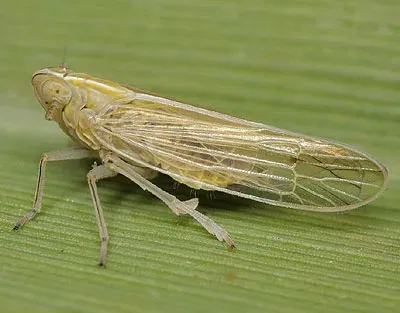
Description
How to identify
Stenocranus is a genus of insects in the family Delphacidae (order Hemiptera), commonly known as planthoppers due to their specialized jumping behavior.
Adults are small, elongated insects, typically measuring a few millimeters, with wings that often feature distinct dark venation patterns.
They are characterized by a broad head and specific antennal structure that helps identify them among other similar insect families.
The coloration of Stenocranus species ranges from pale yellow to brown, providing effective camouflage against the stems of their host cereal plants.
Nymphs resemble smaller, wingless versions of the adults and progress through multiple instars before reaching the reproductive stage.
What it damages
Stenocranus primarily infests various wild and cultivated grasses, with a strong preference for cereals like wheat, barley, and rye.
Using piercing-sucking mouthparts, both adults and nymphs feed on the phloem sap of the host plant, causing significant nutritional loss.
This feeding activity leads to stunted plant growth, chlorosis, and, in severe cases, the failure of the plant to produce a healthy ear.
Beyond direct damage, these insects are known vectors for various plant viruses and phytoplasmas that severely reduce crop yields.
Persistent feeding causes structural damage to plant cells, making the crops more susceptible to secondary fungal infections and environmental stress.
When it appears
These insects typically overwinter as nymphs or adults in sheltered areas, such as leaf litter, tall grass, or crop residues along field margins.
Activity resumes in early spring, as rising temperatures trigger their movement onto young cereal shoots and grasses for feeding.
The peak population density usually occurs in early summer, coinciding with the rapid growth stages of cereal crops which provide optimal food resources.
Depending on the climatic zone, the pest may produce one or two generations per season, influencing the intensity of the infestation.
They are most active during the cooler parts of the day, such as early mornings or late evenings, when humidity levels are higher.
Signs of infestation
Early symptoms include the appearance of tiny pale spots or stripes on the leaves, resulting from the insect probing and extracting plant fluids.
As the infestation progresses, leaves may curl, yellow, and display signs of necrotic tissue due to the toxin injection during feeding.
The presence of honeydew secretions on the stems often leads to the development of sooty mold, indicating a heavy infestation of sucking insects.
Farmers can identify the pest by using a sweep net to monitor field borders, where the population density is usually highest early in the season.
Deformation of the stems and poor grain development are critical field indicators of prolonged Stenocranus pressure on the crop.
Control measures
Integrated pest management strategies begin with rigorous weed control, as non-crop grasses act as reservoirs for the pest population.
Adjusting sowing dates to ensure plants pass through their most vulnerable growth stages before peak insect migration is a highly effective tactic.
Chemical control should be employed only when monitoring data indicates that the economic injury level of the pest population has been reached.
Systemic insecticides are the preferred choice for management, providing long-lasting protection by ensuring the poison is ingested during feeding.
Utilizing sticky yellow traps in field monitoring can help in timing the application of control measures to match the onset of insect outbreaks.
Taxonomy
- Latin name
- Stenocranus
- Order
- Hemiptera (bugs, aphids, leafhoppers)
- Family
- Delphacidae
- EPPO code
- STEKSP
Discussion
No discussions yet — be the first.