
Lobster moth
Stauropus fagi
Description
How to identify
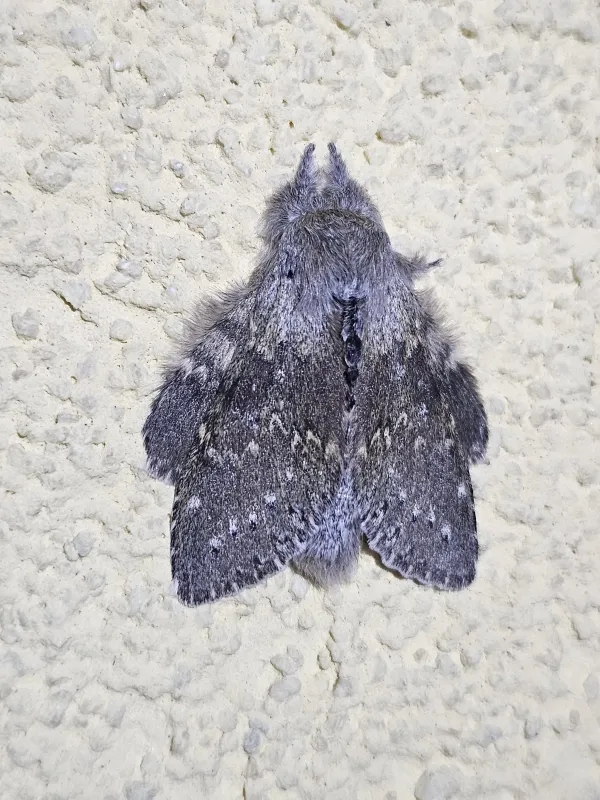
The lobster moth (Stauropus fagi) is a nocturnal moth belonging to the Notodontidae family. The adult moth has a wingspan of up to 70 mm and a grayish-brown coloration that mimics tree bark perfectly.
The caterpillar of this moth is highly distinctive, often referred to as a "lobster" due to its unusual shape. It features elongated thoracic legs and specialized appendages at the rear that it raises when threatened.
Young larvae are dark, resembling bird droppings, which acts as a defense mechanism. As they mature, they turn into a greenish-brown color with diamond-shaped markings along the back.
The pupa develops inside a tough, dark cocoon often found in leaf litter or deep bark crevices. This pupal stage allows the insect to survive harsh winter conditions successfully.
Systematically, the species is part of the order Lepidoptera, family Notodontidae. It is a common inhabitant of deciduous forests that can reach pest status under favorable environmental conditions.
What it damages
The primary hosts for the lobster moth are deciduous trees, including beech, oak, hornbeam, birch, and alder. In managed gardens, they may also infest various fruit-bearing trees.
The larvae feed on leaf tissue, eating from the edges inward or skeletonizing the leaves. Heavy infestations can lead to severe defoliation of the tree crown.
Prolonged defoliation significantly reduces the tree's photosynthetic capacity, affecting overall tree vigor and growth rate. This is particularly damaging to young or newly planted trees.
Stressed trees are far more susceptible to secondary attacks from boring insects and fungal pathogens, which may lead to permanent decline or the death of the tree.
For fruit orchards, larval feeding causes direct damage to the canopy, potentially impacting fruit quality and preventing the tree from building energy reserves for the following season.
When it appears
Adult moths typically emerge from late May to early June. Being nocturnal, they are rarely seen during the day, spending their time resting on tree trunks.
The caterpillar feeding period occurs throughout the summer months, from June to August. This is the window when the most significant damage to vegetation occurs.
Pupation generally takes place from late August through September. The pupa enters diapause and remains inactive throughout the winter until the next spring season.
In warmer southern climates, the lobster moth may produce two generations in a single year, leading to a much faster increase in the population density.
Monitoring should be conducted starting in early June, focusing on the undersides of leaves and the junction of branches where larvae are often located.
Signs of infestation
The first sign of an infestation is the presence of eaten leaves with irregular or notched edges. Larvae are often found resting along the midrib of a leaf.
Fecal pellets (frass) found on leaves or at the base of the tree are a clear indicator of active caterpillar feeding occurring in the canopy above.
When disturbed, the caterpillar performs a unique defensive display by arching its head and tail ends, which makes it easy to identify once spotted.
- Leaves with significant edge damage or skeletonized patterns.
- "Lobster-shaped" larvae present on branches or foliage.
- Hard, dark cocoons nestled in bark crevices or among leaf debris.
Early identification is essential to prevent the larvae from causing extensive damage to the tree's foliage and affecting its long-term health.
Control measures
Hand-picking caterpillars is a viable control method for small trees or isolated infestations. Inspections are most successful during the early morning hours.
Biological treatments using Bacillus thuringiensis are highly effective against these larvae and are safe for beneficial insects, making them ideal for home gardens.
In cases of large-scale outbreaks, professional-grade systemic insecticides may be used according to local forestry or agricultural safety regulations.
Sanitation practices, such as clearing away leaf litter in the autumn and scraping loose bark, can help remove overwintering pupae and reduce future populations.
Encouraging natural predators, including insectivorous birds and parasitic wasps, provides sustainable, long-term biological control in orchard and forest settings.
Taxonomy
- Latin name
- Stauropus fagi
- Order
- Lepidoptera (butterflies)
- Family
- Notodontidae
- EPPO code
- STAUFA
Discussion
No discussions yet — be the first.