
Stauropus basalis
Stauropus basalis
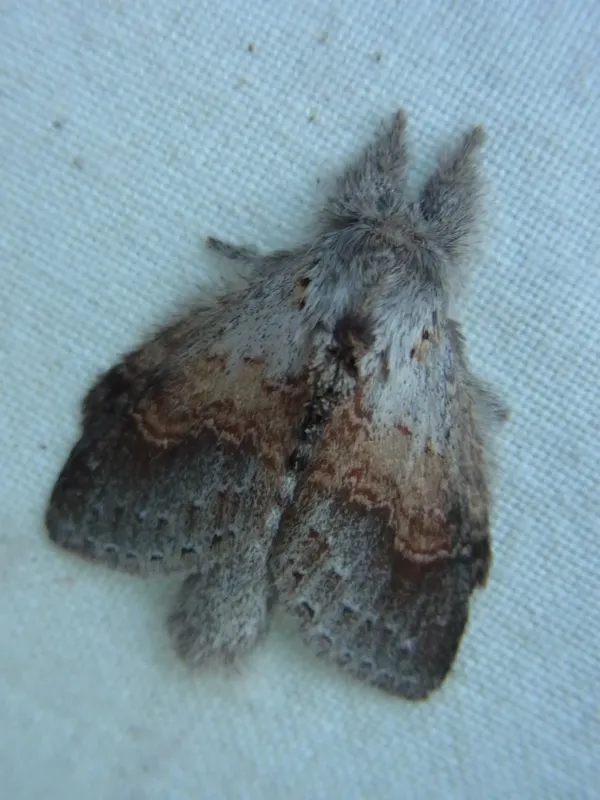
Description
How to identify
Stauropus basalis is a moth species belonging to the family Notodontidae within the order Lepidoptera. It is closely related to other species in the Stauropus genus, often referred to as lobster moths due to the unique appearance of their larvae.
The larvae are highly specialized, featuring elongated thoracic legs and distinctive abdominal humps. This morphology allows them to mimic dry twigs or damaged foliage, providing an excellent defense against visual predators.
Their coloration typically ranges from earthy browns to shades of grey and green, which helps them blend perfectly with the bark or leaves of their host plants.
The adult moths are characterized by a robust body covered in dense hairs and cryptic wing patterns that provide camouflage when resting on tree trunks during daylight hours.
The life cycle involves complete metamorphosis, including egg, larva, pupa, and adult stages. Overwintering typically occurs in the pupal stage, often encased in a durable cocoon within the soil or ground litter.
What it damages
This pest primarily attacks various species of broadleaf trees, posing a potential risk to both ornamental garden trees and forest stands.
Common host plants include members of the Betulaceae, Fagaceae, and Rosaceae families, which encompasses a wide variety of deciduous trees and shrubs.
The larvae are active folivores, meaning they feed on leaf tissue. They usually start at the margins of the leaf or consume irregular holes in the center of the leaf blade.
High population densities can lead to significant defoliation, which reduces the tree's ability to perform photosynthesis and can cause severe stress to the host.
If defoliation continues over multiple growing seasons, the affected trees may experience weakened growth, reduced vigor, and increased susceptibility to secondary pests and diseases.
When it appears
The flight period for adult moths typically spans from late spring through mid-summer, depending on local climatic conditions and temperature shifts.
Larval development occurs primarily during the summer months when food resources are most abundant and nutritional quality of foliage is at its peak.
Pupation usually takes place towards the end of summer or early autumn, marking the transition into the overwintering stage as the trees begin to drop their leaves.
Environmental factors such as moisture and ambient temperature significantly influence the timing of emergence and the overall reproductive success of the population.
Synchronization between the hatching of larvae and the budburst or leaf expansion of host trees is essential for the survival and successful proliferation of this species.
Signs of infestation
The primary indicator of an infestation is the presence of eaten or damaged leaves, often showing jagged edges or holes of varying sizes.
Detecting the larvae themselves is challenging due to their specialized mimicry, as they often remain completely motionless when disturbed or during the day.
Frass (larval droppings) found on the leaves below the feeding sites or on the ground beneath the canopy is a strong indicator of an active population.
Localized areas of thinning in the tree canopy or clusters of damaged leaves are common focal points that can help in identifying where larvae are feeding.
- Irregular or ragged leaf margins caused by larval feeding.
- Presence of frass deposits on the lower foliage.
- Visible defoliation in specific branches or sections of the canopy.
Control measures
Biological control, such as the application of Bacillus thuringiensis-based products, provides an environmentally safe method for managing larval populations.
Monitoring adult populations using pheromone traps can help track the pest's activity and determine the most effective timing for necessary interventions.
Manual removal of larvae may be a practical solution for smaller trees or low-level infestations where visual inspection is feasible.
Chemical control measures using selective insecticides may be required in situations where the pest population poses a significant threat to the survival or growth of the trees.
Promoting a healthy ecosystem that supports natural predators, such as insectivorous birds, parasitic wasps, and predaceous bugs, is an effective long-term strategy for managing the pest.
Taxonomy
- Latin name
- Stauropus basalis
- Order
- Lepidoptera (butterflies)
- Family
- Notodontidae
- EPPO code
- STAUBA
Discussion
No discussions yet — be the first.