
Lobster moth
Stauropus alternus
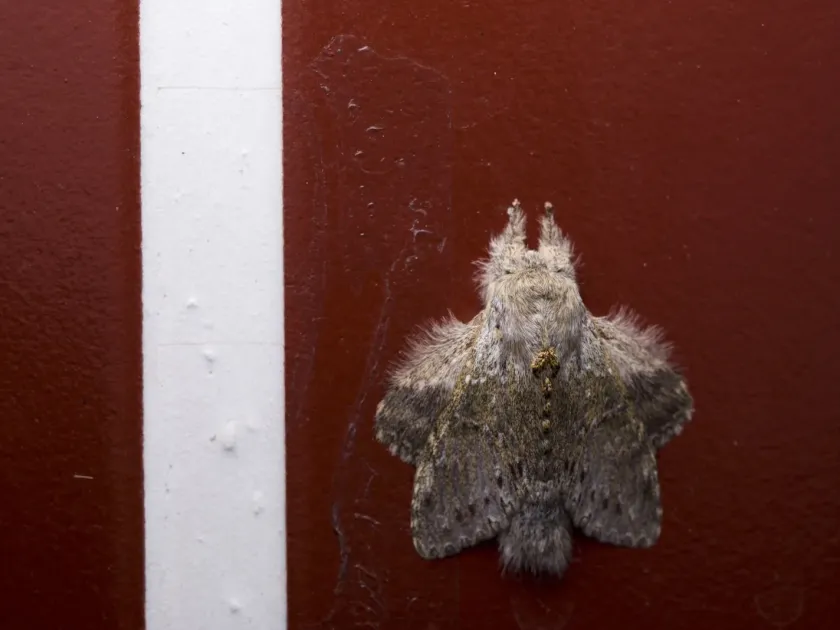
Description
How to identify
The Lobster moth (Stauropus alternus) belongs to the Notodontidae family, order Lepidoptera. It is a nocturnal moth characterized by its larvae, which have a unique appearance resembling a lobster or scorpion due to their elongated thoracic and anal legs.
The adult moth has a wingspan of 40–60 mm, with coloration ranging from grey to brown featuring intricate patterns. The caterpillar can reach lengths of 50–60 mm and often displays bright warning colors to deter predators.
The life cycle encompasses four stages: egg, larva, pupa, and imago. In warm tropical and subtropical climates, the insect can complete several generations within a single calendar year.
Females typically deposit eggs on the underside of host plant leaves. The eggs are laid in small clusters, ensuring the larvae have an immediate food source once they emerge from the eggs.
Hibernation usually occurs at the pupal stage within a robust, silk-lined cocoon spun among leaves or within the top layer of soil, providing protection against harsh environmental conditions.
What it damages
The primary damage is caused by the caterpillars, which possess strong mandibles and a high feeding capacity. They are known to infest a wide array of woody and shrubby species, including major agricultural crops.
Frequently targeted plants include the tea bush, various species of acacia, legumes, cocoa, and fruit trees. Under conditions of high population density, the larvae can completely skeletonize the foliage of host plants.
Signs of infestation
The first indicator of an infestation is the presence of eaten leaf margins. When populations are dense, only the central veins of the leaves may remain, significantly hampering the plant's photosynthetic ability.
The accumulation of frass on the leaves beneath the canopy is another clear sign of active feeding. Infested plants show stunted growth, and young saplings may suffer mortality due to severe defoliation.
Control measures
Manual collection of caterpillars is a practical control measure for small-scale farms. Regular scouting of plantations enables early detection of outbreaks, allowing for localized management before the pest spreads widely.
The application of biological control agents, specifically those based on Bacillus thuringiensis, is highly effective against early-instar larvae and is considered an environmentally sustainable practice.
Taxonomy
- Latin name
- Stauropus alternus
- Order
- Lepidoptera (butterflies)
- Family
- Notodontidae
- EPPO code
- STAUAL
Discussion
No discussions yet — be the first.