
Golden rove beetle
Staphylinus caesareus
Description
How to identify
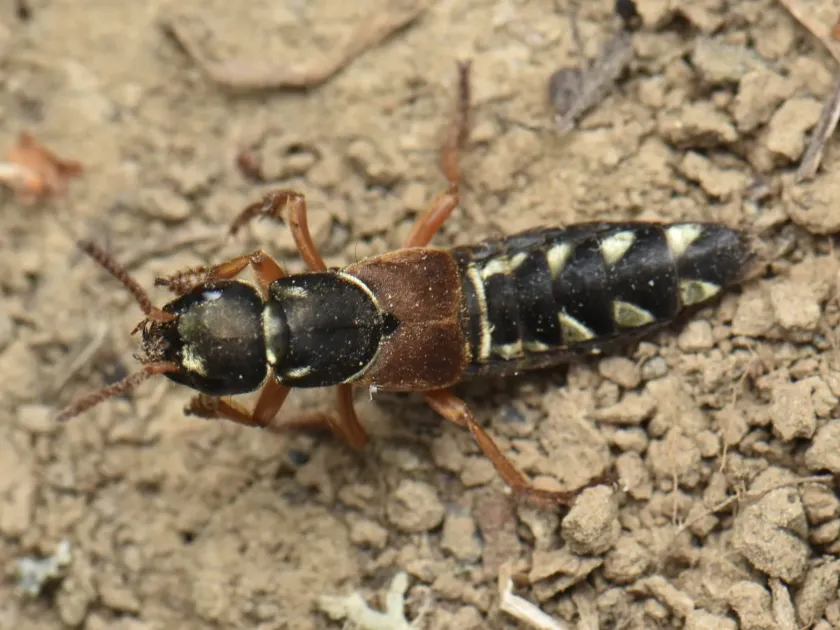
The golden rove beetle (Staphylinus caesareus) is a member of the Staphylinidae family within the order Coleoptera, recognized by its distinct appearance.
The adult beetle is relatively large, measuring between 20 and 25 mm, with a slender body covered in characteristic golden-yellow hair on its thorax and elytra.
They possess prominent, sickle-shaped mandibles which are adapted for predatory behavior, common among most rove beetle species.
The larvae are also elongated and highly mobile, often inhabiting the soil layers and organic matter where they search for small invertebrates.
While often beneficial as predators of other pests, under specific agricultural imbalances, they can become a nuisance to young plant tissues.
What it damages
The golden rove beetle is primarily a predator, feeding on soil insects, slugs, and other small organisms, rather than being a direct plant feeder.
However, when standard prey populations are low, they may turn to gnawing on tender seedlings or the root necks of young vegetables.
These feeding activities can result in small surface lesions on the stems, which compromises the integrity of the plant.
Once the plant tissue is damaged, it becomes highly susceptible to subsequent attacks by soil-borne pathogens, such as fungi or bacteria.
Such injuries are most noticeable in seedlings grown in damp, protected environments like greenhouses where rove beetles can concentrate.
When it appears
Adult beetles become active in early spring as soon as soil temperatures provide sufficient warmth for their metabolic processes to resume.
Population peaks are typically observed during mid-summer, especially in regions with consistent humidity and abundant plant litter.
They thrive in moist habitats, often clustering beneath mulch, rotting leaves, or debris where the environment remains consistently damp.
Larval development occurs throughout the summer months, and several growth stages can be identified until the beetles prepare for overwintering.
Winter is spent in a dormant state deep within the soil or under dense vegetation cover, preparing for the next active cycle in spring.
Signs of infestation
The primary sign of their presence is the visual identification of large, golden-hued beetles scurrying near the base of garden plants.
Seedlings exhibiting stunted growth or sudden wilting without evidence of obvious leaf diseases often indicate subterranean disturbance by beetles.
Small, irregular gnaw marks on the stem just above the soil line are indicative of feeding damage from these opportunistic insects.
An abundance of beetles in or around greenhouse structures is usually a clear sign of poor sanitation or excessive moisture in the soil.
Secondary infections of root rot on damaged plants often mask the initial feeding wounds, making it hard to identify the underlying cause.
Control measures
Effective management focuses on creating an environment that is less attractive to the beetles rather than using aggressive chemicals.
- Maintain excellent field sanitation by removing crop debris and decaying organic matter promptly.
- Avoid excessive irrigation that leads to constant soil saturation and creates favorable beetle habitats.
- Implement regular cultivation or soil tilling to disrupt the larvae's habitat in the upper soil layers.
- Utilize physical barriers like mesh netting to protect sensitive young plants during their vulnerable initial growth phase.
- Encourage the presence of natural predators, such as insectivorous birds, that naturally regulate beetle populations.
Taxonomy
- Latin name
- Staphylinus caesareus
- Order
- Coleoptera (beetles)
- Family
- Staphylinidae
- EPPO code
- STAFCA
Discussion
No discussions yet — be the first.