
Carolina mantis
Stagmomantis carolina
Description
How to identify
The Carolina mantis (Stagmomantis carolina) is a common predatory insect belonging to the family Mantidae, widely distributed across North America.
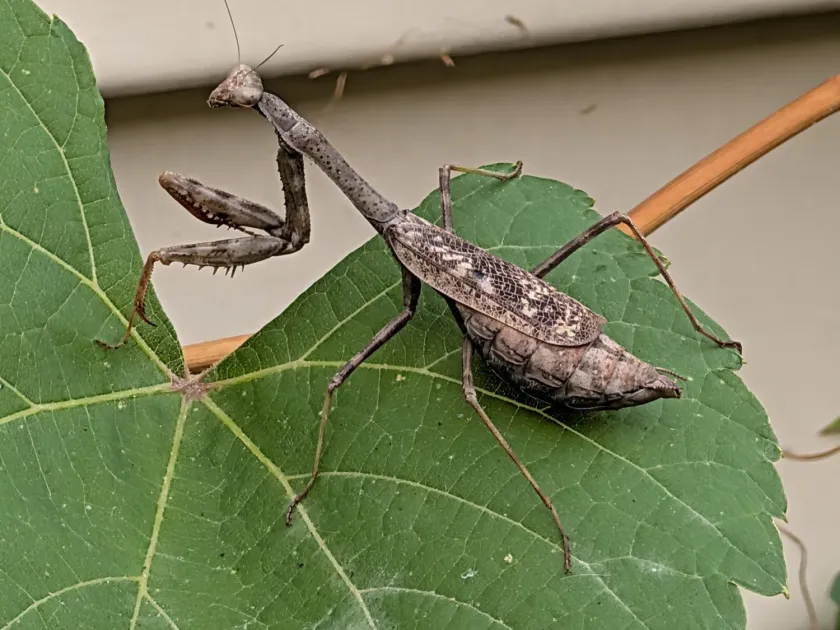
Adults typically reach a length of 5 to 7 centimeters and possess a distinctively elongated body that is perfectly adapted for ambush hunting.
Their coloration is highly variable, ranging from shades of green to brown and grey, providing excellent camouflage against foliage, bark, and grasses.
They are characterized by powerful, raptorial forelegs equipped with sharp spines, which allow them to seize prey with lightning-fast speed.
The mantis possesses a highly flexible neck, enabling it to swivel its head 180 degrees to observe its surroundings and track potential targets.
What it damages
The Carolina mantis is fundamentally a generalist predator and does not consume plant tissues, therefore it does not cause direct physical damage to crops.
Its status as a pest is based on its indiscriminate predatory nature, where it consumes both harmful insects and valuable beneficial species.
In managed agricultural environments, the mantis may feed on essential pollinators like honeybees, bumblebees, and various beneficial parasitic wasps.
A high density of mantises in a garden or greenhouse can lead to a decline in the populations of insects that are critical for crop fertilization.
Therefore, farmers should weigh the benefits of having a mantis in the garden against the potential loss of pollinator populations in specific sites.
When it appears
The lifecycle begins with the female depositing eggs into a foam-like protective casing known as an ootheca, typically attached to sturdy plant stems.
The species overwinters in this egg stage, remaining dormant throughout the cold months until temperatures rise sufficiently in the spring.
Nymphs emerge in late spring and undergo several molting stages, gradually increasing in size and developing their adult morphology.
The adult mantises are most active during the late summer and early autumn, which is their primary period for mating and egg deposition.
As the colder weather arrives in late autumn, the lifecycle is completed, with the eggs left behind to ensure the next generation survives the winter.
Signs of infestation
The most reliable sign of the presence of Carolina mantis is the discovery of the distinctive brown, papery, or foam-like oothecae on twigs.
Careful visual observation of garden plants during dawn or dusk often reveals adults waiting in ambush among the flowers or leaf clusters.
Exuviae, the discarded exoskeletons from molting, are frequently found attached to stems, serving as evidence of their growth and residency.
The behavior of smaller flying insects can change in the vicinity of a mantis, as they avoid high-risk areas where the predator is perched.
Persistent presence of the insect in a specific area may indicate that the location offers optimal hunting conditions and sufficient prey availability.
Control measures
Managing the population of Carolina mantis is rarely necessary, as they can also contribute to the control of actual garden pests like aphids.
If population control is required, the most efficient method is the manual removal of oothecae during the winter dormancy period.
Maintaining a balanced ecosystem with diverse vegetation helps prevent any single species from dominating the beneficial insect population.
Avoid the use of broad-spectrum insecticides, which can harm both the mantises and other vital predatory insects that manage pest populations.
In specialized environments like greenhouses, using fine mesh screens is an effective physical barrier to prevent the entry of these insects.
Taxonomy
- Latin name
- Stagmomantis carolina
- Family
- Mantidae
- EPPO code
- STAMCA
Discussion
No discussions yet — be the first.