
Yellow-headed moth
Spuleria flavicaput
Description
How to identify
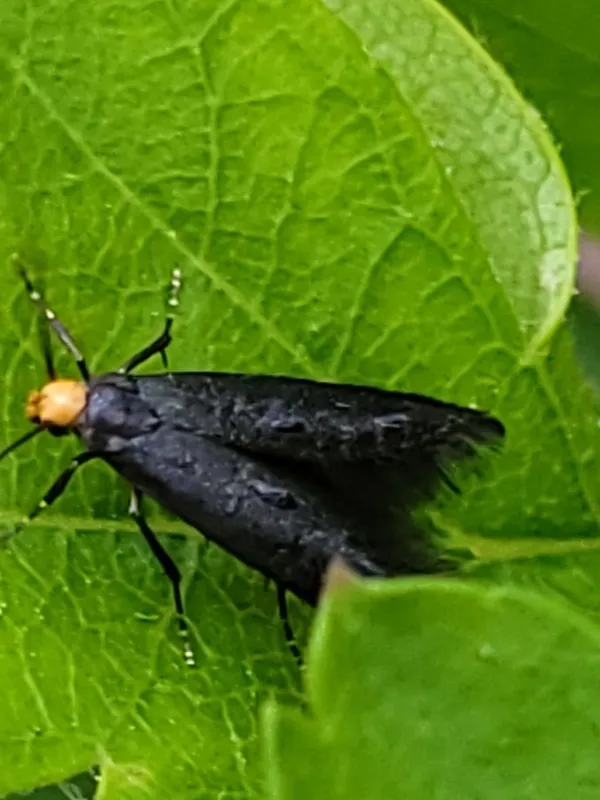
The yellow-headed moth (Spuleria flavicaput) is a small moth species belonging to the Agonoxenidae family. The adult insect is characterized by dark wings with a metallic luster and a distinct yellow-orange head, which serves as its primary diagnostic feature.
The larvae, or caterpillars, are small and possess a coloration that enables excellent camouflage within the bark and buds of host plants. The presence of a darker head capsule is a key indicator for entomologists when conducting inspections of infested twigs.
Taxonomically, this species is classified under the order Lepidoptera. The insect undergoes complete metamorphosis, consisting of egg, larva, pupa, and adult stages. Understanding each stage is crucial for timing integrated pest management strategies effectively.
Adult moths are primarily crepuscular or nocturnal, making them difficult to spot during routine daytime orchard monitoring. They lay eggs near buds or crevices in the bark, ensuring the offspring have immediate access to food upon hatching.
Distribution is closely tied to the presence of host plants within the Rosaceae family. They are commonly found in temperate climates where suitable hawthorn or related fruit trees are prevalent, making them a recurring concern in many orchard environments.
What it damages
The primary damage is caused by larvae feeding on young shoots, buds, and bark, particularly on hawthorn and related fruit trees. This feeding behavior weakens the overall physiological state of the tree and disrupts normal spring growth.
The larvae lead a concealed life, boring tunnels under the bark or inside developing buds. This internal feeding makes them highly resistant to many contact-based insecticides, as the pest remains protected by plant tissues for most of its larval development.
In cases of heavy infestation, the moth can significantly reduce the annual shoot growth and lower fruit yields. Infested buds often wither and fail to develop into leaves or flowers, causing deformities and stunted growth in nursery saplings.
Beyond direct damage, the larval tunnels provide entry points for secondary infections, including fungal pathogens and bacterial cankers. These infections can cause necrotic spots and bark rot, which often inflict more long-term damage than the moths themselves.
Systemic damage to young trees can lead to a loss of commercial viability for nursery stock. Agronomists emphasize that early detection is critical, as the difficulty of control increases exponentially once the larvae have burrowed deep into the wood.
When it appears
The flight period of adult moths typically occurs in late spring and early summer. During this time, moths mate and lay eggs, initiating the life cycle for the next generation. Proper timing of the onset of flight is essential for effective intervention.
Larval activity peaks during the spring, coinciding with the tree's sap flow and bud break. This period is the most critical time for monitoring; agronomists must inspect trees closely to catch the early larval stages before they penetrate the plant tissues.
Pupation generally occurs in protected niches such as bark crevices, plant debris, or soil near the base of the trunk. The emergence of adults in spring is directly correlated with the accumulation of effective heat units, influencing the timing of management programs.
While typically univoltine (one generation per year), weather fluctuations can influence the intensity and timing of moth emergence. Consistent monitoring with pheromone traps allows for precise identification of the activity window.
Management efficacy is heavily dependent on the synchronization of control measures with the moth's biological cycle. Even minor delays in treatment schedules can result in significantly reduced success rates for insecticidal applications.
Signs of infestation
The most common sign of infestation is the withering and drying of buds during the early stages of the growing season. If an affected bud is dissected, one can often find larvae or evidence of their frass inside.
Signs on branches include small, inconspicuous holes or the presence of brownish dust (frass) emerging from tunnels in the bark. This indicates that the caterpillar has successfully established itself within the cambium or wood of the shoot.
During the summer, while more common in spring, some larval activity may be observed through leaf mining or discoloration, though the focus of Spuleria flavicaput remains predominantly on the buds and stems.
- Premature yellowing and leaf drop on affected twigs.
- Webbing structures near damaged or hollowed-out buds.
- Dieback of young shoot tips.
- Visible entry or exit holes on the surface of young bark.
For accurate identification, researchers often use incubation samples, placing suspect twigs in high-humidity chambers to encourage larval exit, which confirms the presence and activity of the yellow-headed moth.
Control measures
Cultural control methods involve mandatory sanitary pruning during the dormant winter period to remove hibernating pupae. All pruned material must be disposed of correctly, preferably through incineration, to eliminate the reservoir of the pest.
Chemical protection should utilize systemic insecticides capable of penetrating plant tissues to reach hidden larvae. Treatments must be applied before the larvae burrow deep into the bark or buds, as contact coverage becomes ineffective thereafter.
Biological control strategies, such as the use of Bacillus thuringiensis-based insecticides, provide a targeted approach against lepidopteran larvae. These are highly effective against early-stage caterpillars without negatively impacting beneficial garden insects.
The use of light or pheromone traps significantly reduces adult moth populations in the orchard. This method not only decreases egg-laying potential but also acts as an early-warning system for the timing of necessary chemical treatments.
Promoting overall tree health through balanced fertilization and correct irrigation practices enhances natural resistance. A robust tree can often better recover from localized infestations, minimizing the total impact of the yellow-headed moth.
Taxonomy
- Latin name
- Spuleria flavicaput
- Order
- Lepidoptera (butterflies)
- Family
- Agonoxenidae
- EPPO code
- SPLEFL
Discussion
No discussions yet — be the first.