
Blastodacna
Blastodacna
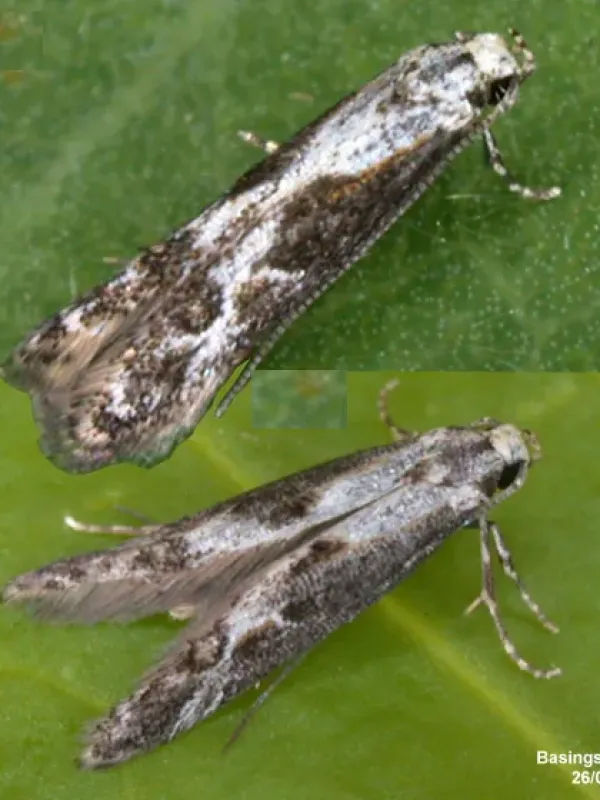
Description
How to identify
Blastodacna is a genus of moths belonging to the family Agonoxenidae. These small insects are known as significant pests in orchards, particularly affecting pome fruits.
The adult moth is small with a wingspan of approximately 10–12 mm. Their forewings are typically dark brown or blackish with subtle light patterns, while the hindwings are narrow and fringed.
The larvae, or caterpillars, are the stage that causes economic damage. They are yellowish-white with a dark, sclerotized head capsule, adapted for boring into plant tissues.
The life cycle typically includes one or more generations depending on the climate. The species overwinters as young larvae in cocoons protected under bark or near the base of buds.
Development involves complete metamorphosis: egg, larva, pupa, and adult. The timing of each stage is highly sensitive to spring temperature fluctuations.
What it damages
The primary host for Blastodacna is the apple tree (Malus). However, they can also cause localized damage to other members of the Rosaceae family in orchard settings.
The larvae destroy the fruit buds by boring into them in early spring. This prevents the development of leaves and blossoms, resulting in direct crop yield losses.
Later in the season, larvae target growing shoots. By creating tunnels inside the shoots, they cause terminal wilting and dieback, which stunts the growth of young trees.
Young trees in nurseries are particularly vulnerable. Heavy infestations can lead to permanent structural damage to the tree's scaffold branches.
Because the larvae live inside the buds and shoots, they are shielded from most external environmental factors and many standard topical pesticides.
When it appears
Early spring is the period of highest activity. As buds begin to swell, overwintered larvae emerge and immediately start feeding on the interior tissue.
The flight of adult moths occurs during the summer months, typically between June and August, depending on the specific region and seasonal weather conditions.
Eggs are laid on the leaves and young shoots, and after hatching, the young larvae may feed briefly before seeking overwintering sites for the colder months.
Climatic factors such as temperature and humidity significantly influence the duration of each life stage, with warmer seasons accelerating the pest's reproductive rate.
Monitoring the flight of adults using pheromone traps is essential for timing insecticide applications to catch the larvae before they bore into the buds.
Signs of infestation
The most prominent sign is the presence of brown, dried-out buds in the spring that fail to break dormancy. Small entry holes at the bud base are characteristic.
Wilting terminal shoots during the spring growth phase indicate larval activity inside the twig. These twigs often turn black and brittle as the season progresses.
Frass (larval excrement) resembling fine sawdust near the entry points is a clear indicator that a larva is actively feeding inside the woody tissue.
Uneven leaf development and stunted growth in young trees are common symptoms observed in orchards with a significant Blastodacna population.
Structural deformities, such as excessive branching or irregular canopy growth, occur when the terminal buds are repeatedly killed by the larvae year after year.
Control measures
Sanitation is a cornerstone of control. Pruning and destroying infested twigs during the dormant or early growth season significantly reduces the local population.
Chemical control focuses on the window between larval emergence and the time they bore into the buds. Systemic insecticides are most effective during this phase.
Integrated Pest Management (IPM) practices, including the use of pheromone traps, ensure that sprays are applied only when necessary and at the most vulnerable stage.
Encouraging natural predators, such as parasitic wasps that target larvae and pupae, can help maintain lower pest levels in the orchard environment.
Providing optimal growing conditions, such as proper irrigation and balanced fertilization, helps trees withstand and recover from light infestations.
Taxonomy
- Latin name
- Blastodacna
- Order
- Lepidoptera (butterflies)
- Family
- Agonoxenidae
- EPPO code
- BLAOSP
Discussion
No discussions yet — be the first.