
Chrysoclista
Chrysoclista
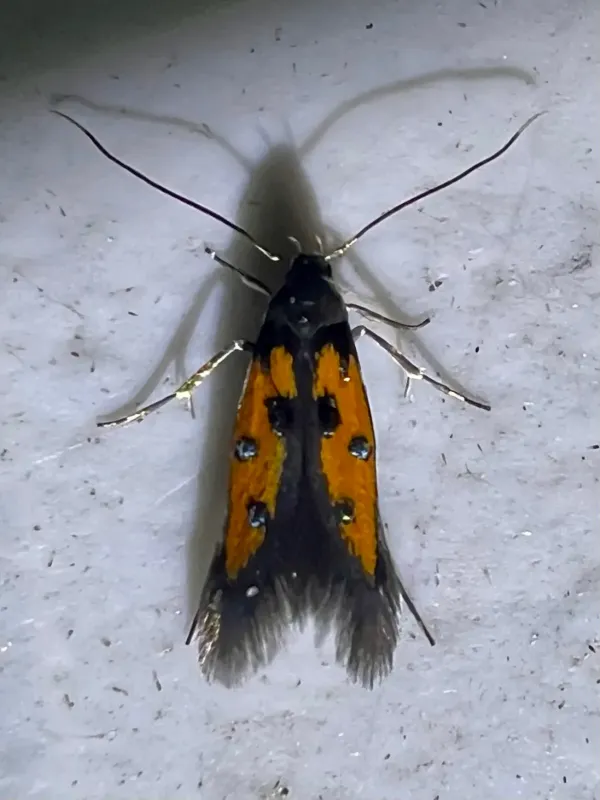
Description
How to identify
Chrysoclista is a genus of moths belonging to the family Agonoxenidae, known for their specific feeding habits on woody plants.
These moths are typically small, with slender bodies and wings often featuring distinctive metallic or iridescent markings that aid in identification.
The larvae are specialized wood-borers or bark-miners, living cryptically inside the plant tissues throughout their developmental stage.
The life cycle involves complete metamorphosis, where the transition from egg to adult is tightly linked to the phenology of the host plant.
As phytophagous insects, their distribution is often restricted to areas where their preferred host tree species are present in sufficient density.
What it damages
The primary hosts for Chrysoclista include various deciduous trees, with a focus on members of the Rosaceae family such as apple and pear.
Larval feeding activity damages the cambium and inner bark layers, which disrupts the flow of nutrients throughout the tree.
Severe infestations can lead to the wilting and subsequent death of individual branches, reducing the overall vigor of the tree.
In addition to physiological damage, these pests can ruin the appearance of young nursery stock, making them unsuitable for commercial sale.
The cumulative effect of their feeding reduces fruit yields and can lead to long-term decline in the health of fruit-bearing orchards.
When it appears
Adult moths emerge in spring, with activity levels peaking according to local weather patterns and tree development stages.
Larval development typically continues throughout the summer, with the insects remaining hidden within the bark to avoid predators.
The flight period for adults can be prolonged, making it difficult to time protective chemical applications precisely.
Overwintering usually occurs as a larva or pupa, tucked away in bark crevices or protected sites near the base of the tree.
Environmental factors, particularly temperature, play a crucial role in determining the speed of development and the number of generations per year.
Signs of infestation
One of the clearest signs of infestation is the presence of frass or sawdust-like debris on the bark surface or at the base of the tree.
Small, irregular holes in the bark are indicative of the entry or exit points used by the developing larvae.
Discoloration or swelling of the bark on smaller branches often suggests the presence of larval mines underneath.
Premature leaf drop or branch dieback on otherwise healthy trees can often be traced back to Chrysoclista damage disrupting water conduction.
Physical inspection during the winter or early spring can reveal pupal cocoons hidden in deep fissures within the tree's bark.
Control measures
Sanitation is a vital component of control, requiring the removal and destruction of infested branches to reduce the local population.
Maintaining tree health through proper fertilization and pruning helps the trees withstand the stress caused by the larval feeding.
Systemic insecticides, when applied at the correct developmental window, can effectively reach larvae feeding within the bark layers.
Integrated pest management strategies often involve the use of pheromone traps to monitor adult populations and determine optimal treatment timing.
- Regular bark inspection and cleaning to discourage egg-laying.
- Use of biological control agents that target larval stages.
- Applying protective trunk coatings to prevent larvae from entering the bark.
Taxonomy
- Latin name
- Chrysoclista
- Order
- Lepidoptera (butterflies)
- Family
- Agonoxenidae
- EPPO code
- KRYCSP
Discussion
No discussions yet — be the first.