
Agonoxena
Agonoxena
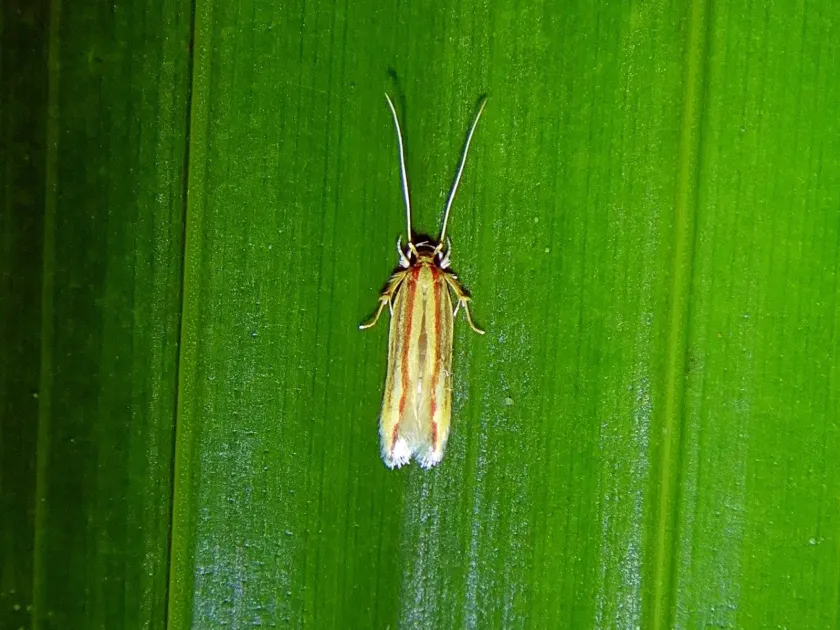
Description
How to identify
Agonoxena is a genus of moths belonging to the family Agonoxenidae. These small insects are typically characterized by narrow, elongated wings with a wingspan of approximately 15–20 millimeters.
Adult moths are nocturnal, exhibiting camouflage patterns on their wings that allow them to blend in seamlessly with the bark and foliage of host palm trees during the daytime.
The larvae are small, light-green caterpillars with dark head capsules that grow significantly as they progress through several developmental instars on the host plant.
Pupation occurs within a delicate, silken cocoon often spun on the underside of leaves or within the leaf folds, protecting the pupa from external environmental factors.
Their life cycle is highly dependent on climate, with warm and humid conditions facilitating continuous reproduction and rapid population growth throughout the year.
What it damages
The primary hosts of Agonoxena are various palm species, most notably the coconut palm, where larvae can cause severe economic losses by damaging foliage.
The larvae feed on the surface of the leaves, creating narrow feeding mines that disrupt the photosynthetic capacity of the palm, leading to leaf necrosis and early decay.
Heavy infestation levels often result in a significant reduction of the plant's overall health, which in turn leads to lower fruit yields and stunted tree growth.
In addition to agricultural crops, ornamental palms in gardens and landscapes can suffer severe aesthetic damage, manifesting as yellowing and curling of the leaves.
Young palm seedlings are particularly vulnerable to high-density infestations, which can occasionally result in the total death of the plant if not controlled in time.
Signs of infestation
The most distinctive sign of Agonoxena infestation is the presence of narrow, light-colored feeding mines running along the leaf blades, created as the larvae feed under the epidermis.
Small, white, web-like shelters on the underside of the leaves are a key indicator, as the caterpillars construct these webs to protect themselves while feeding.
As the damage progresses, the leaves begin to turn brown and dry out, often leading to curling or distortion of the affected leaf tissues near the feeding sites.
Fine granular frass, which appears as dark spots inside the feeding mines, is a reliable diagnostic feature of current larval activity on the plant.
General yellowing of the palm canopy is usually observed in cases of heavy infestation, signalling that the tree is suffering from significant physiological stress.
Control measures
Biological control remains the most effective strategy for managing Agonoxena, primarily through the release of specific parasitoid wasps that target and reduce larval populations.
Sanitation practices, including the prompt removal and destruction of heavily infested leaves, are essential for reducing the source of population spread within a palm grove.
Chemical intervention with systemic insecticides should be considered only as a last resort, especially in large-scale commercial plantations to protect beneficial entomofauna.
Maintaining optimal tree vigor through balanced fertilization and adequate hydration helps the palms withstand minor damage and recover more quickly from infestation.
- Monitor adult moth activity using pheromone or light traps.
- Perform regular inspections of lower leaf surfaces for early signs of mining.
- Encourage local populations of natural enemies and predators.
Taxonomy
- Latin name
- Agonoxena
- Order
- Lepidoptera (butterflies)
- Family
- Agonoxenidae
- EPPO code
- AGOOSP
Discussion
No discussions yet — be the first.