
Coconut leaf moth
Agonoxena argaula
Description
How to identify
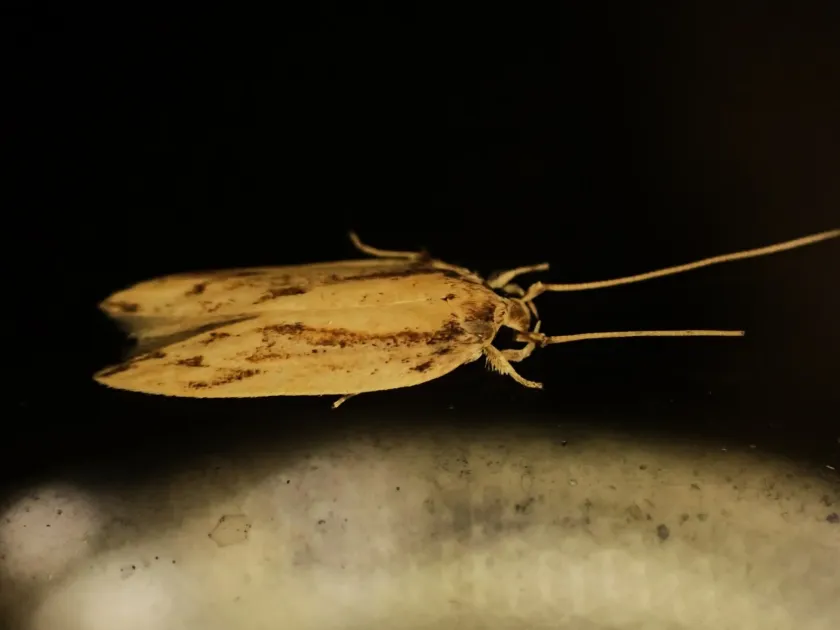
The Coconut Leaf Moth (Agonoxena argaula) is a member of the Agonoxenidae family within the Lepidoptera order. The adult moth is small with a wingspan of approximately 10–12 mm.
Adult moths are typically greyish-brown or pale yellow, often featuring subtle dark markings on the forewings. They are generally nocturnal and rest with their wings held closely against the body.
The life cycle encompasses four stages: egg, larva, pupa, and adult. Females deposit eggs primarily on the undersides of palm fronds, often in rows along the leaf veins.
The larvae are pale green or yellowish and are commonly known as leaf miners. They spend their entire feeding stage protected within the tissues of the palm leaf.
Pupation occurs in a white, silken cocoon constructed by the larva. These cocoons are typically found on the underside of leaves, often in folds created by previous feeding damage.
What it damages
The primary host for this pest is the coconut palm (Cocos nucifera). However, it is also known to infest various species of ornamental palm trees throughout its geographic range.
The larvae feed on the green mesophyll tissue of the leaves, leaving the upper epidermis intact. This mining activity destroys the photosynthetic capacity of the foliage.
Severe infestations lead to the browning and eventual death of palm fronds, which significantly stresses the tree and hampers its growth and reproductive potential.
In addition to coconut trees, the moth can negatively impact palm nurseries and landscaping, reducing the aesthetic and commercial value of the plants.
Reduced foliage vitality leads to lower fruit yields in commercial coconut plantations, making this pest a significant economic concern for tropical agriculture.
Signs of infestation
The earliest signs of infestation are thin, winding lines or patches on the leaves. These "mines" appear as transparent or whitish streaks where the larvae have consumed the inner tissue.
As the infestation progresses, the feeding areas enlarge, causing the leaves to turn yellow and eventually brown. This gives the palm crown a withered or "scorched" appearance.
Small amounts of black or dark granular frass (larval excrement) can often be found inside the mined areas, serving as a clear indicator of active feeding.
White silken cocoons on the underside of leaves or within curled leaf edges are definitive signs of the pupal stage, indicating an established population.
The edges of affected fronds often curl and desiccate, creating sheltered microhabitats that allow the moth to thrive and continue its life cycle undisturbed.
Control measures
Systemic insecticides are the most effective chemical method for control, as they are absorbed by the plant and target the larvae hidden within the leaf tissue.
Biological control through the introduction and conservation of parasitic wasps (Braconidae) has shown promising results in suppressing moth populations naturally.
Sanitation practices, including the strategic pruning and disposal of heavily infested fronds, help to reduce the population density of the pest.
Rigorous quarantine and inspection protocols for moving palm seedlings are essential to prevent the spread of the moth to new areas or unaffected plantations.
- Use of pheromone traps to monitor adult flight patterns and determine peak activity.
- Improving tree vigor through proper fertilization and irrigation to help palms recover from minor damage.
Taxonomy
- Latin name
- Agonoxena argaula
- Order
- Lepidoptera (butterflies)
- Family
- Agonoxenidae
- EPPO code
- AGOOAR
Discussion
No discussions yet — be the first.