
Willow moth
Chrysoclista lathamella
Description
How to identify
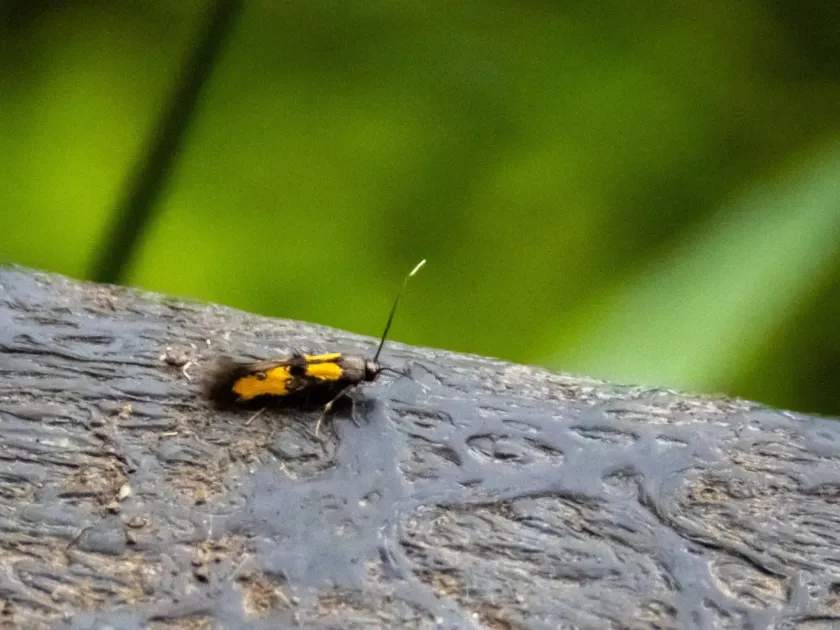
The willow moth (Chrysoclista lathamella) is a small moth belonging to the family Agonoxenidae, order Lepidoptera. It is a cryptic insect, often difficult to spot due to its small size and protective coloration that mimics the bark of its host plant.
Adult moths possess narrow wings with distinct patterns of spots and bands. This specialized morphology allows them to blend seamlessly into the woody surfaces of willow trees, serving as a primary defense mechanism against avian predators.
The larvae, or caterpillars, are cylindrical in shape and typically light-colored. They feature robust chewing mouthparts designed for navigating and feeding within the delicate cambium layers of woody stems and branches.
This species is highly host-specific, primarily infesting trees of the genus Salix. It is recognized as a significant pest in both natural forest stands and managed plantations, particularly where willow trees are grown for biomass or ornamental purposes.
Taxonomically, the species is distinguished by specific morphological traits and its unique ecological relationship with host trees. Accurate identification often requires examining the characteristic damage patterns on the bark, as the insect itself is rarely observed by the naked eye.
What it damages
Willow trees (Salix species) serve as the exclusive hosts for this moth. The caterpillars penetrate the bark of trunks and thick branches, creating serpentine tunnels that disrupt the tree's internal vascular system.
By consuming the cambium layer, the larvae sever the pathways responsible for transporting water and nutrients. This disruption leads to localized tissue necrosis and often causes dieback of individual branches or structural weakening of the entire tree.
Severe infestations can lead to a phenomenon known as girdling, where the continuous tunnel network cuts off nutrient supply around the circumference of the stem, inevitably leading to the death of the upper portion of the tree.
Young willow saplings are particularly vulnerable to this pest. Larval activity in developing stems often leads to permanent deformation, reduced timber quality, and in extreme cases, the total loss of the young tree.
Furthermore, the physical wounds created by larval burrowing provide entry points for secondary fungal and bacterial pathogens. These infections often manifest as bark cankers, which exacerbate the damage caused by the moth and accelerate the tree's decay.
When it appears
The lifecycle of the willow moth is tightly synchronized with the host plant's phenology. After surviving the winter as larvae, they resume active feeding within the bark as soon as temperatures rise in the spring.
Adult emergence typically occurs during the summer months. Mating and oviposition take place under the cover of darkness, with females laying eggs directly onto the bark of suitable willow hosts.
Developmental timing is heavily influenced by regional climate conditions, with the species completing one or more generations per year depending on the length of the growing season and average summer temperatures.
Preparation for winter begins as the growing season wanes. Mature larvae seek refuge deep within the bark crevices or under loose bark scales, where they enter diapause to withstand freezing winter temperatures.
Integrated pest management programs rely on monitoring the adult moth flight periods, usually achieved through light traps or pheromone baits, to determine the optimal timing for intervention.
Signs of infestation
The most reliable indicator of an infestation is the presence of small entry/exit holes on the bark surface. These holes are often surrounded by "frass," a mixture of larval excrement and fine bark shavings, which is easily visible to the trained eye.
Localized bark necrosis is another common symptom. Infected areas may appear discolored, slightly depressed, or cracked, representing the site of past or ongoing larval activity beneath the bark layer.
Visually, infested trees exhibit symptoms of water stress, including premature leaf yellowing, wilting of terminal growth, and overall chlorosis. These signs indicate that the tree's internal plumbing has been compromised by the moth's feeding.
If the bark is carefully peeled away at an active site, the characteristic tunnels of the larvae become visible. These tunnels are typically packed with brown frass, which provides a stark contrast to the surrounding healthy woody tissue.
Heightened activity of woodpeckers on willow trunks is a strong indirect indicator of an underlying pest issue. These birds are adept at locating hidden larvae, often leaving larger, deeper holes in the bark while foraging for the moths.
Control measures
Proactive cultural management is the cornerstone of willow moth prevention. Maintaining tree health through proper irrigation and fertilization, alongside the removal of damaged or dead wood, reduces the attractiveness of the plantation to the moth.
Chemical control can be effective if systemic insecticides are applied at the right time. These treatments should be targeted toward periods when young larvae are active on the bark surface, maximizing the chance of chemical absorption.
Biological control using formulations of Bacillus thuringiensis offers a targeted approach that is safer for beneficial insects and the environment. These microbial agents must be applied to the bark surface where larvae ingest the spores while feeding.
Sanitation is a vital component of integrated control. Infested branches should be pruned and immediately destroyed via burning or chipping to eliminate the source of the infestation and prevent the moth from spreading to adjacent healthy trees.
Pheromone-based monitoring tools help practitioners predict peak moth emergence. By knowing exactly when adults are active, growers can optimize their application of control measures, thereby increasing efficacy and reducing chemical usage.
Taxonomy
- Latin name
- Chrysoclista lathamella
- Order
- Lepidoptera (butterflies)
- Family
- Agonoxenidae
- EPPO code
- KRYCLA
Discussion
No discussions yet — be the first.