
Apple fruit moth
Blastodacna hellerella
Description
How to identify
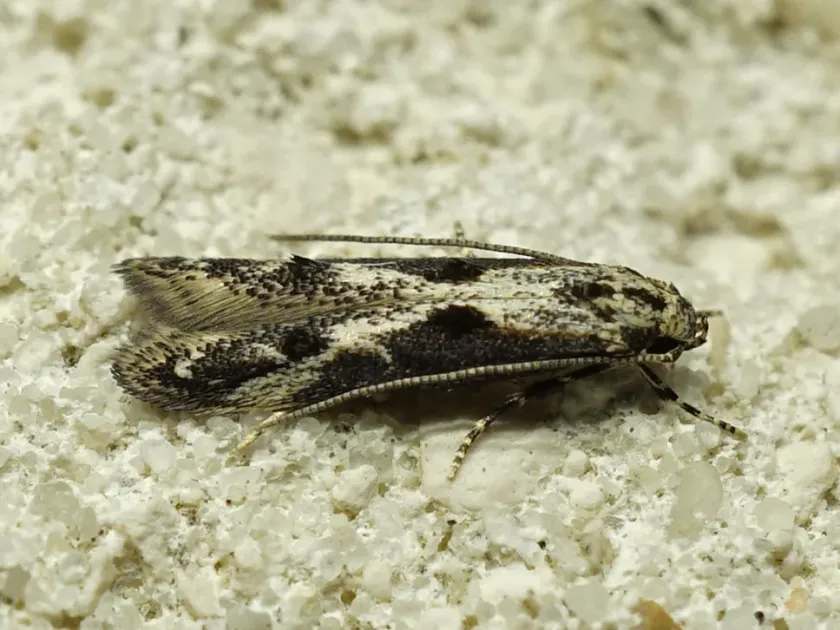
The apple fruit moth (Blastodacna hellerella) is a small moth belonging to the family Agonoxenidae of the order Lepidoptera. Adult moths typically have a wingspan of about 10–12 mm, with narrow wings that feature mottled patterns, providing excellent camouflage against bark.
The larvae, or caterpillars, are small and creamy-white, measuring up to 9 mm in length. They are specialized internal feeders, specifically adapted to burrowing into the tissues of developing fruit, where they remain protected from many environmental factors.
The life cycle of Blastodacna hellerella is tightly synchronized with the host plant's phenology. Depending on the geographical region and climate, the species typically produces one or two generations per year, with larvae overwintering in protective cocoons.
Identifying this species in an orchard setting is challenging due to the moth's nocturnal activity and the hidden life cycle of the larvae. Monitoring using sex pheromone traps is the most reliable method for detecting adult population levels.
Systematically, this moth is a significant, albeit sometimes overlooked, pest in commercial orchards. Its ability to remain undetected until harvest makes it a persistent challenge for integrated pest management programs.
What it damages
The primary hosts of the apple fruit moth include apple trees and hawthorn. While preferring pome fruits, the moth can also impact other members of the Rosaceae family, making hedgerows containing hawthorn a potential source of infestation for nearby orchards.
Damage is exclusively caused by the larvae, which bore into young fruit. These tunnels disrupt the development of the fruit, often causing visible deformation, stunted growth, or early fruit drop, significantly reducing the marketable yield.
The entrance holes made by the larvae provide an entry point for opportunistic fungal pathogens, such as fruit rot. This secondary infection often leads to rapid decay of the entire fruit, rendering it completely unusable for consumption or storage.
In addition to physical damage, the internal tunnels filled with larval frass contaminate the fruit. This infestation often goes unnoticed until the fruit is cut open, which creates major quality control issues for growers.
The economic impact can be severe in high-pressure years, as the hidden nature of the infestation makes it difficult to cull damaged fruit early, leading to potential rejection of harvested batches by consumers.
Signs of infestation
The most reliable sign of an apple fruit moth infestation is the presence of small, inconspicuous entrance holes on the skin of the developing apple. Often, a tiny amount of frass can be observed near these points of entry.
Upon slicing an infested fruit, one will find winding larval tunnels within the flesh. If the larvae reach the core, they can destroy the seeds and significantly accelerate the fruit's decay process.
Visible asymmetry or uneven ripening of the fruit is another clear indicator of internal feeding. Affected areas remain hard or discolored, as the larval activity interferes with the natural ripening process.
The presence of fine silk webbing between leaves and fruit, or near the entry holes, is a common indicator of caterpillar activity. This webbing is used by larvae for protection as they move between different parts of the host plant.
Unexpectedly high rates of premature fruit drop during the summer months can be an indirect sign that the larvae have reached a stage where they are exiting the fruit or moving to a new location.
Control measures
Managing Blastodacna hellerella requires a combined approach of cultural practices and targeted chemical interventions. Sanitation is the first line of defense: collecting and destroying fallen fruit helps prevent the next generation of the pest.
Chemical control should be timed to coincide with the period when larvae are hatching from eggs but have not yet burrowed into the fruit. Once inside, the larvae are largely protected from topical insecticides.
- Deployment of pheromone traps for population monitoring and disruption.
- Proper pruning to remove old or damaged bark where larvae might overwinter.
- Conservation of natural predators, such as parasitic wasps, in the orchard.
- Use of microbial pesticides like Bacillus thuringiensis during the egg-hatch window.
Orchardists should prioritize Integrated Pest Management (IPM) to minimize the use of broad-spectrum pesticides. This helps maintain the ecological balance and prevents outbreaks of secondary pests that might otherwise be controlled by natural predators.
Regular orchard inspections are critical. By tracking the flight activity of adult moths using monitoring tools, growers can apply treatments only when necessary, thereby reducing costs and environmental impact.
Taxonomy
- Latin name
- Blastodacna hellerella
- Order
- Lepidoptera (butterflies)
- Family
- Agonoxenidae
- EPPO code
- BLAOHE
Discussion
No discussions yet — be the first.