
Grizzled Skipper
Spialia
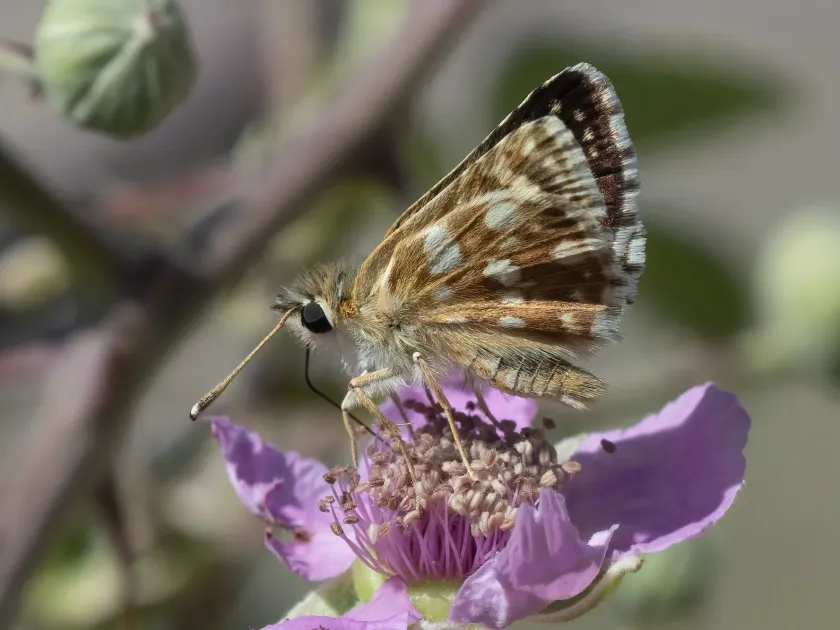
Description
How to identify
The genus Spialia belongs to the family Hesperiidae, commonly known as skippers, within the order Lepidoptera. They are named for their relatively large heads and robust, thick-bodied appearance.
Adult butterflies generally have a wingspan of 20–30 mm. Their wings exhibit a dark brown or blackish base color mottled with white or cream-colored spots, providing camouflage against foliage.
The larvae, or caterpillars, are typically spindle-shaped with dark heads. They are notorious for their cryptic behavior, often hiding in folded leaves spun together with silk.
Pupation occurs within these shelters, where the pupa remains protected from environmental stressors and most visual predators.
Several species exist within the Spialia genus, with Spialia sertorius being one of the most widely recognized across European landscapes.
What it damages
The primary damage is caused by the larval stage, which feeds on the leaves of various host plants, particularly those in the Rosaceae family like Potentilla and Sanguisorba.
While rarely considered a major agricultural pest, heavy infestations can significantly weaken young ornamental plants and reduce their overall vitality.
Larvae consume leaf tissue, often leaving irregular holes or skeletonized leaf sections, which disrupts the plant's photosynthetic capacity.
The damage is most impactful during early plant development when loss of foliage can stunt growth and delay flowering processes.
Cumulative feeding can lead to increased stress, making the host plant more susceptible to secondary fungal or bacterial infections.
When it appears
The life cycle typically includes one or two generations per year, with activity peaking during the warmer months of the year.
Adult flight periods generally occur from May through August, depending on the latitude and local microclimate conditions.
Winter is typically spent in the larval or pupal stage, hidden within the leaf litter or near the base of host plants to survive cold temperatures.
Spring activity begins as temperatures rise, signaling the larvae to resume feeding on the fresh, tender growth of spring vegetation.
Warm and dry summer seasons can accelerate the development of subsequent generations, potentially leading to higher pest population density.
Signs of infestation
Folded or rolled leaves secured by silk threads are the most prominent sign of a Spialia infestation in the garden.
Presence of frass (larval droppings) on or near the leaves is a clear indicator that feeding is currently taking place.
Irregular leaf edges or holes appearing in the center of leaves, coupled with the absence of the larvae during the day, suggest a nocturnal or concealed feeder.
Stunted growth or wilting of the terminal buds may indicate that the caterpillars are targeting the most nutrient-rich parts of the plant.
Direct sightings of the small, fast-flying adults hovering around low-growing host plants can alert gardeners to the presence of the species.
Control measures
Cultural practices such as removing weeds and cleaning up plant debris in the autumn are crucial for reducing overwintering sites.
Hand-picking and disposing of infested leaves can be a highly effective control measure for localized populations in home gardens.
Biological control using Bacillus thuringiensis sprays is recommended, as it effectively targets the larvae while sparing beneficial insects.
Chemical insecticides should be reserved for severe infestations and applied strictly according to label instructions to minimize ecological impact.
- Monitor susceptible plants regularly throughout the growing season.
- Promote biodiversity to encourage natural predators like birds and parasitic wasps.
- Maintain plant health with balanced irrigation and fertilization to improve stress tolerance.
Taxonomy
- Latin name
- Spialia
- Order
- Lepidoptera (butterflies)
- Family
- Hesperiidae
- EPPO code
- SILASP
Discussion
No discussions yet — be the first.