
Elegant Sphinx
Sphinx perelegans
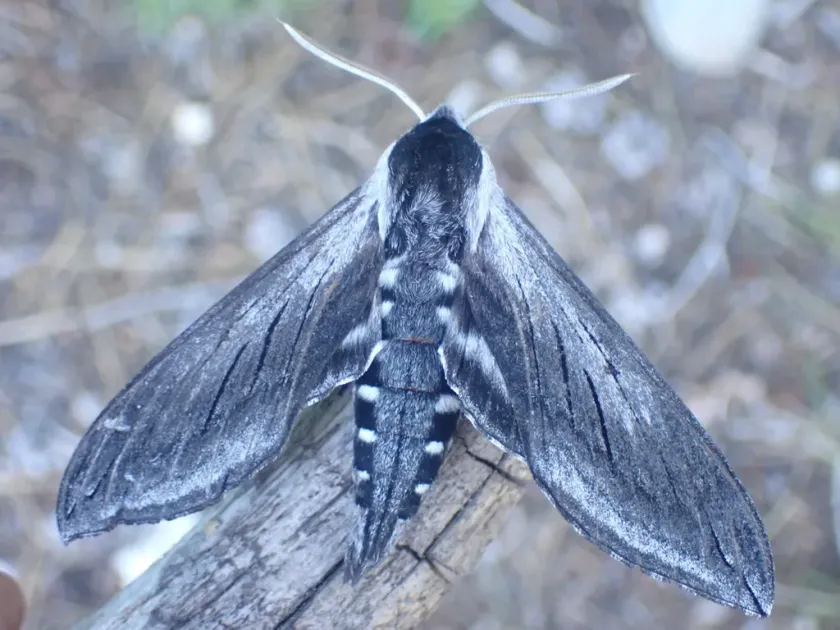
Description
How to identify
The Elegant Sphinx Sphinx perelegans belongs to the family Sphingidae, known for their streamlined body shape and high-speed flight capabilities.
The adult moth features an intricate pattern of grey and brown lines on its wings, providing exceptional camouflage when resting on tree bark during the day.
The larvae, or caterpillars, are large and possess a distinctive posterior horn, which is a hallmark feature for many species within the Sphinx family.
Their bodies are often adorned with diagonal lateral stripes that mimic the veins of leaves, effectively hiding them from predators and human observers.
The life cycle involves pupation within the soil or leaf litter, where the insect remains dormant through the winter before emerging as an adult.
What it damages
The primary damage is caused by the caterpillars, which feed aggressively on the foliage of host trees during their developmental stages.
These pests commonly infest plants in the Rosaceae family, including various apple and pear varieties, as well as several ornamental shrubs.
Heavy infestation leads to severe defoliation, which reduces the plant's photosynthetic capacity and weakens its overall health and resilience.
Reduced vigor can result in lower fruit yields and may leave the trees more susceptible to secondary diseases or environmental stressors.
In managed orchards, the presence of these caterpillars necessitates monitoring to prevent significant aesthetic and structural damage to the trees.
When it appears
Adult moths are typically active during mid-summer, when favorable night temperatures support their flight and mating behaviors.
Eggs are deposited singly on the underside of leaves, a strategy that helps protect them from environmental elements and early detection.
Caterpillar feeding activity peaks in the second half of the summer and early autumn, coinciding with the tree's late-season growth phase.
By late autumn, the larvae cease feeding and descend to the soil surface to burrow and initiate the pupation process for the winter.
Agricultural experts recommend regular inspections throughout the summer to identify larval presence before widespread damage occurs.
Signs of infestation
Signs of infestation include irregular holes or "notching" along the edges of leaves, eventually leading to full defoliation of affected branches.
The accumulation of large, firm larval droppings (frass) beneath the tree canopy is a clear indicator of active feeding above.
While caterpillars are masters of disguise, they may be spotted resting along twigs during the day if the foliage density is low.
Severe infestations often reveal themselves through noticeable thinning of the canopy and exposed branches during mid-to-late summer.
- Notched leaf edges and skeletonized leaves
- Accumulation of larval frass on the ground
- Premature yellowing and dropping of foliage
- Visible thinning of the tree canopy
Control measures
Hand-picking caterpillars is an effective control method for smaller gardens or young trees where the foliage can be easily inspected.
Biological insecticides containing Bacillus thuringiensis are highly effective against younger larval stages while preserving beneficial insects.
Chemical control, such as using pyrethroid-based insecticides, should be reserved for cases of extreme infestation to avoid ecological disruption.
Cultivating the soil beneath the canopy in late autumn can help expose and destroy pupae, effectively reducing the next generation's population.
Promoting a healthy ecosystem by encouraging birds and predatory insects will help keep the population of Sphinx moths in natural balance.
Taxonomy
- Latin name
- Sphinx perelegans
- Order
- Lepidoptera (butterflies)
- Family
- Sphingidae
- EPPO code
- SPHXPE
Discussion
No discussions yet — be the first.