
Larch hawkmoth
Sphinx morio
Description
How to identify
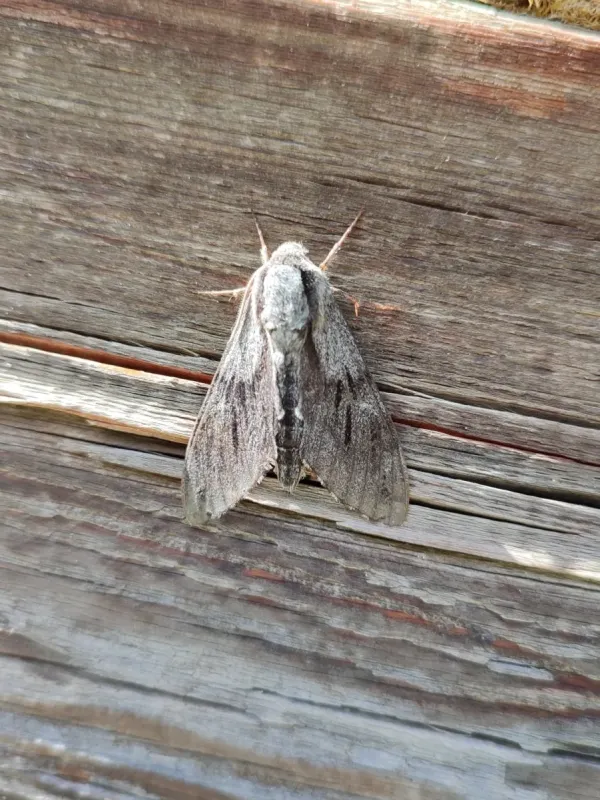
The Larch hawkmoth (Sphinx morio) is a nocturnal moth species belonging to the Sphingidae family. The adult moth features a wingspan of approximately 60–70 mm, with coloration that mimics the bark of trees, allowing for effective natural camouflage during the day.
The larvae, or caterpillars, undergo five stages of development. A fully mature caterpillar can reach up to 80 mm in length and possesses a distinct horn on the rear end of its abdomen, a diagnostic trait for this moth family.
Caterpillar coloration ranges from light green to reddish-brown, enabling them to blend in with the needles of Larch trees, which serves as a protective mechanism against avian predators.
The pupae are dark brown, hardy structures that overwinter in the soil or forest litter beneath the host tree. They are well-protected from cold winter temperatures within their earthen chambers.
Adult moths are primarily active at dusk and dawn. They are powerful fliers capable of hovering over flowers or foliage, which makes them difficult to observe or target during the day.
What it damages
The primary host plant for this pest is the Larch (Larix) tree. Caterpillars feed voraciously on the needles, leading to significant foliage loss and general weakening of the host tree.
Severe infestations can lead to complete defoliation of the canopy, which hampers the tree's photosynthetic capability. This stress makes the trees significantly more susceptible to secondary pests like bark beetles.
Repeated defoliation cycles cause stunted growth and a reduction in timber quality, which is particularly detrimental in nursery settings and commercial reforestation projects.
In ornamental plantings, the loss of needles ruins the aesthetic value of the trees. Even smaller populations can cause visible damage that requires intervention to prevent further spread.
The damage is cumulative throughout the summer months as the caterpillars grow larger and increase their daily intake of plant material to support their rapid development.
When it appears
Adult moths emerge in early summer, typically during June and July. This period is dedicated to mating and egg-laying on the needles of host trees.
Larvae hatch within two weeks of oviposition. The feeding stage is concentrated in the mid-to-late summer months, primarily July and August, when the foliage is most nutritious.
By late summer, the caterpillars descend to the forest floor to pupate. The pupal stage remains dormant throughout the autumn and winter until the following spring.
The species typically completes one generation per year. However, environmental conditions can influence the duration of the pupal stage, sometimes extending the life cycle if spring conditions are unfavorable.
Monitoring for the presence of adult moths is often conducted using ultraviolet light traps during the peak of the flight season to predict the emergence of larvae.
Signs of infestation
A primary indication of a Larch hawkmoth presence is the accumulation of frass (caterpillar excrement) on the forest floor or the base of the tree trunk.
Visual inspection of the canopy may reveal partially eaten needles or completely bare branches. Because caterpillars often lie along the needles, careful observation is required to spot them.
Yellowing of the needles may occur as a result of the damage to the foliage, especially in areas where larvae have been actively grazing for several days.
Shaking the branches can occasionally cause young larvae to drop to the ground, providing a method for foresters to estimate the density of the infestation.
Searching the leaf litter for overwintering pupae in the autumn is a reliable way to assess the risk of a potential population outbreak for the upcoming season.
Control measures
Integrated pest management strategies are recommended. Biological control, using Bacillus thuringiensis sprays, is highly effective against early-instar larvae without causing widespread damage to non-target insects.
Chemical control with systemic insecticides is reserved for high-density outbreaks in nurseries or high-value landscapes to ensure the protection of the foliage.
Mechanical interventions, such as soil cultivation under the trees in late autumn, can destroy overwintering pupae and increase their vulnerability to predators and harsh weather.
Encouraging biodiversity by protecting insectivorous birds and predatory insects helps to keep hawkmoth populations in check within natural forest ecosystems.
- Utilize pheromone or light traps for population monitoring.
- Practice sanitary logging to remove infested or weak trees.
- Apply specialized insecticides only when the damage threshold is exceeded.
Taxonomy
- Latin name
- Sphinx morio
- Order
- Lepidoptera (butterflies)
- Family
- Sphingidae
- EPPO code
- SPHXMO
Discussion
No discussions yet — be the first.