
Sphinx justiciae
Sphinx justiciae
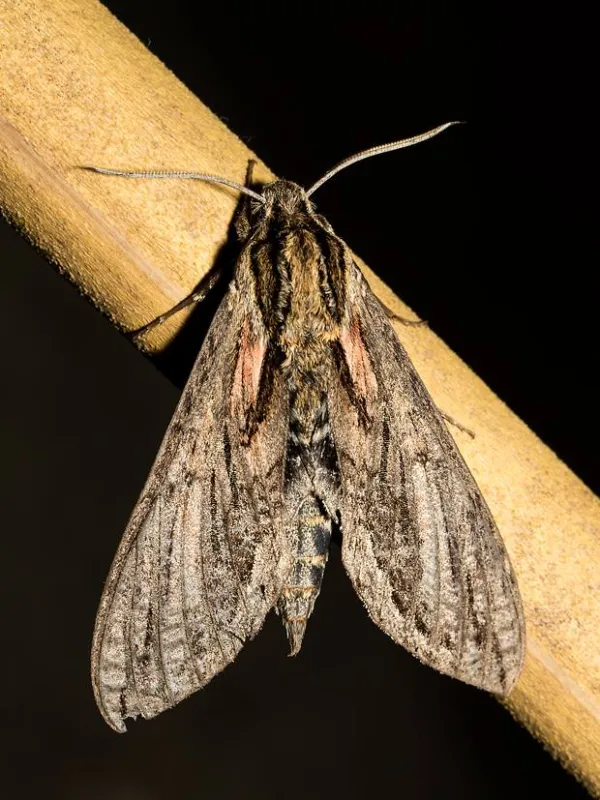
Description
How to identify
Sphinx justiciae is a species of moth belonging to the family Sphingidae (hawkmoths). These insects are known for their powerful, streamlined bodies and long, narrow wings, which allow for rapid flight and hovering capabilities.
Adult moths typically exhibit cryptic coloration in shades of grey, brown, or olive. This adaptation provides excellent camouflage against tree bark and foliage, making them difficult to detect during daylight hours.
The life cycle of this species includes four distinct stages: egg, larva (caterpillar), pupa, and adult. The caterpillar stage is particularly recognizable by the horn-like structure located on the posterior end of the body.
As nocturnal insects, adult moths are most active after sunset, when they feed on nectar and seek host plants to lay their eggs, ensuring the next generation has immediate access to food.
Developmental speed is heavily dependent on ambient temperatures, with warmer seasons leading to faster maturation cycles and potentially multiple generations in tropical or subtropical climates.
What it damages
The primary damage is caused by the larval stage, as caterpillars possess robust mandibles designed for continuous feeding. They can consume large amounts of leaf tissue in a very short timeframe.
Common hosts often include plants from the Acanthaceae and Rubiaceae families. However, if these are unavailable, caterpillars may shift their focus to garden or agricultural crops in the vicinity.
Feeding damage results in severe defoliation, which reduces the plant's ability to photosynthesize. This leads to stunted growth, poor vigor, and, in severe cases, the death of the plant.
When caterpillars feed on the terminal buds or new shoots, they can alter the structural development of the plant, negatively affecting both aesthetic value and potential fruit yield.
Large-scale infestations can cause significant economic loss by weakening plants, making them more susceptible to secondary pathogens and environmental stress during winter months.
Signs of infestation
One of the earliest indicators of an infestation is the presence of caterpillar droppings (frass) under the canopy of host plants. These dark, uniform pellets are a clear sign of active feeding.
Foliar damage often manifests as skeletonized leaves, irregular bite marks on leaf margins, or complete consumption of entire leaves, leaving behind only the central veins.
Inspect for the presence of larvae on the underside of leaves or along stems. Their cryptic appearance requires careful observation, especially during the early morning hours.
Adult moth activity can be observed at dusk, as they frequent flowering plants to feed. Their hovering behavior near nectar sources is a characteristic trait of the Sphinx family.
Premature leaf drop or yellowing that does not correspond with seasonal changes can be a secondary indicator that a population of caterpillars has been feeding undetected within the plant crown.
Control measures
Cultural control practices, such as tilling the soil around host plants in late autumn, can destroy overwintering pupae and significantly reduce the emergence of the next year's generation.
Manual removal of caterpillars is a practical and environmentally friendly solution for small gardens or limited infestations. This is most effective when done during early morning or evening hours.
Biological control agents, such as Bacillus thuringiensis sprays, are highly effective against larvae while minimizing impact on beneficial insects and the surrounding environment.
Chemical intervention should be considered a last resort. If necessary, use systemic insecticides labeled for the specific host crop and strictly adhere to pre-harvest intervals to ensure safety.
Promoting a healthy ecosystem by encouraging the presence of natural predators, including predatory wasps, birds, and spiders, provides long-term, sustainable control of the pest population.
Taxonomy
- Latin name
- Sphinx justiciae
- Order
- Lepidoptera (butterflies)
- Family
- Sphingidae
- EPPO code
- SPHXJU
Discussion
No discussions yet — be the first.