
Gordius sphinx
Sphinx gordius
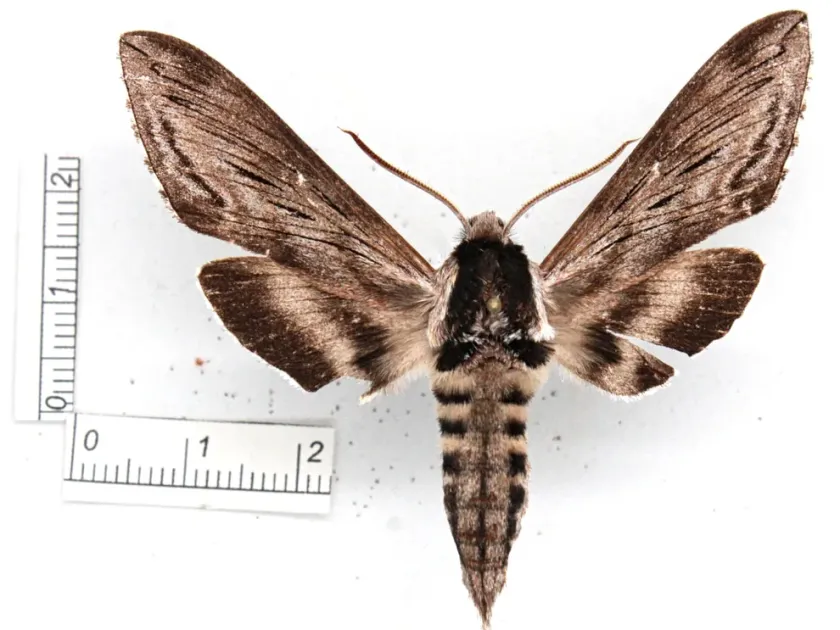
Description
How to identify
The Gordius sphinx is a large moth species belonging to the Sphingidae family. The adult moths typically possess a wingspan ranging from 70 to 100 mm, with coloration patterns that mimic the texture and color of tree bark to provide effective camouflage during daylight hours.
The larvae, known as caterpillars, are notably large and feature a vibrant green color decorated with diagonal stripes along their bodies. A characteristic tail horn is present at the rear end, which is a hallmark feature of many sphinx moth larvae.
The life cycle undergoes complete metamorphosis, consisting of four stages: egg, larva (caterpillar), pupa, and adult. The species typically overwinters in the pupal stage, buried within the soil or protected by leaf litter beneath the host plants.
Adult moths are primarily nocturnal or crepuscular, emerging at twilight to feed on nectar. Their robust physiology allows them to fly across significant distances, facilitating the colonization of new orchard areas throughout the growing season.
While often single-brooded, in warmer climates, the Gordius sphinx can produce multiple generations per year. The pupae are highly resilient, enabling the species to survive harsh winter conditions and emerge successfully in the following spring.
What it damages
The Gordius sphinx caterpillars primarily feed on the foliage of trees within the Rosaceae family, with apple trees being a major host. Their feeding habits can lead to significant biomass loss if the population density is high.
Early-stage larvae typically skeletonize the leaves, while mature caterpillars consume entire leaf blades, leaving only the midribs and petioles intact. This intensive defoliation can quickly strip individual branches or smaller trees of their photosynthetic capacity.
Reduced leaf surface area hinders the tree's ability to produce energy, which often leads to stunted shoot growth and diminished vigor. Over time, recurring damage can compromise the tree's ability to form fruit buds for future seasons.
Young saplings are at the highest risk, as they have limited foliage reserves. Excessive feeding on young trees can significantly weaken their structural integrity and reduce their overall cold hardiness during winter.
Damage is typically localized, occurring in clusters where eggs were originally deposited. Although they rarely destroy entire orchards at once, failing to monitor and manage these localized outbreaks can lead to more widespread infestations over time.
Signs of infestation
The most evident sign of a Gordius sphinx infestation is the presence of missing leaf tissue or partially eaten leaves in the upper and middle canopy of apple trees. Close inspection often reveals the caterpillars hiding along the leaf stems.
Accumulation of larval frass—distinctive dark, pellet-like droppings—underneath the tree canopy is a reliable indicator of active feeding above. Spotting these droppings on the ground often prompts an immediate search of the branches directly above the site.
Larvae are masters of camouflage; they often rest during the day on the undersides of leaves or along twigs to blend in. Scouting should involve checking the margins of the foliage, as this is where the caterpillars begin their feeding activity.
During the pupation stage, one might notice soil disruption near the base of the trees if the larvae have recently migrated to burrow into the ground. However, since the pupae remain subterranean, they are generally invisible to casual observation.
The presence of adult moths near outdoor lights during summer evenings serves as a behavioral sign. A high number of moths suggests a significant population nearby, signaling the need for increased vigilance regarding egg-laying on orchard trees.
Control measures
Integrated pest management starts with cultural practices. Autumn cultivation of the soil around the base of the trees is highly effective in disturbing or destroying the pupae that reside in the ground, preventing successful emergence.
Hand-picking remains a very practical and non-toxic solution for smaller gardens or young orchards. Because the larvae are large and relatively slow-moving, they can be easily located and removed manually during early morning or evening hours.
When populations reach economic threshold levels, registered insecticides for apple production may be applied. Timing is critical: applications are most effective when the eggs are hatching and larvae are in their early, more vulnerable stages.
Biological control agents, such as formulations containing the bacterium Bacillus thuringiensis (Bt), offer an environmentally friendly alternative. These specific products target the lepidopteran larvae while sparing beneficial predatory insects.
Regular monitoring throughout the summer months is essential to catch infestations early. By keeping a close eye on leaf integrity and watching for larval droppings, growers can mitigate damage without the need for intensive chemical interventions.
Taxonomy
- Latin name
- Sphinx gordius
- Order
- Lepidoptera (butterflies)
- Family
- Sphingidae
- EPPO code
- SPHXGO
Discussion
No discussions yet — be the first.