
Hermit Sphinx
Sphinx eremitus
Description
How to identify
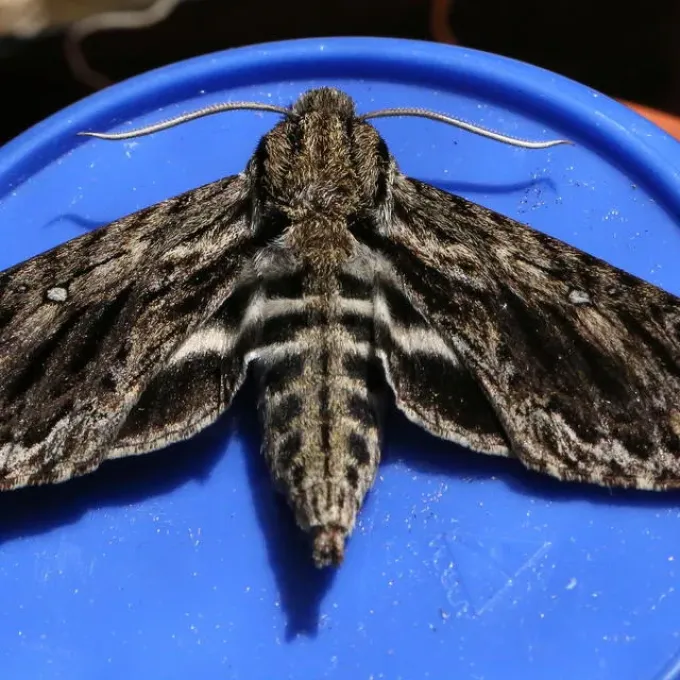
The Hermit Sphinx (Sphinx eremitus) belongs to the Sphingidae family, known as sphinx moths. These insects are nocturnal and possess a gray-brown cryptic coloration.
Adult moths have a robust, spindle-shaped body and powerful wings, which allow for high-speed flight when navigating through agricultural fields.
The caterpillar is the most recognizable stage for growers, reaching 7-9 cm in length and featuring a distinct horn at the posterior end of its body.
Caterpillar coloration ranges from vibrant green to brown with diagonal lateral stripes, providing effective camouflage against foliage.
The pupa survives the winter months buried in the soil, protected by a hard, dark chitinous shell that resists environmental stressors.
What it damages
The primary damage is caused by the caterpillars, which are voracious feeders capable of consuming large amounts of plant tissue in a very short time.
Favorite host plants include species from the Lamiaceae family, particularly mint, sage, and basil, posing a threat to commercial herbal crop production.
In addition to herbs, they may infest Solanaceous crops, stripping leaves and tender shoots, which significantly impairs photosynthesis and yields.
Severe defoliation weakens the host plant, making it more susceptible to secondary infections and environmental stresses.
In cases of high infestation, the pest can completely strip a plant of its foliage, leaving behind only the stems and causing severe growth retardation or death.
When it appears
Adult moths typically emerge in late spring, with activity continuing throughout the summer months depending on the regional climate.
Females deposit eggs on the undersides of host plant leaves, specifically selecting lush, younger foliage to provide immediate food for emerging larvae.
The larval development period takes approximately 4-6 weeks, after which the caterpillar descends into the soil to undergo pupation.
In warmer climates, the Hermit Sphinx may complete two generations in a single growing season, drastically increasing the cumulative damage.
The pupal stage remains dormant in the soil surface layer, which is a critical detail for determining the timing of preventative soil-based treatments.
Signs of infestation
The first noticeable sign of infestation is large, irregular holes appearing on the leaf margins, which expand quickly as the larvae grow larger.
Black or dark brown frass (caterpillar droppings) found on the soil surface or lower leaves is a strong indicator of the pest's presence.
Because of their effective camouflage, caterpillars are often difficult to spot until they have already caused significant damage to the plant.
Affected plants often show signs of wilt or poor vigor due to the loss of photosynthetic surface area caused by the feeding activity.
- Defoliated stems and petioles
- Large holes in leaf blades
- Accumulation of dark larval frass under plants
- Stunted growth of young shoots
- Direct observation of large larvae on stems
Control measures
Deep cultivation or tilling of the soil between rows is an effective cultural practice to disturb and kill overwintering pupae.
Hand-picking caterpillars is a viable control method for home gardens or small plots due to the large, visible size of the larvae.
For larger infestations, biological insecticides containing Bacillus thuringiensis are highly effective and pose minimal risk to beneficial pollinators.
Chemical control should be reserved for severe outbreaks, ensuring all label instructions and pre-harvest intervals are strictly followed.
Effective weed management, especially targeting Lamiaceae weeds, reduces the available habitat and egg-laying sites for adult moths.
Taxonomy
- Latin name
- Sphinx eremitus
- Order
- Lepidoptera (butterflies)
- Family
- Sphingidae
- EPPO code
- SPHXER
Discussion
No discussions yet — be the first.