
Great ash sphinx
Sphinx chersis
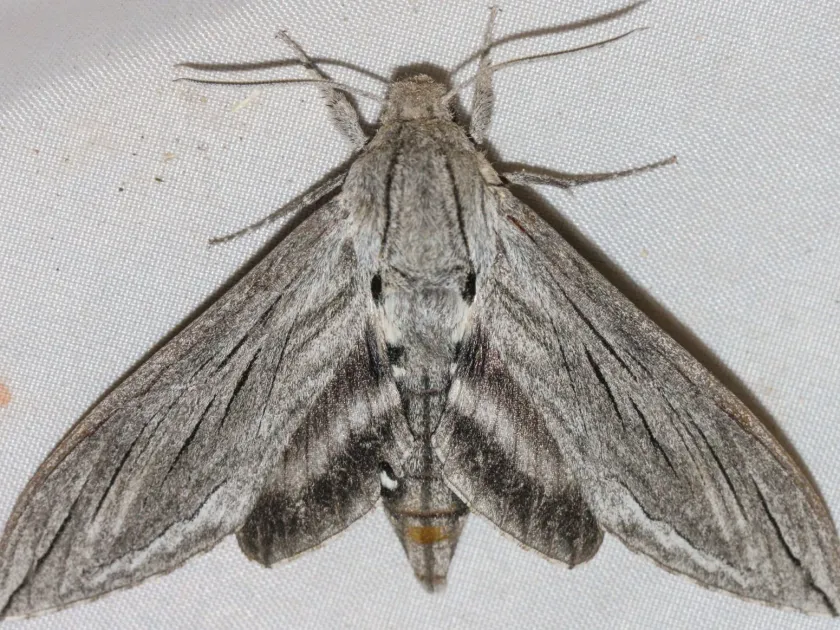
Description
How to identify
The great ash sphinx (Sphinx chersis) is a large moth belonging to the Sphingidae family. The adult moth has a wingspan of 10–12 cm, with a coloration ranging from pale gray to brownish-gray, featuring intricate black wavy lines that provide excellent camouflage against tree bark.
The larvae, or caterpillars, are notably large, often reaching 8–10 cm in length. They display a vibrant green color with diagonal pale lateral stripes and the characteristic caudal horn, which serves as a defense mechanism and changes color from yellowish to blue as the larvae mature.
Taxonomically, it is classified within the order Lepidoptera and the family Sphingidae. These moths are primarily crepuscular and nocturnal, making them elusive during the daylight hours when most gardening activities take place.
The lifecycle follows a complete metamorphosis: egg, larva, pupa, and adult. The insect typically overwinters in the pupal stage, buried within the soil or in leaf litter, which allows it to survive harsh winter temperatures.
Adult moths are powerful fliers equipped with long proboscises for nectar feeding. This mobility allows them to travel long distances, ensuring the species can colonize new areas and find suitable hosts for oviposition.
What it damages
Great ash sphinx caterpillars are voracious folivores that feed on the foliage of various woody shrubs and trees. Their preferred host plants primarily belong to the Oleaceae and Rosaceae families.
Commonly attacked hosts include lilac, ash, privet, and occasionally ornamental cherry or plum trees. In domestic gardens and nurseries, this pest can cause significant aesthetic and physiological damage to plants.
The primary damage is the consumption of leaf tissue. In high-density infestations, caterpillars can strip branches entirely, leaving only the midribs, which drastically reduces the plant's capacity for photosynthesis and overall vigor.
Young plants and newly transplanted saplings are particularly susceptible. Severe defoliation can stunt growth, reduce winter hardiness, and increase the likelihood of mortality due to the stress placed on the plant's resources.
Additionally, the wounds created by caterpillar feeding serve as entry points for secondary pathogens, such as fungi and bacteria, which can lead to further decline or localized dieback in the host plant.
When it appears
Adult moth activity typically begins in late spring and continues throughout the summer. Egg-laying peaks in June and July, with females depositing eggs singly on the undersides of leaves to ensure the emerging larvae have immediate access to food.
The larval stage is most prominent during July and August. This is the critical window for monitoring, as the caterpillars grow rapidly and require large amounts of foliage to sustain their development.
Pupation usually occurs in late summer or early autumn. The pupae burrow into the soil to begin their dormant phase, remaining there throughout the winter months until the environmental cues of spring trigger adult emergence.
The number of generations per year is climate-dependent. While northern regions typically see a single generation, warmer southern climates may support a partial second generation if environmental conditions allow.
Climatic variability plays a major role in population dynamics. Wet, cool weather during the mating season can suppress moth activity, whereas consistently warm and dry summers favor rapid larval growth and survival.
Signs of infestation
The most immediate sign of an infestation is the presence of irregular holes in leaves, which expand rapidly as the caterpillars consume more tissue. Feeding often starts at the leaf margins, progressing toward the center.
Large quantities of dark, cylindrical frass (caterpillar droppings) on the soil or leaves beneath the canopy are a definitive sign of activity. These droppings are often the first thing a gardener notices before seeing the caterpillar itself.
Due to their cryptic coloration, the larvae are often difficult to spot during the day. Inspecting the undersides of branches or the interior of the plant canopy is necessary to locate the caterpillars effectively.
Wilting, premature yellowing, or thinning of the foliage on specific branches can suggest significant feeding pressure. In severe cases, the tree may show signs of general stress or reduced budding for the following season.
Using a flashlight for night inspections is highly effective, as the moths and larvae are active during dusk and twilight, making them easier to identify when they are out feeding or mating.
Control measures
Hand-picking is the most practical and environmentally friendly method for managing infestations in small gardens. Removing caterpillars early in the morning or evening significantly reduces local populations.
Cultural practices, such as gently tilling the soil around host plants in the fall, can help disrupt the overwintering pupae, exposing them to predators or cold, which reduces the number of moths emerging the following year.
For larger infestations, biological controls such as products containing Bacillus thuringiensis (Bt) are highly effective. These target young larvae specifically and have minimal impact on beneficial insects or the environment.
Chemical insecticides should be reserved for severe outbreaks on ornamental plants. It is crucial to follow label instructions strictly, avoiding applications during bloom to protect pollinators and selecting products with low residual toxicity.
Encouraging natural predators such as birds and parasitic wasps provides long-term ecological balance. Maintaining a diverse garden habitat helps keep populations of the great ash sphinx below damaging levels.
Taxonomy
- Latin name
- Sphinx chersis
- Order
- Lepidoptera (butterflies)
- Family
- Sphingidae
- EPPO code
- SPHXCH
Discussion
No discussions yet — be the first.