
Sphinx moth
Sphinx
Description
How to identify
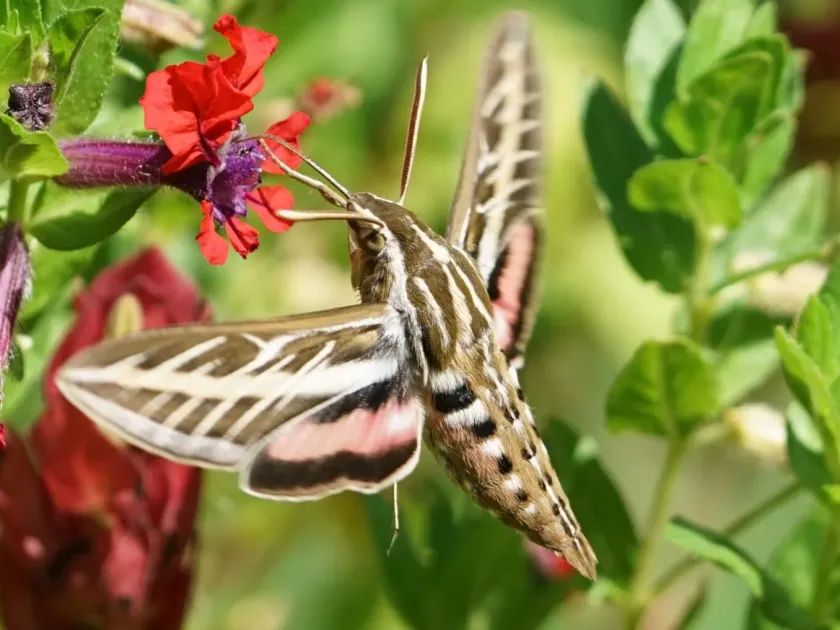
Sphinx moths, members of the family Sphingidae, are robust, powerful fliers often called hawkmoths. Adults are characterized by their streamlined, spindle-shaped bodies and narrow wings, allowing them to hover like hummingbirds while feeding on nectar.
The larvae, known as hornworms, are easily identified by their large size and the prominent, fleshy horn located at the posterior end of their body. Their coloration is typically green or brown, blending perfectly with their host plants.
Pupation usually occurs in the soil or in leaf litter. The pupae often feature a distinct proboscis sheath that may be separate from the body, which is a key diagnostic feature for this family of insects.
The life cycle undergoes complete metamorphosis, consisting of four distinct stages: egg, larva, pupa, and adult. Each stage is adapted to specific environmental conditions, which are critical for their survival.
Taxonomically, the genus Sphinx belongs to the order Lepidoptera. Identifying the specific species often requires a close examination of the larval markings and the host plant range they inhabit.
What it damages
Sphinx moth larvae are highly voracious feeders with strong mandibles designed for consuming large quantities of plant tissue. They are capable of stripping entire leaves down to the midrib in a short period.
They damage a wide range of agricultural and ornamental crops, including tomatoes, grapes, potatoes, and various deciduous trees. Severe infestations can lead to significant defoliation, which hampers the plant's ability to thrive.
Photosynthetic capacity is drastically reduced by larval feeding, resulting in stunted growth, lower yields, and inferior fruit quality. In nursery settings, such damage can make plants unmarketable.
Young plants are particularly vulnerable; a single large larva can defoliate a significant portion of a small plant within days. This necessitates early detection and management to prevent severe losses.
Although they are often considered occasional pests, their size and appetite make them a formidable threat to home gardens and small-scale farms where they tend to aggregate.
When it appears
Adult moths generally emerge in late spring or early summer, depending on regional temperatures. They are nocturnal or crepuscular, active primarily during the evening hours when they mate and lay eggs.
The larval stage is most active throughout the summer months. During this time, they feed aggressively, undergoing several molts as they grow significantly in size and weight.
The duration of the larval stage is highly temperature-dependent. Warmer weather accelerates their metabolism, leading to faster development cycles that can impact the number of generations per year.
Most species overwinter as pupae buried several centimeters deep in the soil. This dormancy protects them from harsh winter conditions until the return of favorable temperatures in the spring.
The emergence of adults is often synchronized with the blooming period of local flora, ensuring that the moths find adequate nectar sources for flight and reproduction.
Signs of infestation
The most common indicator of a sphinx moth presence is the appearance of frass, which are large, dark, pellet-like droppings found on the ground beneath the affected plant branches.
Visible feeding damage, characterized by missing leaf edges or entirely skeletonized foliage, is a clear sign of larval activity. Larvae usually begin by consuming the margins of the leaf and work inward.
Finding the larvae themselves can be challenging because they are masters of camouflage, often remaining perfectly still on stems during the day to avoid detection by predators.
Scouting the undersides of leaves can reveal individual, pale-colored eggs. Early discovery of these eggs is the best way to manage the population before they become destructive caterpillars.
Plants affected by sphinx moth larvae may show signs of stress, including poor fruit development and weakened stems. Regular monitoring of susceptible crops is essential to prevent significant damage.
Control measures
Mechanical control, such as hand-picking the larvae, is the most effective method for small gardens. Removing them in the evening, when they are most active, can significantly reduce their impact.
Tilling the soil in the autumn and spring is a highly recommended agricultural practice. This process disturbs and exposes the overwintering pupae, leading to their destruction by environmental factors or predators.
Biological control methods, including the application of Bacillus thuringiensis (Bt), are effective against young larvae and are considered environmentally friendly as they do not harm beneficial insects.
For more severe infestations, contact or systemic insecticides may be necessary. Always follow the product label carefully to ensure safety for both the applicator and the environment, especially near harvest time.
- Use light traps to monitor and potentially reduce adult moth populations.
- Maintain a weed-free area to remove secondary host plants.
- Encourage natural predators like birds and parasitic wasps in the garden.
Taxonomy
- Latin name
- Sphinx
- Order
- Lepidoptera (butterflies)
- Family
- Sphingidae
- EPPO code
- SPHXSP
Discussion
No discussions yet — be the first.