
Sphenorhina sororia
Sphenorhina sororia
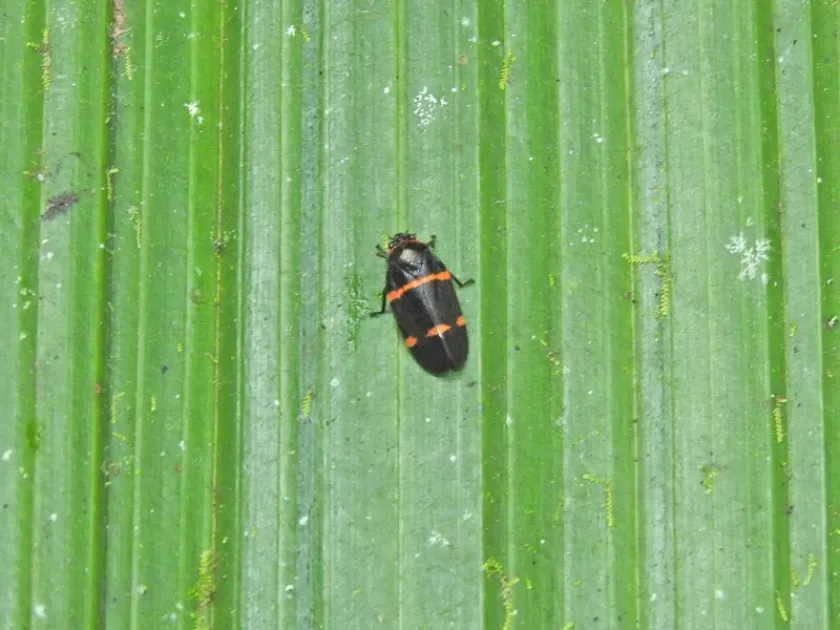
Description
How to identify
Sphenorhina sororia belongs to the order Hemiptera and the family Cercopidae, commonly known as froghoppers or spittlebugs. These insects are distinguished by their specific body structure and remarkable jumping ability, supported by powerful hind legs.
The adults are recognizable by their distinct coloration and hardy exoskeleton. Their mouthparts are specialized for piercing plant tissues and sucking sap, which is the primary mode of feeding for both nymphs and adults throughout their life cycle.
A key biological feature is the nymph's habit of producing a protective mass of spittle or foam. This substance keeps the soft-bodied nymphs moist and shields them from predators and extreme environmental conditions.
Morphologically, they are compact insects with well-developed wings. Identifying them in the field often requires careful observation, as they are agile and tend to hide on the undersides of leaves or deep within the plant canopy.
Entomologists often use sweep nets to monitor their populations in agricultural fields. Understanding their visual characteristics is essential for distinguishing them from other similar cicada species found in the same habitat.
What it damages
Sphenorhina sororia targets a variety of crops, primarily grasses and legumes. The pest is particularly harmful during the seedling stage, when the plant's vascular system is still developing and highly susceptible to damage.
The feeding process leads to the loss of cell sap, causing visible chlorotic spots and necrosis at the puncture sites. This damage significantly reduces the plant's photosynthetic efficiency, which directly affects growth rates.
Beyond physical damage, these insects are known vectors for various plant pathogens. The transmission of viral or mycoplasma-like agents during feeding often results in systemic plant disease, causing far more damage than the sap depletion itself.
In cases of heavy infestation, plants may exhibit stunted growth, leaf deformation, and wilting. If left uncontrolled, the combined effects of direct feeding and pathogen transmission can lead to substantial yield losses.
Crops under stress from drought or nutrient deficiencies are more prone to severe damage by Sphenorhina sororia. The pest thrives in dense vegetation, where the microclimate remains humid and favorable for its development.
When it appears
The life cycle of Sphenorhina sororia is highly synchronized with the growing season of its host plants. They overwinter primarily as eggs, which are deposited in plant debris or the upper layer of soil to ensure survival.
As spring temperatures rise, the eggs hatch, and the nymphs immediately seek out host plants. This phase coincides with the early development of agricultural crops, making it a critical time for monitoring.
The adult population typically peaks during the mid-summer months, when temperatures are highest. This is the period of greatest activity, characterized by rapid reproduction and colonization of adjacent fields.
Depending on the climatic region, multiple generations can emerge within a single season. High temperatures often accelerate their life cycle, causing the population density to rise rapidly within a short period.
As the season progresses into autumn, the insects enter a state of dormancy or diapause. Agricultural management strategies must account for these seasonal patterns to effectively target the most vulnerable developmental stages.
Signs of infestation
The most distinctive sign of Sphenorhina sororia infestation is the presence of frothy "spittle" masses on stems and leaf axils. These masses protect the developing nymphs and are easily spotted during routine field inspections.
Early-stage feeding causes tiny white or yellowish specks on the leaves, which are the result of puncture wounds. Over time, these spots can enlarge and turn brown as the plant tissue begins to die.
Wilting and loss of turgor in leaves are common indicators that the plant's nutrient transport system has been compromised. Despite adequate irrigation, the plant may look dehydrated because the sap flow is disrupted.
The sudden flight of numerous adults when plants are disturbed is a clear sign of a significant infestation. Because these insects are highly active, they are often detected only when their population reaches a high threshold.
The presence of certain weeds in or near the field can serve as an indicator of potential infestation. These weeds often harbor the pest before it migrates to the primary agricultural crops.
Control measures
Effective management of Sphenorhina sororia requires an integrated approach that combines cultural, biological, and chemical strategies. Crop rotation is a fundamental tool for breaking the pest's life cycle.
Field sanitation is critical; removing crop residues and controlling weeds eliminates primary breeding grounds. Deep plowing in the autumn can bury eggs and significantly reduce the emergence of nymphs the following spring.
When the economic threshold is exceeded, the application of systemic insecticides is often necessary. These treatments are absorbed by the plant and provide long-term protection against sap-sucking insects.
Biological control, focusing on the preservation of natural predators such as lady beetles, spiders, and parasitic wasps, can help keep populations under control in a more sustainable manner.
Providing balanced fertilization, particularly with potassium, strengthens the plant's cell walls and enhances its natural resistance to damage. Healthy plants are better equipped to recover from pest attacks without significant loss to the harvest.
Taxonomy
- Latin name
- Sphenorhina sororia
- Order
- Hemiptera (bugs, aphids, leafhoppers)
- Family
- Cercopidae
- EPPO code
- TOMASO
Discussion
No discussions yet — be the first.